
The Insurance Council of New Zealand (ICNZ) still doesn’t support a flood reinsurance scheme for NZ, three years after it called the idea of introducing a scheme similar to Britain’s Flood Re a “grossly disproportionate response”.
This is despite the Council’s British counterpart – the Association of British Insurers (ABI) – finding Flood Re a success in the UK.
Flood Re is the British reinsurance scheme launched in 2016 that supports flood insurance in areas of high risk of flooding. The scheme is a joint initiative between the British Government and insurers, with the costs of the scheme covered by a levy.
An annual levy is collected from every insurer offering home insurance in the UK, and insurers are also charged a fixed premium based on a policyholder’s home council tax band.
UK 'led the way' with Flood Re
Earlier this week the ICNZ along with four other Commonwealth insurance lobby groups – the ABI, the Insurance Council of Australia (ICA) and the Insurance Bureau of Canada (IBC) – published a joint letter to the Prime Ministers of their prospective countries.
Collectively, the associations represent approximately US$200 billion (NZ$329.4 billion) in Gross Written Premium (GWP).
The letter said the NZ, Australian, British and Canadian Governments had a “critical opportunity” to collaborate with insurers and build a shared view of current and future hazard risk.
The insurer lobby groups' letter emphasised the “significant increases” in hazard risk that many insurers in the Commonwealth are reporting which is increasing premiums in regions that are particularly vulnerable to natural disasters.
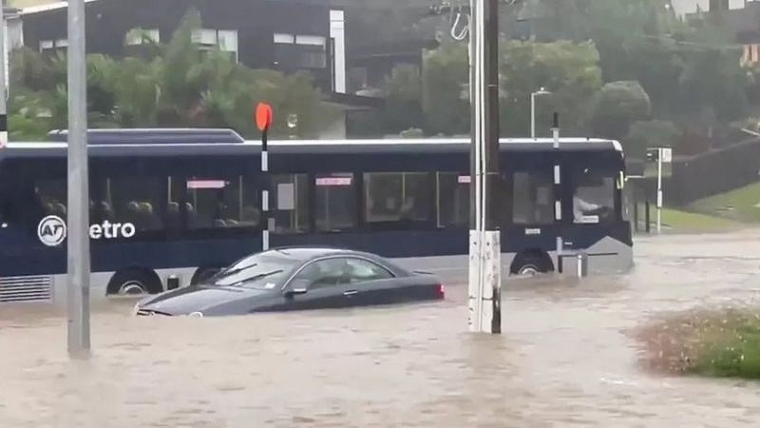
New Zealand has experienced extreme weather events in recent years, with the costs of the Auckland Anniversary floods and Cyclone Gabrielle in 2023 coming to $3.8 billion in insurance payouts alone so far.
In comments made by the leaders of these four insurance lobby groups in the letter, ABI Director General Hannah Gurga commented that the UK had “led the way” with the creation of Flood Re.
She said Flood Re had helped keep insurance accessible for “hundreds of thousands of homes” in the UK.
“Our changing climate represents a real and growing threat to our resilience as a nation and globally,” Gurga said.
'Each country has its own factors to consider'
A Flood Re-like scheme for NZ was floated back in 2022 with the then EQC Minister David Clark in the previous Labour Government keen to get a similar scheme to the UK’s over the line.
The ICNZ was against the idea in 2022 and called it a “grossly disproportionate response” in its submission to the Labour Government’s National Adaptation Plan.
Interest.co.nz asked the ICNZ on Monday if the Insurance Council’s position on a flood reinsurance scheme for NZ had changed since 2022 due to the rise in extreme weather and insurance costs that the country had experienced.
An ICNZ spokesperson said each country had its own factors to consider when responding to natural hazards, including the impact on lives, property, disruption to jobs and communities, and cost.
“New Zealand is one of the most vulnerable countries in the world to natural hazards, including earthquakes, flooding and coastal inundation. In the UK, around 2% of homes are in flood-prone locations,” they said.
“In New Zealand, that figure is approximately 20% according to the Climate Change Commission’s National Climate Risk Assessment.”
Asked if ICNZ saw potential benefits in a similar scheme for NZ in high-risk areas, the spokesperson only said that the Insurance Council’s focus continued to be supporting NZ’s “collective effort” to improve resilience at a national level as well as ensuring insurance was affordable and accessible.
“There is a risk that schemes that subsidise the cost of insurance will send the wrong signals and encourage people to live in high-risk areas,” they said.
The ICNZ also confirmed there had been no discussions involving ICNZ about reinsurance options like Flood Re.
“We support the development of a framework that creates a clear, co-ordinated and consistent approach nationally to natural hazards which reduces risk, which the Government is best placed to lead on,” the spokesperson said.
24 Comments
What's the benefits of such a scheme?
If it were set up like the UK one, would it serve to socialise the risk from allowing continued occupation and use of land which simply should not be used?
20% of our housing stock becoming uninsurable is a big deal. I think the answer will involve ensuring the value of any land in a flood prone area will approach zero over time, so if the government wants to offer a managed retreat it's not offering $1m for a house. This will probably require some subsidisation of insurance so people are still able to get fire and earthquake protection for their homes, but the market prices in the flood risk.
Not all flood prone areas are created equal. Flat cities like Christchurch where the flood risk is mostly rain buildup rather than swelling rivers, can have fairly cheap flood mitigations.
The council places floor height controls on new builds far above the 100 year return event level. The street flooding for half a day every couple years isn't that big a deal (improved drainage would lower the amount of time) and aside from maybe the odd unfortunately parked car there is little to no damage. Would be crazy to retreat from such areas.
jackG. In Chch it's usually a combination of heavy rain combined with tidal river back up, although the biggest flood to hit the city was in 1868 when what is now thought to have been a cyclone caused the Waimakariri river to break its banks. CCC was early out of the blocks with the floor level control designations you write of and it's proving a successful approach to flood mitigation and subdivision creation, combined with the excellent work council has done on flood retention basins in river head areas. Yet to be fully tested by a granddaddy event of course; if the Waimak breached its flood banks in the wrong place there'd be a catastrophe.
Yes, I live near (not in) the flockton basin which has had a lot of work done post quake. They seem to be managing flooding quite well.
The Waimak flood protection has had a major upgrade in the last 10 years including secondary stop banks in case of a break out : https://www.ecan.govt.nz/your-region/your-environment/river-and-drain-m…
https://www.stuff.co.nz/nz-news/350446836/family-successfully-challenge…
When they learned earlier this year, through their mortgage broker Aon, that their 2024 premium was going to be an eye-watering $7949, it caused more than a little concern and prompted Phil Dol to take a closer look at how the premium was calculated.
So, in mid-July Dol, who is a project management consultant, contacted the regional council.
Within a day he received an email from the council to say it had looked into the matter and had updated its hazard map for the area.
The update meant Dol’s property and dozens around it no longer appeared within the flood risk area.
Aon contacted NZI, which agreed to give Dol a $991.50 discount for his 2024 policy and a $900 discount for the 2023 policy, (which, as yet, hasn’t been paid).
Aon also agreed to provide a $1442 discount for the family’s custom, meaning their 2024 premium, once GST and other fees were factored in, dropped from $7949 to $4835.
Whatwillhappen. The process you discuss is already underway in flood prone areas. Notably so in eastern Christchurch where values have changed to reflect the increased risk. Sky hasn't fallen.
At least with the UK version: "To avoid the scheme incentivising the building of homes on high flood risk land, houses that were built since 2009 are not covered by the scheme"
The lions share of the moral hazard is maintaining existing property values in flood prone areas. But that's basically what the scheme is for I guess, ensure the great landed homeowner faces zero financial risk.
It sounds like a terrible idea to me. Working Joe subsidising some rich prick's 10 coastal baches.
People have had plenty of notice of global warming, and even now they can sell flood prone property for good coin to a non believer. If they don't believe in global warming and make investment decisions based on that belief, that is their own problem.
Definitely a cruel irony if those that scoff at the idea of global warming are the first to put their hands out to remedy the effects of it.
About a terrible idea as getting Working Joe to pay for some rich prick European furniture makers and aristocrats to plant production forests.
"evidence is lacking or the signal is not present, leading to overall low confidence of an emerging signal for
-
River floods
-
Heavy precipitation and pluvial floods"
https://www.ipcc.ch/report/ar6/wg1/downloads/report/IPCC_AR6_WGI_Chapte…
makechange. Yes. It'd just delay the inevitable retreat from areas that will become untenable with sea level rise.
"In the UK, around 2% of homes are in flood-prone locations,” they said.
“In New Zealand, that figure is approximately 20% according to the Climate Change Commission’s National Climate Risk Assessment.”
Is that stat accurate? Because if it is, then why the hell have we been building so many houses in such inappropriate locations?
Exactly.
Unfortunately, we have Winger wanting to make a fortune flogging off his land speculation lot in the Riverhead Swamplands, for new developments.......what could possibly go wrong here?????
- We need to stop doing stupid in NZ
1- people are suckered into the climate change denial narrative that is peddled by commercial interests that benefit from this denial
2 - Developers don't give a shit so long as they make a buck, and New Zealand is set up in such a way that there is little comeback for duping people into buying in a flood prone bog.
3 - There is an increasing narrative in New Zealand that regulation is bad, Councils and Governments are filled with useless pen pushers and small government is good. This erodes the status, authority and capacity of regulatory agencies to stop housing being built in the wrong locations
4 - A significant amount of coastal property is held by powerful and wealthy people. They do not want their assets to be devalued by acknowledging that they are at risk until they have managed to offload to another sucker. So they oppose any efforts at managed retreat and push for more to be built in inappropriate locations to 1) undermine the risk narrative ("surely this coastal property can't be at risk otherwise someone would stop more stuff being built there") and 2) the more people who own homes in flood risk areas the more likely a state sponsored solution that will bail them out (support for tax payer funded bail out on $4 million Omaha baches is not likely but if the bach bail-out is buried along with thousands of other recently built Riverhead homes bought by FHBs who couldn't afford the Isthmus, it becomes easier to justify)
I'm guessing you haven't tried to insure a house in a hazard exposed zone recently. Premiums have become eye wateringly expensive, cover on at risk houses increasingly hard to get and many such coastal property owners values are declining sharply. Buyers and banks are generally becoming much more savvy as councils increasingly make hazard data available. Uber wealthy types that have leverage over insurers and banks can still bully their way through but they are a tiny minority.
Ag,
1) I think the denial is the cause, not the fact itself. The Sahara was once lush green Land...before industrialisation and after an ice age. I think people don’t want to sleepwalk into a social credit score control system. In the UK the shop checkout’s have face ID cameras, what's that for, you are already there paying, not walking out without paying?
2) see 3
3) we have for many years increasing regulation and larger government and to your point 2, it's still happening. Perhaps smaller government, counter intuitively will provide better regulation.
4) Yeah, cannot disagree with this one.
MH. A big chunk of that 20% was built long ago (eg Sth Dunedin) on land that wouldn't get across the line today.
extract from the NCCRA. "Stage 1 of this NCCRA used projections based on RCP8.5, a high greenhouse gas emissions scenario. This is assumed to be a plausible upper level of risk." Not gone through the report in detail but I thought RCP8.5 was implausible even by the ICC. This begs the 20% into question.
Its here https://environment.govt.nz/assets/Publications/Files/national-climate-…
"...Accounting for this bias indicates RCP8.5 and other ‘business-as-usual scenarios’ consistent with high CO2 forcing from vast future coal combustion are exceptionally unlikely. Therefore, SSP5-RCP8.5 should not be a priority for future scientific research or a benchmark for policy studies."
https://www.sciencedirect.com/science/article/abs/pii/S0360544217314597
Profile - you don't have to believe in climate change. Have you ever considered the effect of CO2 emissions killing off the keystone sea-cleaning shellfish populations? I.e. where the CO2 is absorbed by the ocean and becomes more acidic, so the crustacean's would-be shells don't stand up to the acid baths?
Using tanks with controlled sea water, the researchers observed the shellfish as greater amounts of CO2 were added.... When CO2 reached 1,800 ppmv, mussel shells completely dissolved.
These are worrying findings given the importance of these shellfish for biodiversity and the economy. For the last 30 years, global shellfish production has increased by just under 8% on an annual basis. In 2002, it reached 11.7 million tonnes, corresponding to a commercial value of USD10.5 billion (€7.9 billion). Mussels and oysters also have an important role to play in the environment. They behave as 'ecosystem engineers', governing energy and nutrient flows in coastal waters, and providing habitats to other species. They are also important food sources for birds.
We welcome your comments below. If you are not already registered, please register to comment
Remember we welcome robust, respectful and insightful debate. We don't welcome abusive or defamatory comments and will de-register those repeatedly making such comments. Our current comment policy is here.