
By Alex Tarrant
Taxpayers may be in line for a NZ$337 million hit from the government's backstop agreement with insurer AMI, if the Christchurch-based insurance company is not able to raise new capital by 2015.
Insurer AMI, which is heavily exposed to the Christchurch residential property market, announced on Tuesday the cost of the earthquakes that have hit the city since September last year was likely to be about NZ$531 million above its available reinsurance. It also booked an additional NZ$229 million contingency for costs largely related to the February 22 quake. AMI financial statements showed it had gross outstanding claims from the Christchurch earthquakes of NZ$1.937 billion in total, while it had NZ$1.197 billion in reinsurance receivables.
AMI announced a NZ$705 million loss for the year to June 30, 2011, compared with a profit of NZ$33 million the previous year, chairman Kerry Nolan said. That was not a cash loss, and reflected the expected costs of the earthquakes which hit Christchurch, Nolan said.
Nolan said the company would be in need of the government's capital committment of up to NZ$500 million if it was unable to recapitalise by 2015, although work was progressing on recapitalisation plans, with AMI set to soon go to the market in search of new funding.
That would most likely be through an outside investor taking an equity stake in AMI, which would mean the company would lose its independence as a mutual. AMI had previously said it would like to remain a mutual company if possible, meaning it was fully owned by its policy holders.
Finance Minister Bill English said based on AMI's NZ$705 million loss in the year to June 30, the best current estimate of the likely cost to the government of its support package for the company was NZ$337 million. This would be booked as an impairment in the government's accounts for the year to June 30, set to be released in October.
Quake costs
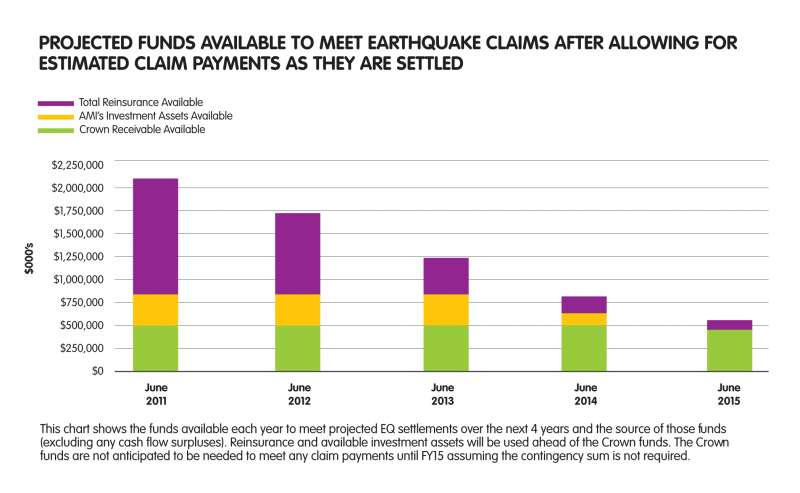
"AMI has NZ$2.3 billion in assets including NZ$1.2 billion of available reinsurance receivable, its own cash and investments and the unpaid NZ$500 million of Crown capital committed to the company by the Government in April," Nolan said in a media release.
"The Government agreed to contribute the capital, if needed, to enable the company to use its own cash and investment assets of some NZ$400 million to help meet earthquake claims," he said.
“AMI continues to trade strongly. We are able to pay all normal day-to-day and earthquake claims as they are settled. We have effectively set aside NZ$760 million, which includes a large contingency, to pay earthquake claims as they are settled over the next few years and have already paid out NZ$80 million,” Nolan said.
He said several potential investors have made approaches since AMI appointed Goldman Sachs to oversee a capital restructuring by attracting a new investor as it seeks new capital.
Set to lose mutual independence
Nolan told interest.co.nz that recapitalisation talks were well advanced, with AMI set to go to the market “in the near future,” looking for an investor to join with an equitable holding in the company, rather than raising cash through a bond issue or borrowing.
However AMI had yet to resolve completely how the capital would be raised. Either way, there would need to be an injection of money from an outside source, Nolan said.
“But it isn’t hard for a mutual to raise capital, it just is a little different from a company limited by shares, because we can’t look to our members. But of course we have effectively raised capital from the government, so it can be done,” Nolan said.
“It’s fair to say it [the new capital] will be through an equitable holding rather than bonds or borrowing because of our solvency requirements under the Reserve Bank,” he said.
“At the end of the day, AMI will be owned wholly or partly, or as a majority or minority, by an outside investor.”
AMI has been New Zealand's largest mutually owned and locally owned general insurer. It has 500,000 policyholders who have effectively been its owners and will see their ownership diluted. AMI has not disclosed who might be potential buyers, but NZX-listed Tower has already expressed an interest and Australia's Suncorp Metway (which owns Vero and most of AA Insurance) and IAG, (which owns State and NZI) are potential buyers, as is the Wesfarmers' owned Lumley and QBE Insurance.
How much would be raised was up to the investors being talked to, which included both local and international investors, with some in the insurance business.
“We want to get the best price and it depends on what the investors are prepared to offer,” Nolan said.
'Might split into good and bad'
Capital raised by any recapitalisation would be used to help cover the earthquake liabilities, regardless of whether AMI separated its business into a good part and bad part, which was a likely scenario.
“If we want to maximise the price, of course what the purchaser wants is certainty. Because there is, even now, no real certainty as to the magnitude of the earthquake liability, one of the options is to separate the earthquake [part] out, and offer to the market the business as usual, as it were, part of AMI Insurance,” Nolan said.
If that were the way forward, then the capital introduced to AMI would flow back to the earthquake part, or ‘bad book’ of the company.
That would mean the government’s backstop would be called upon if the amount of new capital was not enough to cover that part of the business.
However, there were other variables, such as the NZ$229 million contingency for the February quake, Nolan said.
“I’d rather not be too specific about AMI because it may not happen this way, but you could have an insurance company in this sort of position, or with large debts, which formed a subsidiary, sold the good assets, whatever they happened to be to the subsidiary, and took a debt back, so that as new capital flows into the subsidiary it is then paid back to the parent.”
Nolan said he could give an “absolutely unequivocal guarantee” that any new capital would be used to help cover costs from the earthquakes.
“One of the reasons is that the capital raised needs the consent of the Crown, and if that were not to happen, the Crown simply wouldn’t consent. So there is absolutely no doubt that all new capital will assist with the reconstruction of Christchurch,” he said.
There were other options than splitting the company two, with AMI to a degree in the hands of the successful investor, and the government.
(Updates following interview with AMI Chairman Kerry Nolan)
See the release from AMI below:
AMI Insurance says the cost of claims resulting from the Canterbury earthquakes, over and above the company’s available reinsurance, is likely to be about $531 million, in line with earlier estimates.
Announcing its results for the year to June 30, 2011, AMI says it is also providing an additional $229 million risk margin (contingency sum). Almost all of the costs relate to the February, 2011 earthquake.
The calculations of the likely cost of claims and a prudent contingency sum have been provided by an international actuarial consultancy commissioned by AMI. They take into account the recent upward revision by the Earthquake Commission of the number of house claims they expect to receive over their maximum level of cover.
“These calculations are the best estimates available, but it will be the middle of next year before the company has reliable projections based on resolution of claims to that point,” says AMI Chairman Kerry Nolan.
The calculations of net earthquake claims and the recommended contingency sum have been included in the company’s annual accounts to June 30, 2011, resulting in an after-tax loss of $705 million.
AMI has $2.3 billion in assets including $1.2 billion of available reinsurance receivable, its own cash and investments and the unpaid $500 million of Crown capital committed to the company by the Government in April. The Government agreed to contribute the capital, if needed, to enable the company to use its own cash and investment assets of some $400 million to help meet earthquake claims.
“AMI continues to trade strongly. We are able to pay all normal day-to-day and earthquake claims as they are settled,” says Mr Nolan. “We have effectively set aside $760 million, which includes a large contingency, to pay earthquake claims as they are settled over the next few years and have already paid out $80 million.”
ANNUAL RESULTS
Announcing AMI’s annual result for the year ended June 30, 2011 Mr Nolan says the company would have made a record profit but for the impact of various earthquake-related costs during the year, and the need to make provision for the future payment of earthquake claims.
Instead, AMI has recorded an after-tax loss of $705 million compared with an after-tax profit of $33 million in the previous year.
Gross written premium income of $362 million for the year compares with $341 million in the previous year.
“Almost all of the loss has been caused by claims related to the February earthquake, rated as a one in 2500 year event. This was the most damaging disaster in New Zealand’s history and, I believe, the most expensive insurance situation to occur in any country relative to GDP.
“In making provision in the accounts to June 30, 2011 for future claims, we believe we have allowed for worst-case scenarios and added an appropriate contingency sum, but only time will tell what the final figures will be.”
Mr Nolan says AMI is confident about its trading situation and expects to show a trading profit in the current financial year.
“In the meantime we are strongly focused on continuing to run a major New Zealand insurance company providing secure cover for almost 500,000 New Zealanders, and we are able to meet all valid claims.”
PAYMENT OF EARTHQUAKE-RELATED CLAIMS
Mr Nolan says finalising earthquake related claims is a very complicated and time-consuming process, as policyholders have a variety of options. These depend not only on the terms of their policies, but also on Government decisions being progressively announced for each “land zone” and the need for AMI to work closely with the Earthquake Commission, Local Authorities, the Canterbury Earthquake Recovery Authority and the Government.
“Some properties have had to be assessed more than once, having been damaged in successive earthquakes. In many cases repairs have been deferred until there is more confidence that seismic activity has ceased. There is still considerable uncertainty in Canterbury.
“We estimate just over one-third of claims will be paid out in the coming year, a similar amount in the June 30, 2013 year and about 20 per cent in the following year. I emphasise that all claims will be paid as they are settled.”
AMI has recruited nearly 200 people to join its dedicated Earthquake Recovery Team which is helping customers with their earthquake related claims. AMI has also engaged Arrow International to help expedite assessments of more than 7000 houses and project manage their repair or rebuild.
IMPACT OF EARTHQUAKES ON COMPANY
Mr Nolan says the growing impact of the earthquakes on the company’s resources will be felt in both the current financial year and the following two years year as the payout of claims gathers pace and the company begins to supplement the available re-insurance with its own investment assets in the year ending June 30, 2013.
“For the September 2010 earthquake claims will slightly exceed the $600 million of reinsurance available for that event. Claims related to the February earthquake are expected to exceed the $600 million of re-insurance available by a very considerable margin. Immediately after the February earthquake, the company purchased extra reinsurance of $1 billion. This meant that claims relating to the June earthquake will be very comfortably covered by our reinsurance.
“We will have more accurate projections by mid 2012, when most assessments will have been completed and enough rebuilds will be in progress to give a reality check on previous estimates of project management costs and inflation in labour and building product costs.”
RECAPITALISING THE COMPANY
AMI has established a Board Committee to oversee the capital restructuring of AMI by attracting a new investor and has appointed Goldman Sachs as advisers to help raise new capital.
“Several potential investors have already made approaches and the Board looks forward to a successful outcome. A process will be adopted which ensures that AMI’s ongoing business is ring fenced from its earthquake liabilities.
“We are grateful for the ‘Backstop’ Agreement, announced in April, for the Government to contribute $500 million in capital if needed,” said Mr Nolan. “Their strong support as we work through the process of recapitalising the company has been invaluable and is contributing greatly to the orderly resolution of the Canterbury earthquake claims.
“The Crown has already been issued with convertible preference shares in AMI enabling the company to draw down the $500 million when it is needed. The recapitalisation process the company is undertaking is expected to resolve a requirement in the Crown Support Deed for the company to have a minimum level of capital.
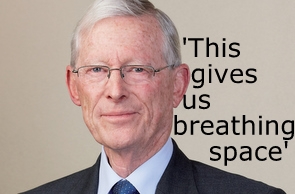
“This Agreement gives us breathing space to seek new capital in a manner that maximises the value of the company. We are very hopeful we will be able to conclude an acceptable transaction.”
OUTLOOK
AMI believes the prospects of recapitalising the company and strengthening its balance sheet, by attracting a new investor, are positive.
In the uncertainty following the earthquakes the company says it has maintained customer numbers, and is continuing to win new business. While insurance premiums are increasing as a result of the increased cost of reinsurance, customers understand that this is inevitable due to recent catastrophic events around the world including the Canterbury earthquakes, Japan’s tsunami, Australian floods and tornadoes in the United States.
AMI has reinsurance in the current year of up to $ 1.4 billion for any major event in New Zealand.
AMI is a major insurer of homes in Canterbury, where the company originally began business in 1926.
AMI is the largest wholly New Zealand owned fire and general and personal lines insurance company. It has a current financial strength rating of A – (Excellent) from international rating agency A.M. Best Company.
The company has 73 branches, two contact centres and 21 agencies throughout New Zealand (the largest network of any insurance company), nearly 1000 staff, and around 500,000 New Zealand customers holding 1.2 million policies.
ENDS
Issued on Tuesday, September 20 by AMI Insurance.
Further information, including the Annual Report and Year in Review, is available on www.ami.co.nz ( http://www.ami.co.nz/annual-report-2011/ ).
Here is the statement from Finance Minister Bill English:
The Government is standing behind its support agreement for AMI Insurance policyholders, as Treasury continues to work closely with the company on recapitalisation options, Finance Minister Bill English says.
Commenting on AMI’s annual results announced this morning, he says the Government has not been called on to pay any money under the support agreement.
“AMI is using its own capital reserves and reinsurance to pay claims from the Canterbury earthquakes as they come due,” Mr English says.
“When we put the AMI policyholder support agreement in place back in April, AMI started a programme to raise fresh capital.
“The Treasury has been working closely with the AMI board on securing new private capital for the company.”
In April, the Government announced a backup financial support package to give AMI policyholders certainty and to ensure an orderly rebuild of Christchurch in the aftermath of devastating earthquakes in September and February.
The support package will be called on only as a last resort if AMI’s own reserves have been exhausted – unless the Government believes it is in the public interest to take control sooner.
If called on, the package would involve the Government investing up to $500 million of equity in AMI, with the right to take ownership and assume control of the company if needed.
The ultimate cost to the Government will depend on the final cost of AMI’s claims, which remain uncertain, and the outcome of AMI’s recapitalisation process, which is still underway.
However, based on the $705 million annual loss reported by AMI today, the best current estimate of the likely cost of the Government’s support package is $337 million.
This will be reflected as an impairment for that amount in the Government’s annual accounts for the year to 30 June, to be published next month.
“AMI Insurance has set aside a large amount of money in anticipation of future claims from the Canterbury earthquakes, which is the prudent thing to do,” Mr English says. “In addition, reinsurers continue to support AMI, with $1.4 billion of reinsurance in place to cover any further disasters in the 2011/12 year.
“The company’s underlying business and earnings - without the impact of the earthquakes and the need to provision for them - remain strong.”
We welcome your comments below. If you are not already registered, please register to comment
Remember we welcome robust, respectful and insightful debate. We don't welcome abusive or defamatory comments and will de-register those repeatedly making such comments. Our current comment policy is here.