
By Bernard Hickey
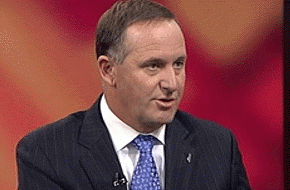
Prime Minister John Key has signalled reforms to Local Government legislation designed to restrict development contributions have been put on hold until after the September 20 election.
Key told his weekly post-cabinet news conference the Government no longer had the numbers or the time to get its Local Government Act 2002 Amendment Bill No 3 (2013) through a third reading and passed into law.
The bill is designed to limit the ability for councils to charge development contributions for infrastructure not directly limited to residential development and to give developers a right of appeal. It had already passed its second reading and only needed one more reading to pass into law before Parliament rises for the election campaign on July 31. There are nine sitting days left.
Key was asked about reports showing a deterioration in housing affordability in recent months as interest rates rose.
Key said the Government was focused on boosting housing supply and had already had to park its proposed reforms to the Resource Management Act (RMA) after opposition from Labour, the Greens, Peter Dunne and the Maori Party. National was also forced to park employment law reform after the loss of John Banks earlier this month.
"There's more we'd like to do, but we currently can't get the support of other parties for the RMA reforms which would help in that area," Key said.
"We've also got some issues in terms of getting through the Local Government legislation in the short term for Parliament breaks up that would help in terms of development contributions," he said.
"I don't think that legislation is going to pass before the election. It's a combination of time and support. It's one of those ones that is locked at 60 all," he said.
Local Government Association Minister Peseta Sam Lotu-liga told Interest.co.nz the Maori Party opposed the changes and the loss of Banks had made the vote too tight. He said it was unlikely to pass before the election.
NZ dollar a 'fickle beast'
Meanwhile, Key was asked if the rise in the New Zealand dollar to a post-float TWI high on Friday threatened the Government's strategy of lifting exports and the economy.
Key said exporters should be congratulated for dealing with the high New Zealand dollar, which has remained elevated despite a 20-30% fall in dairy and log prices this year.
"Generally speaking when you see commodity prices coming back, generally that's reflected in movements in the exchange rate over time," Key said.
"I accept there's a bit of a lag with these things, but I suspect if commodity prices continue to come back you'll see a reduction in the Kiwi/US rate," he said, agreeing he expected it to fall.
Key said the New Zealand dollar had also risen and fallen in line with interest rates in the past, but not always.
"It's a fickle beast," he said.
We welcome your comments below. If you are not already registered, please register to comment
Remember we welcome robust, respectful and insightful debate. We don't welcome abusive or defamatory comments and will de-register those repeatedly making such comments. Our current comment policy is here.