
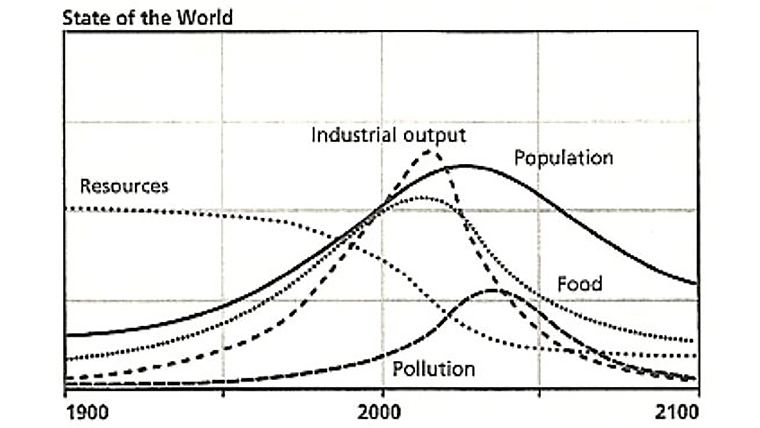
This Top 10 comes from regular commenter powerdownkiwi, aka Murray Grimwood.
As always, we welcome your additions in the comments below or via email to david.chaston@interest.co.nz. And if you're interested in contributing the occasional Top 5 or Top 10 yourself, contact gareth.vaughan@interest.co.nz.
Ten years ago I joined the Interest.co.nz discussion. There was much denigration of my message – there still is a little – but the conversation slowly shifted.
Then Covid hit; the skies were empty, the highways deserted.
To the backbeat of Trump, Brexit and ever-increasing debt, a pianissimo passage had caught the rock-n-rollers by surprise. The confident were confused, the decisive dithered, but most importantly, the narrative rapidly shifted.
The direction is clearly onward from the Chicago School/Neoliberal/Classic Economics chapter; just what is to be written overleaf is as yet unclear. We are in for an interesting year, with across-the-board legislation up either for writing or for re-writing.
Hopefully by the end of the process energy will command a little more respect, and fiat-issued debt a little less (Although I’ve always understood that fiat issued debt was a little less…..).

1. The myth of green energy
Here’s Charles Hugh Smith, laying out the message in clear terms.
“Again, ‘money’ is nothing but a claim on future energy, because energy is the foundation of the global economy. Without energy, we’re all stranded in the desert and all our ‘money’ is worthless because it can no longer buy what we need to live.”
“Central banks can print infinite amounts of currency but they can’t print energy”
And he finishes with: “The monumental asymmetry between the staggering rate of expansion of ‘money’ — claims on future energy — and the stagnant supply of energy means this illusion is only temporary.”
Quite.
2. After a Trumpian detour ...
Kunstler was one of my favourite wordsmiths, his high-water-mark being ‘Living in the Long Emergency’; still worth the read today. Recently his blog degenerated into minor US political witch-hunts, but post-Trump he’s showing glimmerings of genius again:
“The defense rests!” the Queen of Hearts screeched. “Mr. Pooh, you have led a life of disgusting racism, colonialism, hate-ism, white supremacy, and depravity. I am directing the jury to find you guilty as charged and sentence you to be cancelled.”

3. Did you hear the one ...
Tom Murphy did something like this on his dothemath site some years ago. Here it is done with humour; but the message is identical. This is the direction that ‘overall narrative’ is moving in:
ECONOMISTS: You really do underestimate the human capacity to adapt, don't you? And they say ours is the dismal science! Anyway, we're not totally agreed on the level of warming. It depends on the discount rate
ECOLOGISTS: Hmm--discount rates. The idea that the present is more valuable than the future. We always wondered why you took that view. Surely, we want our children to have lives at least as good as ours…don't you think the economy should also somehow reflect our values? Seems like it does the opposite…
ECONOMISTS: Sorry, values, what? You've lost us…
4. A spinoff from the old ‘The Oil Drum’ site (now archived) was Gail the Actuary.
Like Nicole Foss (once interviewed by Interest.co.nz and an old Oil Drummer too) she saw energy from a different angle:
It is clear to many people that the world economy is now struggling. There is too much debt; young people are having trouble finding jobs that pay well enough; people in poor countries are increasingly more food insecure. Leaders everywhere would like solutions. The “easy” solution to offer is that intermittent wind and solar will solve all our problems, including climate change. The closer a person looks at the situation, this solution is simply nonsense. Wind and solar work passably well at small concentrations within electric systems, if it is possible to work around their pricing problems. But they don’t scale up well. Energy researchers especially should be aware of these difficulties.
5. And the message is just getting more mainstream by the day:
in both Neoclassical and Post-Keynesian models, output (the quantity of goods or services produced in a specific time period) is a function of capital and labour. But this ignores the energy needed to feed the worker, to power the machine – in other words it ignores the very Laws of Thermodynamics.
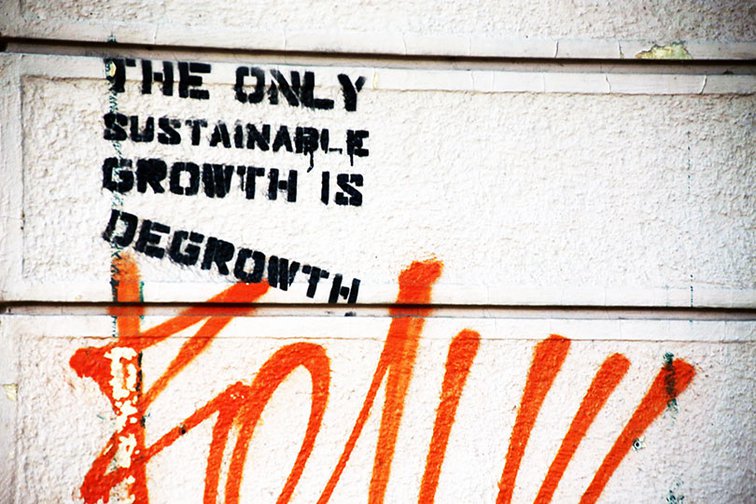
6. De-growth urgently required
If growth is an impossibility but you only discuss that possibility in a Wile-E-Coyote moment (when you are overshot, in other words) then logic suggests de-growth is required. Urgently.
This one is academic level-wise, dense word-wise, but essential reading for anyone involved in – or teaching – governance.
7. Limits to Growth updated
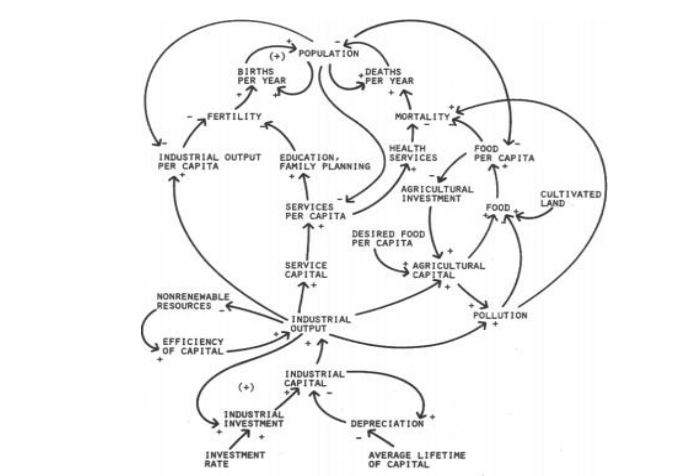
The last academic appraisal of the Limits to Growth (outside of the 10-year updates) was in 2014. It essentially validated the ‘Standard Run’. We have a newer Master’s Thesis (Harvard), which finds that other ‘runs’ might fit just as well, but end the same if we continue pursuing our present trajectory. For every one Thesis into the Limits to Growth, of course, there are 10,000 back-casting growth-to-date and projecting it into the stratosphere…..
8. A Wall Street high-flyer's epiphany
Still academic, but an easy read and lighter on the cranium, is yet-another reminder of the old Oil Drum days, Nate Hagens. He “holds a Masters Degree in Finance with Honors from the University of Chicago and a PhD in Natural Resources from the University of Vermont. Previously Nate was President of Sanctuary Asset Management and a Vice President at the investment firms Salomon Brothers and Lehman Brothers.” But somewhere back there, this Wall Street high-flyer had an epiphany. And ended up peddling the same story you get hereabouts from PDK.
Here's Hagens:
A bunch of mildly clever, highly social apes broke into a cookie jar of fossil energy and have been throwing a party for the past 150 years. The conditions at the party are incompatible with the biophysical realities of the planet. The party is about over and when morning comes, radical changes to our way of living will be imposed. Some of the apes must sober up (before morning) and create a plan that the rest of the party-goers will agree to. But mildly clever, highly social apes neither easily nor voluntarily make radical changes to their ways of living. And so coffee and stimulants (credit, etc.) will be consumed during another lavish breakfast, but with the shades drawn. It’s morning already.
9. A couple for music lovers (well, life shouldn’t all be serious, should it?)
Sometimes you come across cross-genre musicians. Sometimes it’s like Linda Ronstadt, travelling from Rock to near-classical; sometimes it’s like Kiri going the other way. This one is at the edge of my comfort-zone, but has to be hat-tipped for professionalism. The song is constructed for live performance (tempo-changes, a soft stretch, a build, a crowd-pull, hooks) and is worth admiring alone, but the voice! Clearly trained, clever breathing, amazing range, every attack absolutely nailed:
10. Ending on a quiter, but high note
For those who like it a little quieter, here’s an Alan Parson Project song (from Eye in the Sky, 1982) originally sung by Colin Blunstone, later by Eric Woolfson. It’s not often an apartment-recorded cover knocks the original out of the park:
We welcome your comments below. If you are not already registered, please register to comment
Remember we welcome robust, respectful and insightful debate. We don't welcome abusive or defamatory comments and will de-register those repeatedly making such comments. Our current comment policy is here.