

Here's my Top 10 links from around the Internet at 1 pm in association with NZ Mint.
I welcome your additions in the comments below or via email tobernard.hickey@interest.co.nz.
I'll pop the extras into the comment stream. See all previous Top 10s here.
It's great to be back...just in time for the sun to arrive.

1. Keep an eye on China - Bloomberg says China is expected to report on Wednesday its slowest economic growth rate for 10 quarters.
There have been mumblings in the last couple of weeks that China may be about to ease its monetary and fiscal policy.
That has helped boost US stocks and helped lift our currency.
China matters more to New Zealand than Europe.
It now drives our economic future directly through our exports to China and indirectly through our exports to Australia.
The Euro zone now buys less than 10% of our exports.
Here's Bloomberg:
“The worst is yet to come and more easing measures will be in the pipeline in coming months,” said Zhang Zhiwei, Hong Kong-based chief China economist at Nomura Holdings Inc., who previously worked at the IMF. “Increasing downside risks in China will hurt the outlook for other economies especially commodities exporters such as Australia and Brazil.”
Growth may “trough” at 7.5 percent in the three months through March and 7.6 percent in the second quarter, Zhang said. That may prompt the central bank to “front-load” policy easing into the first half, with one interest-rate cut in March and three reductions to banks’ reserve requirement ratios, he said.

2. A political transition - There's so much noise around the Republican nomination in America that we're all forgetting about a much more important political transition in China, where the top two bosses, Hu Jintao and Wen Jiabao, hand over to their successors from October.
Here's the SMH with a nice backgrounder:
Most observers expect that October will see Vice-President Xi Jing Ping elevated to replace President Hu Jintao, with Prime Minister Wen Jiabao replaced by Vice-Premier Li Keqiang.
''The new guys will have to spend a couple of years getting their feet under the desk, paying due homage to their predecessors and building their own credentials in the party, in the government, with the military and among the population at large,'' said Clinton Dines, head of the Asia-focused investment fund Caledonia.

3. System D - Robert Capps at Wired has a useful interview with journalist Robert Neuwith about his book on the growth of the black economy globally where taxes are unpaid and things are done with cash.
It has grown sharply in the last year and employs half the world's people.

4. Great name for a right winger - Reuters' Kristina Than reports from Hungary about the growth of far right protests against the Euro zone's demands for austerity.
Many supporters of nationalist Jobbik believe the government should not bow to international pressure.
"Since we joined the EU we have not seen any advantages from that, Hungary should go its own way and keep its national sovereignty," Attila Gyalog, 24, said at the rally.
5. The lost decade fallacy - Japan based journalist Eammon Fingleton has written a usefully counter intuitive piece in the New York Times challenging the view that Japan's economy has stagnated for a couple of decades.
It's worth reading just to have your views challenged.
As longtime Japan watchers like Ivan P. Hall and Clyde V. Prestowitz Jr. point out, the fallacy of the “lost decades” story is apparent to American visitors the moment they set foot in the country. Typically starting their journeys at such potent symbols of American infrastructural decay as Kennedy or Dulles airports, they land at Japanese airports that have been extensively expanded and modernized in recent years.
William J. Holstein, a prominent Japan watcher since the early 1980s, recently visited the country for the first time in some years. “There’s a dramatic gap between what one reads in the United States and what one sees on the ground in Japan,” he said. “The Japanese are dressed better than Americans. They have the latest cars, including Porsches, Audis, Mercedes-Benzes and all the finest models. I have never seen so many spoiled pets. And the physical infrastructure of the country keeps improving and evolving.”

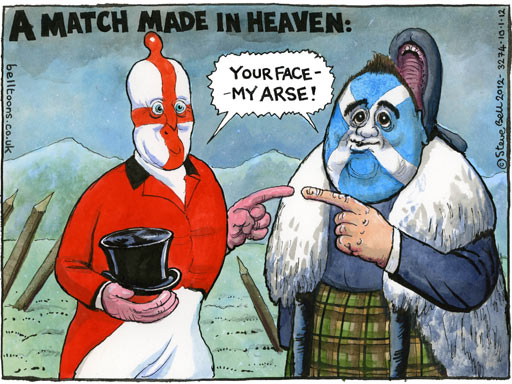
6. No wonder the Scots are grumpy - One of the stories that has emerged from left field over the summer break is the one about Scotland's push for independence.
This piece in The Independent detailing how an explosive piece of research written in 1975 showing how Scotland would have benefited if it had access to Britain's North Sea oil explains why they are a bit grumpy with the English at the moment.
In 1975, the Government faced a dilemma: how to exploit the potential of its new oil fields without fuelling demands for Scottish independence. So it buried the evidence.
It was a document that could have changed the course of Scottish history. Nineteen pages long, Written in an elegant, understated academic hand by the leading Scottish economist Gavin McCrone, presented to the Cabinet office in April 1975 and subsequently buried in a Westminster vault for thirty years.
It revealed how North Sea oil could have made an independent Scotland as prosperous as Switzerland.
7. Too good to be true - The Economist writes here about about a new book on hedge fund performance showing hedge funds lost more money in 2008 than all the money they made in the previous 10 years.
The book by Simon Lack, The Hedge Fund miracle: The Illusion of Big Money and why it's too good to be true, also shows hedge fund clients only made 2.1% per year since 1998, less than half the returns from Treasury Bills.
Even if you allow for the rebound in markets (and hedge-fund returns) in 2009 and 2010, investors have still got the short end of the stick. They have yet to recover the losses suffered in 2008. But hedge-fund managers took home almost $100 billion in fees between 2008 and 2010 (and an aggregate haul of $379 billion between 1998 and 2010).
Mr Lack’s book suggests the blind faith displayed by many institutional investors in hedge funds needs to be reconsidered. Individual managers may be brilliant but it is hard to spot them in advance.
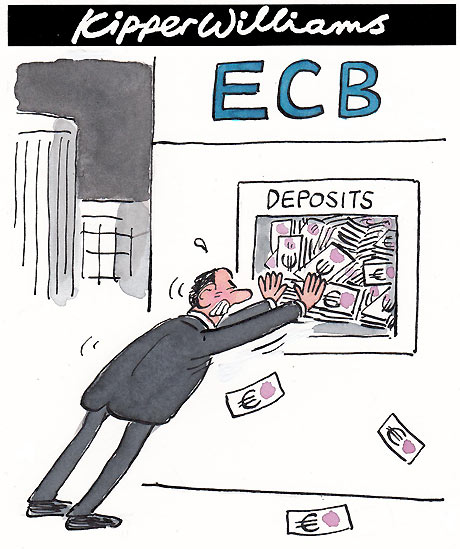
8. What a credit crunch looks like - Bloomberg reports on problems some suppliers of Airbus parts are having getting working capital.
GKN Plc (GKN) said some of its suppliers are struggling to secure the financing needed to step up production of components for planes includingAirbus SAS (EAD)’s delayed A350 model as bank credit for new equipment dries up.
While GKN’s own ramp-up plans are on track, with a second set of A350 wing spars and trailing edges due to be delivered this month, the limited access to capital of its suppliers is of some concern, according to aerospace unit chief Marcus Bryson. “If you talk to some of the supply chain they do find it difficult in the current climate to get access to finance from the banks,” Bryson said in an interview in London.
9. Good time to be a beef farmer - Bloomberg reports on cattle futures prices hitting record highs because of shortages of supplies in America, drought in Brazil and strong demand from emerging markets.
10. Totally Jon Stewart on the Republican Primaries. Newt Gingrich gets it in the neck.
We welcome your comments below. If you are not already registered, please register to comment
Remember we welcome robust, respectful and insightful debate. We don't welcome abusive or defamatory comments and will de-register those repeatedly making such comments. Our current comment policy is here.