

Here's my Top 10 links from around the Internet at 11.30 am today in association with NZ Mint.
As always, we welcome your additions in the comments below or via email tobernard.hickey@interest.co.nz.
See all previous Top 10s here.
My must read today is #5. It got me thinking about the size of my cups and spoons.

1. From worst to least worst - A survey by a grass roots group of home and business owners in Christchurch has found which insurers they rate the worst and the least worst.
It's good to see people on the ground getting together to lobby and pressure both government and insurers in the interests of home owners. The group is called Insurancewatch.org and they have their own website here.
The delays, the obfuscation and the confusion are obviously holding up the rebuild in Christchurch.
It's also interesting to see some of the detail in the comments with the survey.
There's an awful lot of frustration and anger building in Canterbury.
Here's a sample:
"We feel that we are at war with our insurer and EQC. Originally we were patient and had some faith in the system. We knew it was an unprecedented event/s and were not demanding at all. Now we feel we are being completely dicked around," said one frustrated Tower respondent.
"We are incredibly disheartened living in a house that we don't know how or when may be rebuilt or repaired and paying insurance to a company who are incompetent and lazy and have made no effort at any stage to make contact with us, and progress forward," said an AA-Vero-SIS customer.
Other AA-Vero-SIS customers had more visceral responses: "When I see our insurer's advertisements promising fair and prompt settlement, and a commitment to excellence I am overcome by bouts of nausea." "There are so many people not doing their job that I don't even know who to punch."

2. The hubris is unbroken - The Telegraph reports the British banking establishment seems non-plussed by the extraordinarily damaging allegations that Standard Chartered laundered US$250 billion for Iran.
Sure, the CEO returned early from holiday and StanChart put out a statement defending itself. But that killer quote ("You f------- Americans. Who are you to tell us, the rest of the world, that we’re not going to deal with Iranians") has been confirmed as coming from the Group CFO.
But here's what one fund manager was really thinking. It betrays that they really don't get it:
One top institutional investor said: “This is just a tiny regulator grabbing the headlines. But these days, politics can be very dangerous.” He added: “People are terrified in this situation because the scale of the fine, the losses, the loss of licence is so unknown and could even lead to the chief executive having to go, or whatever else. There is a lot of fear.”
Analysts estimated that losing the ability to clear transactions through the US could wipe as much as 40pc off the group’s earnings. Others forecast that the bank could face a $1.5bn fine plus losses of around $1bn from its Iranian business and a further $3bn of losses if senior managers were forced to quit.
It emerged that Richard Meddings, Standard Chartered’s finance director, was the “Group Executive Director” accused of showing “obvious contempt for US banking regulations”. The US regulator’s order alleges that Mr Meddings’ response to warnings about the bank’s Iranian operations was: “You f------- Americans. Who are you to tell us, the rest of the world, that we’re not going to deal with Iranians.”
3. 'That's not fair' - Standard Chartered shares fell 16% last night after it was accused by New York's financial regulator of laundering US$250 billion for Iran.
Standard Chartered has denied the allegations in an angry statement saying the regulator wasn't being fair. It said it had complied in almost every transaction...
The Group does not believe the order issued by the DFS presents a full and accurate picture of the facts. The analysis, that the Group shared with all the US agencies, demonstrates that throughout the period the Group acted to comply, and overwhelmingly did comply, with US sanctions and the regulations relating to U-turn payments. As we have disclosed to the authorities, well over 99.9% of the transactions relating to Iran complied with the U-turn regulations. The total value of transactions which did not follow the U-turn was under $14m.
The Group believes that the interpretation reflected in the DFS’ order, of the U-Turn exemption — a federal regulation administered and enforced by federal authorities — is incorrect as a matter of law. The Group’s review of its Iranian payments also did not identify a single payment on behalf of any party that was designated at the time by the US Government as a terrorist entity or organization.
4. If only they knew - A survey of financial advisers and brokers by the Chartered Institute for Securities and Investment in Britain found two thirds had little or no trust in the British banking industry in the wake of the Royal Bank of Scotland, Barclays and HSBC scandals, not the mention all the rogue trading and market collapses in the City of London. 25% had zero confidence in banks.
Arguing that the banking sector has been “corrupted” by the need for annual profit growth at all costs, one respondent commented: “Enforced integrity and complete transparency is the only solution.”
Another said: “The scandals and greed never stop. We need to see a clean financial services sector with no more FSA fines for the next five years to rebuild trust. Only personal fines for directors and prison for perpetrators can change the fat-cat culture.”
“An embarrassment to all of those who call ourselves bankers,” was a further viewpoint.
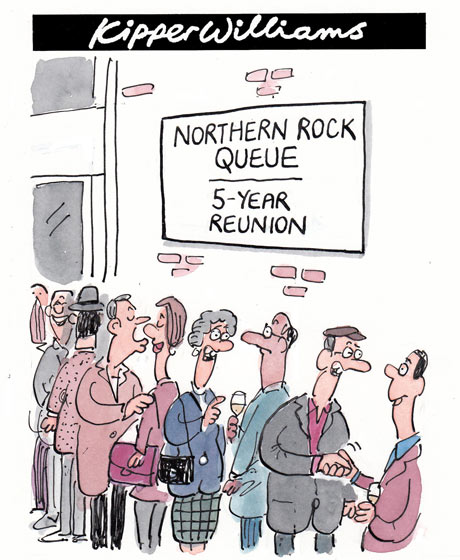
5. Default bias - James Suroweicki writes at the New Yorker about how Mayor Michael Bloomberg's ban on mega-sized cups of sugary fizzy drink (which Americans call soda) might actually work. He points to some fascinating research on default bias.
Bloomberg’s proposal makes clever use of what economists call “default bias.” If you offer a choice in which one option is seen as a default, most people go for that default option. People who are automatically enrolled in a retirement plan, for instance, are more likely to stay with their original plan than those who choose plans for themselves. In countries where people have to choose to be an organ donor, most people aren’t donors; in countries where people have to actively say they don’t want to be an organ donor, most are donors. The soda ban makes sixteen ounces or less the default option for soda drinkers; if they want more, they’ll have to make an extra effort.
An executive at the American Beverage Association has dismissed the plan, saying that “150 years of research finds that people consume what they want.” Actually, the research shows that what people “want” has a lot to do with how choices are framed. In one well-known study, researchers put a bowl of M&M’s on the concierge desk of an apartment building, with a scoop attached and a sign below that said “Eat Your Fill.” On alternating days, the experimenters changed the size of the scoop—from a tablespoon to a quarter-cup scoop, which was four times as big. If people really ate just “what they want,” the amount they ate should have remained roughly the same.
But scoop size turned out to matter a lot: people consumed much more when the scoop was big. This suggests that most of us don’t have a fixed idea of how much we want; instead, we look to outside cues—like the size of a package or cup—to instruct us. And since the nineteen-seventies the portion sizes offered by food companies and restaurants have grown significantly larger. In 1974, the biggest drink McDonald’s offered was twenty-one ounces. Today, that’s roughly the size of a “small” drink at Burger King. In effect, the scoops have got bigger, and consumption has risen accordingly.
6. Silver probe may be dropped - FT.com reports a four year investigation into possible manipulation in the silver market looks like it will be dropped.
After taking advice from two external consultancies, the first of which found irregularities on certain trading dates that it believed deserved more analysis, CFTC staff do not have sufficient evidence to bring a case, according to the people familiar with the situation. Ending the probe would infuriate some US silver investors, who claim that a group of large investment banks – in particular, JPMorgan – has conspired to drive the price of silver lower.
7. Preparing for Eurozone breakup - FT.com reports Wall St banks are telling counterparties and borrowers to rewrite contracts and use other banks as they prepare for a Eurozone breakup. Reading between the lines, it's clear any eurozone breakup would be immensely disruptive to the global financial system and trade credit system.
Using hedges, such as credit default swaps, US banks have reduced their net exposure to troubled eurozone countries. But they are also engaged in more work behind the scenes to ensure that if a country leaves the eurozone they will not have to receive payments in a devalued drachma or peseta.
One senior Wall Street executive said his bank was approaching derivatives counterparties to say: “‘We’ve got this contract, it’s in euros, what I want to know is in the event that Spain were to be redenominated are we going to end up being adversaries on this or can we just agree that this is a euro contact? Let’s just move it to London law so we each agree that we know where we stand. If they don’t … when that contract matures there’s not going to be any roll-over.”
Most derivatives contracts already use law for English or New York courts which, lawyers and bankers believe, are likely to insist that a counterparty from a country that has left the euro continues to make payments in euros rather than with a devalued new currency.
8. One reason for a higher Australian dollar - Yesterday Reserve Bank of Australia Board Member Warwick McKibbin wrote an excellent opinion piece in the AFR arguing for intervention to bring down the Australian dollar because of the external shock of central bank buying Australian dollar bonds to diversify their reserves away from the Euro, US$ and Japanese yen.
Here's a useful chart showing just how much foreign money has poured into Australian government bonds over the last decade. Australia is the first country on the left.

9. Japan's population and economic death spiral - Here's what happens when people stop having babies and you have a very restrictive immigration policy. Japan's population is rapidly ageing and its economy has been flat to falling for almost two decades. These charts courtesy of Bloomberg tell the story. (HT Zerohedge)
The last sentence below about China's population structure following the Japanese path is sobering. And China also has the one child policy adding to the ugly mix.

Japan’s demographics will also likely have an impact on consumer behavior. Japanese consumers older than 65 are less likely to shop for alcohol, clothing, books and electronics compared with younger consumers, according to a McKinsey survey from 2011. The average senior shops for books and clothing 38 and 35 times per year, respectively, compared with 73 and 58 times for people between the ages of 18 and 34. The only item seniors shop for more frequently than younger consumers is food, McKinsey found.
How Japan faces its demographic challenges over the next several decades may provide important lessons for countries
such as China, which has a rapidly increasing senior population due largely to the one-child policy. People over 65 account for nearly 10 percent of the population in China — similar to Japan in 1985 — up from 6 percent 20 years ago.
Here's the book the interview is based on.
The Colbert Report
Get More: Colbert Report Full Episodes,Political Humor & Satire Blog,Video Archive
We welcome your comments below. If you are not already registered, please register to comment
Remember we welcome robust, respectful and insightful debate. We don't welcome abusive or defamatory comments and will de-register those repeatedly making such comments. Our current comment policy is here.