
By Bernard Hickey
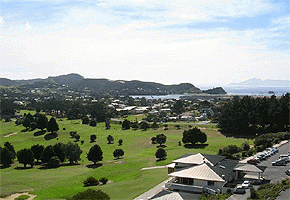
I have fond memories of my holidays in the peaceful and sunny beaches and dunes of Mangawhai.
But Mangawhai is anything but peaceful and sunny right now for the ratepayers there all year round who are now revolting at what they see as the illegal and wasteful activities of their Kaipara District Council.
Like many vistors to Mangawhai who don't own property there, the dramas on the dunes and mudflats of the North seemed a distant and irrelevant affair. They have become more interesting since the appointment of commissioners by the central government two weeks ago. But even then it seemed more of a sideshow involving a wastewater scheme cost blowout that inflated the council's debt to NZ$82.9 million or more than 200% of its revenues. It seemed the usual story of a bunch of councillors and property developers with dollar signs in their eyes who bet the council's future on unending coastal property expansion. It seemed awfully remote.
Until, that is, I saw this startling press release issued by the Kaipara District Council on the same day commissioners were appointed: "Council seeks cheap loans."
"Kaipara District Council will join the Local Government Funding Agency (LGFA) in order to get access to cheaper loans. The decision was made by Council and adopted as part of the 10 year plan signed off on August 29," the statement read.
What? Does this mean I and every other ratepayer in the country is on the hook for Mangawhai's mad debt-driven expansion? Is Mangawhai the Athens to Auckland's Berlin?
Luckily for the rest of us, this isn't the case. Yet.
The LGFA is a centralised body created under legislation passed in 2011 that essentially allows councils to borrow together in a single pool. Councils had previously had to borrow directly from banks or bond markets in relatively small and inconsistent chunks, which meant their borrowing costs were relatively high.
This agency started borrowing in February and has already issued over NZ$1 billion of bonds. It is also allowed to borrow money in foreign currencies and from foreign investors. It has the same AA+ credit rating as the central government and although the central government does not guarantee the debt, investors are essentially betting councils across the nation will always pay up because they have the power to levy rates to pay the interest bill.
It seemed a no brainer from a borrowers' point of view. Councils could reduce their borrowing costs by piggybacking on the stronger financial profiles of the biggest councils, particularly those with growing populations and strong asset bases such as Auckland, Wellington and Christchurch.
But what happens when a council goes beserk with the national council credit card? What's to stop Auckland deciding it needs to borrow up large for a new train tunnel and use the financial strength of the rest of New Zealand's councils to back it?
It all sounds very Euro-zone ish. For years the Portugal, Ireland, Greece and Spain (the PIGS) were able to borrow with low German interest rates. That ended when bond investors worked out not all governments and economies were the same. If Germany had been able to exclude Greece from this joint borrowing club in 2000 it would have done.
In New Zealand the LGFA has been lucky enough not to have all councils in the club from the start. Chief Executive Philip Combes confirmed this week that Kaipara may want to be in the club, but its admittance is no sure thing, particularly given its high debt load.
However, the question remains: how often will the rest of New Zealand have to bail out a council? Or force it to undergo a Greek-style austerity programme?
Luckily the commissioners being installed into the Kaipara District Council won't have to brave molotov cocktails or learn Greek. But they could learn a few lessons from the 'Troika' currently overseeing the Greek austerity programme. One thing they can have in common? Sun and beaches.
-------------------------------------------------------------
This piece was first published in the Herald on Sunday. It is used here with permission.
We welcome your comments below. If you are not already registered, please register to comment
Remember we welcome robust, respectful and insightful debate. We don't welcome abusive or defamatory comments and will de-register those repeatedly making such comments. Our current comment policy is here.