

Here's my Top 10 links from around the Internet at 11 am in association with NZ Mint.
As always, we welcome your additions in the comments below or via email to bernard.hickey@interest.co.nz.
See all previous Top 10s here.
My must read today is #1 from Matt Taibbi on HSBC's failures. It is a head-slappingly good read. Numbers 5,8 and 9 are also crackers.
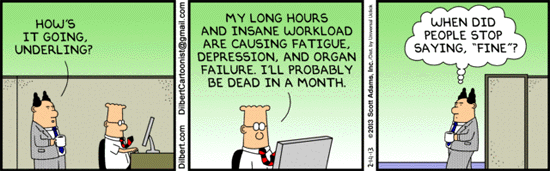
Read it and weep.
Again.
Taibbi has a foam-flecked style which can be disconcerting.
But he always goes fairly deep in his reportage.
Worth reading before you say our global 'too big to fail' banks are now completely beyond reproach and are reformed beasts. If you are an HSBC customer, in particular, you need to read it.
They just got away with it. And now they're 'too big to jail'.
Flooring politicians, lawyers and investigators all over the world, the U.S. Justice Department granted a total walk to executives of the British-based bank HSBC for the largest drug-and-terrorism money-laundering case ever. Yes, they issued a fine – $1.9 billion, or about five weeks' profit – but they didn't extract so much as one dollar or one day in jail from any individual, despite a decade of stupefying abuses.
People may have outrage fatigue about Wall Street, and more stories about billionaire greedheads getting away with more stealing often cease to amaze. But the HSBC case went miles beyond the usual paper-pushing, keypad-punching sort-of crime, committed by geeks in ties, normally associated with Wall Street. In this case, the bank literally got away with murder – well, aiding and abetting it, anyway.
That nobody from the bank went to jail or paid a dollar in individual fines is nothing new in this era of financial crisis. What is different about this settlement is that the Justice Department, for the first time, admitted why it decided to go soft on this particular kind of criminal. It was worried that anything more than a wrist slap for HSBC might undermine the world economy. "Had the U.S. authorities decided to press criminal charges," said Assistant Attorney General Lanny Breuer at a press conference to announce the settlement, "HSBC would almost certainly have lost its banking license in the U.S., the future of the institution would have been under threat and the entire banking system would have been destabilized.
2. The myth of Saudi America - Slate's Raymond T. Pierrehumbert reports on some very detailed rebuttals of the idea (cited in yesterday's Top 10) that America doesn't have an energy shortage anymore because of the discovery of apparently monstrous oil and gas reserves in shale.
The popularity of the abundance narrative waxes and wanes, and its current ascendance comes primarily on the heels of a report by Leonardo Maugeri, a former oil-industry chief and currently a fellow at Harvard's Belfer Center. When his cornucopian fantasy came out, I smelled a rat (or at least a not-too-deeply buried fish). But the International Energy Agency jumped on the bandwagon with breathless, and equally fishy, forecasts of the coming “Saudi America.” Most of the media swallowed the story hook, line, and sinker, with even the usually sober Economist rising to the bait. So what's wrong with this story? Maugeri's problems begin but don't end with an arithmetic blunder so dumb (he compounded a percentage decline incorrectly) it would make even Steve Levitt blush. The geeky geological stuff discussed at the AGU session is more interesting and ultimately more damning.
The geological considerations expose a number of common threads of faulty reasoning that pervade the current crop of starry-eyed projections of endless oil abundance. There are certainly huge amounts of oil locked up in shale formations worldwide. In the United States alone, the Bakken and Eagle Ford shales contain up to 700 billion barrels, and the Green River shale under Colorado, Wyoming, and Utah has a whopping 2 trillion barrels. However, only a tiny fraction of this total is recoverable. For Bakken (in Montana and North Dakota) and Eagle Ford (in Texas), which account for most of the current surge in U.S. oil production, the estimated recoverable fraction ranges from 1 to 2 percent. Though all of these deposits are loosely referred to as “shale oil,” Bakken and Eagle Ford oil is more precisely called “tight oil,” because it is actual, fluid oil that is trapped in the pores of shale, and it can be liberated by fracturing the rock to allow the oil to flow. In contrast, the hydrocarbon in the Green River shale is not really oil at all but a waxy substance that must be cooked at around 500 degrees Celsius to turn it into flowing oil.
The technology for extracting oil from deposits like the Green River shale is far more challenging than what is required to tap into tight oil, and it has never been profitably implemented at any significant scale. There is thus no credible estimate of how much oil can be recovered from the Green River formation. At the high end of the estimates, predicted production from Bakken and Eagle Ford together amounts to perhaps a two-year oil supply for the United States at 2011 consumption rates. That's significant but not a game-changer. Even if it were to prove possible to achieve production rates comparable to those of Saudi Arabia, that would only mean that we would deplete the resource faster and bring on an oil crash sooner.
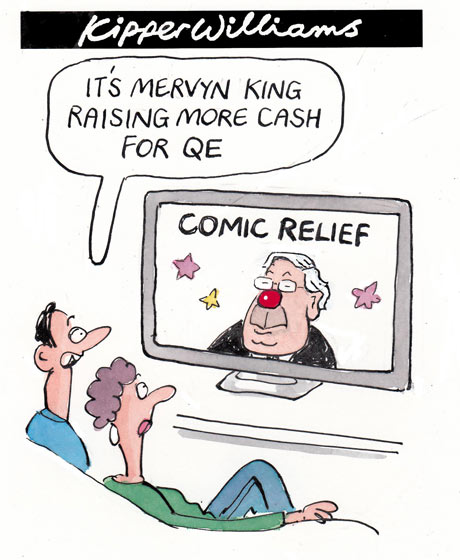
3. 'Raise that Wage' - Paul Krugman argues for a higher minimum wage here at his NYTimes blog.
Economics 101 tells us to be very cautious about attempts to legislate market outcomes. Every textbook — mine included — lays out the unintended consequences that flow from policies like rent controls or agricultural price supports. And even most liberal economists would, I suspect, agree that setting a minimum wage of, say, $20 an hour would create a lot of problems. But that’s not what’s on the table. And there are strong reasons to believe that the kind of minimum wage increase the president is proposing would have overwhelmingly positive effects.
First of all, the current level of the minimum wage is very low by any reasonable standard. For about four decades, increases in the minimum wage have consistently fallen behind inflation, so that in real terms the minimum wage is substantially lower than it was in the 1960s. Meanwhile, worker productivity has doubled. Isn’t it time for a raise?
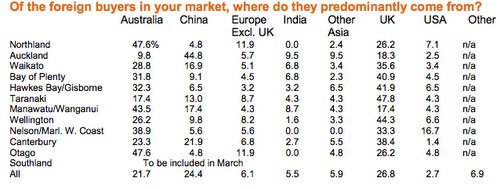
4. Where the foreign buyers come from - Tony Alexander has an excellent monthly survey of real estate agents and he has just started asking them where the foreign buyers they are seeing come from. Next month's survey will show what percentage of buyers are from overseas. I can't wait.
In Auckland Chinese dominate, but British buyers have a strong presence everywhere except Manawatu/Wanganui.
5. China, technology and the middle class - Chrystia Freeland at Reuters has done a nice job of talking about the elephant in the room of the current thinking on trade liberalisation and use of technology: both cost high paid jobs in the developed world. If it wasn't for Taibbi's epic this would have been today's must-read.
The big surprise, at least for believers (like me) in the classic liberal economic view that trade benefits both parties, is the strong and negative impact of globalization on U.S. workers — Autor estimates it accounts for 15 to 20 percent of jobs lost. “The rise of China was such a huge change. It really did matter,” Autor said. “First, China is such a huge country. Two, China was 40 or 50 years behind in technology, so it had a lot of catching up to do. Third, it happened so fast.” What is striking, and frightening, is the extent to which, at least in the U.S.-China trade relationship, the knee-jerk, populist fears intellectuals tend to deride actually turned out to be true.
“U.S.-China trade is almost a one-way street. This trade relationship doesn’t clearly give you the benefit that you can sell a lot of stuff to your trade partner,” Dorn said. “If you talk to someone who is somehow involved in the promotion of free trade, they may say that maybe the headquarters of Apple (AAPL.O) benefits. That may be true. But the first-order effect is of job loss.” The impact of technology is more familiar. Autor, Dorn and Hanson found that it did not create fewer jobs overall, but it did hollow out the jobs in the middle. “Technology has really changed the distribution of occupation. That doesn’t necessarily go hand in hand with reduced unemployment, but it creates a more bimodal set of opportunities,” Autor said. “There is an abundance of work to do in food service and there is an abundance of work in finance, but there are fewer middle-wage, middle-income jobs.”

I wonder how much money the New Zealand government spends with Facebook, Google and Apple.
Companies involved in failed tax avoidance schemes will be banned from bidding for government contracts, under new rules published on Thursday. Firms bidding for contracts of £2m or more will have to declare whether they have fallen foul of wide-ranging tax avoidance rules in the past 10 years. The move is designed to deter tax avoidance and evasion by companies bidding for public contracts.
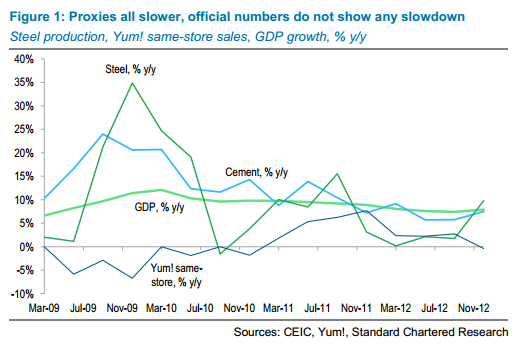
7. China's economic growth rate - What if it was really only 5.5% last year and not the 8% plus in the official figures? Here's FTAlphaville with the theory from two sources who cross checked the GDP figures with lending growth figures and other more...er...concrete measures of output, including concrete and steel and KFC.
This is the best description I've seen in response to say there is no problem to solve.
The traditional view is that monetary policy should be aimed at stimulating growth and employment as long as price stability is ensured. On the proviso that inflation expectations are well anchored and the central bank’s inflation projections are within target, interest rates can be kept as low as possible to foster consumption and investment. The exchange rate is determined by financial markets as a result of the different monetary policy stances across countries, which are in turn determined by different cyclical positions. In such an environment, currency wars do not exist because the weakness of some countries’ exchange rates reflects the weakness of their fundamentals. There would be no point in complaining about the low level of the exchange rates of countries with a relatively depressed economy.
It is the task of monetary policy to try redress the situation; the exchange depreciation is only the consequence. The real world has become a bit more complicated.
First, exchange rates do overshoot compared with the levels that are consistent with underlying fundamentals. This is not only because financial markets adjust faster than goods markets, as the German-born economist Rüdiger Dornbusch explained more than 35 years ago, but also because of the self-fulfilling nature of investors’ expectations, and the herd behaviour that influences aggregate market developments. Overshooting is the rule rather than the exception, and is very difficult to mitigate. Indeed, exchange rate interventions are ineffective unless they are co-ordinated between the monetary authorities of both the appreciating and depreciating countries. Such a co-ordination is very hard to achieve, however, because of the asymmetric benefits that exchange rate movements produce.
Bini Smaghi then points out that central banks take on the role of quietly redistributing wealth from savers to borrowers to reduce unpayable debt. It does this by repressing interest rates lower than inflation.
The reaction of investors is to try to escape from being financially repressed, including by purchasing foreign assets, especially of countries where such repression is opposed by the political system or prohibited by the central bank statutes. The outflow of capital leads to an excessive depreciation of the currency in the former countries and an appreciation in the latter, compared with underlying fundamentals. At that point, a currency war can be avoided only if the latter start acting like the former, and also repress holders of financial assets.
The most likely outcome of the currency peace which would result from a global attempt by central banks to repress holders of financial assets would be a new bout of risk taking all over the world. And, sooner or later, a new financial crisis.

9. A study of hyper inflations - James Montier at GMO has done a studie of hyperinflations. He rejects the idea that government money printing automatically leads to money printing. He says wars and the supply shocks that follow them are often the trigger.
There is an alternative view of hyperinflations, one that I find much more credible than the quantity-theorybased argument outlined above. This alternative viewpoint recognizes that money supply is endogenous (and hence that interest rates are exogenous), and that budget deficits are often caused by hyperinflations rather than being the source of hyperinflations.
If simply “printing money” really did lead to hyperinflations, then we should expect to see hyperinflations all of the time. Any government that issues its own currency under a floating exchange rate effectively spends by printing money 7 (as a matter of logic, if the government is the sole issuer of currency, it has to spend before it can collect any taxes at all, otherwise there is nothing to pay the taxes with). Yet, rather than two-a-penny, hyperinflations are thankfully rare events, representing occasions when populations lose complete faith in their currencies.
10. Totally Jon Stewart on Barack Obama and the Giant Speech. There are 70,000 structurally deficient bridges in America.
(Updated with cartoons)
We welcome your comments below. If you are not already registered, please register to comment
Remember we welcome robust, respectful and insightful debate. We don't welcome abusive or defamatory comments and will de-register those repeatedly making such comments. Our current comment policy is here.