
• Auckland ratepayers continually expect better levels of service and reduced environmental impact – as they should.
• At the same time, the council is under pressure to keep rates as low as possible for ratepayers.
• This rational approach creates difficulty when decisions made decades, or even a century ago, are still having negative impacts today.
• The need to fix mistakes from the past at huge cost, to constantly increase service levels while avoiding repeating the short-sighted decisions of the past, may cost more in the short-run.
• Past experience shows the need for rigorous analysis of our infrastructure and policy choices to consider the immediate and long-term impact on Auckland, and the need to think big in our planning to avoid under-provision.
We often harken back to the “good old days” with fond memories about how good things were. However, nostalgia has a way of distorting our memories by omitting the unpleasant parts. In fact, many of the decisions that were made in the past, especially around environmental and transport issues in Auckland, are inconceivable in retrospect. And short-sighted or ill-informed decisions carry huge inter-generational costs.
How not to train your city
Many of Auckland’s transport decisions have been short-sighted over the last hundred years. Each has ended up costing Auckland ratepayers and New Zealand taxpayers both time and money in the long run.
For instance, a tunnel for trains that was proposed as early as the 1920s, but dismissed as too expensive, took until now (with City Rail Link) to even start construction. In the 1950s, a decision was made not to electrify Auckland’s rail lines and invest in motorways instead. Electrification was delayed until 2015.
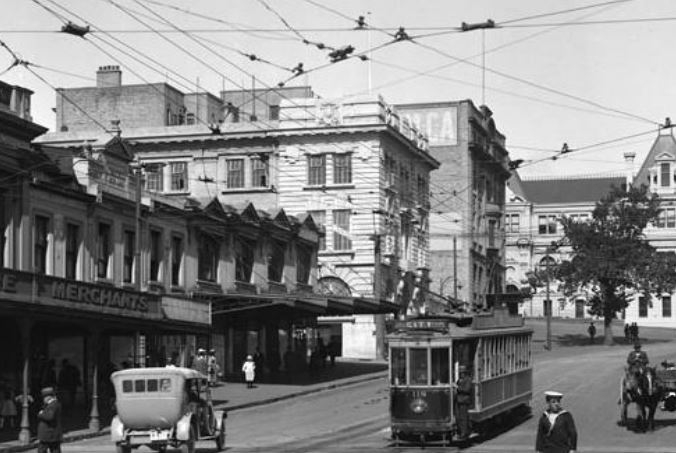
Auckland’s vast network of electric trams that operated from the early 1900s was dismantled by the late 1950s. Now, the proposed light rail projects, at a cost of billions of dollars, will be bringing back some of the routes that existed a century ago, but were got rid of during the heyday of the automobile.
Imagine how different (and accessible) Auckland would be today, had we more far-sighted decisions all those decades back.
Each of these decisions severely stunted the growth of public transport in Auckland.
Similarly, Auckland’s harbour bridge – a design that was compromised on the grounds of cost – was opened in 1959 and was almost immediately overcapacity. Ten years later, the clip-on lanes that were added had a cost that far exceeded what it would have taken to build a bigger bridge in the first place.
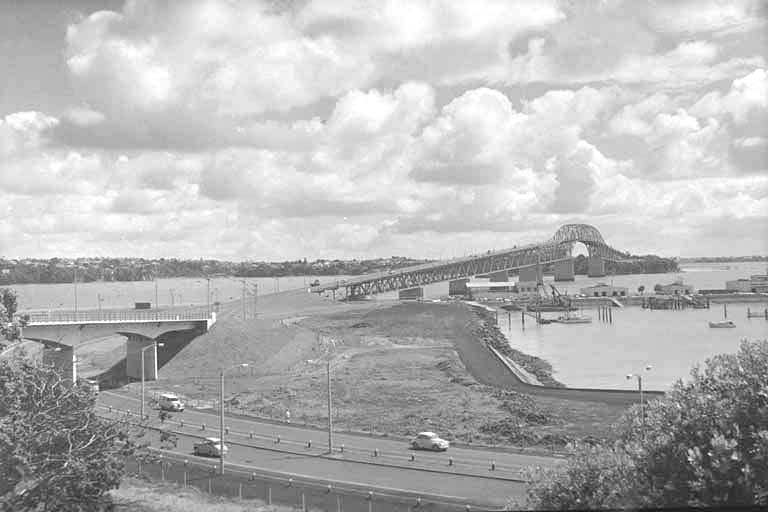
These decisions illustrate both local and central governments making the easier and “cheaper” decision without fully considering the long-term implications. Since Auckland experiences the congestion consequences of these decisions daily, most of us are vocal about wanting an immediate improvement in service levels to reduce our transport difficulties.
The #2 harbour in Auckland
We see a similar pattern of short-sighted decisions on environmental issues – especially with regards to wastewater.
According to the South Auckland Research Centre, in 1908 Auckland’s municipal abattoir was moved from Western Springs over concerns of pollution in the Waitemata. Slaughterhouse effluent was being dumped directly into the harbour. The “solution” was to move the abattoir to Otahuhu and dump slaughterhouse effluent directly into the Manukau harbour instead.
Similarly, at the turn of the 20th century, household sewage was a major problem. The first wastewater (sanitary sewer) systems built discharged raw sewage into the Waitemata and Manukau harbours.
While this got rid of the problem of people throwing their waste in their back garden and night soil collectors spilling waste into the streets, it obviously created other problems. These systems were efficient, but did almost nothing to clean the sewage before it entered the waterways.
It wasn’t until the Mangere treatment plant opened in 1960 that the solution to wastewater on the isthmus was something better than dumping it in the sea. About 20 years ago, this plant was significantly upgraded and now cleans water so thoroughly that it can be safely discharged into the Harbour immediately after treatment.
Even though Auckland’s treatment plants do an excellent job at cleaning all the wastewater received, issues remain. A lot of the infrastructure that carries wastewater is outdated and undersized – especially on the western isthmus. There, many areas are on combined sewers. This means that wastewater and stormwater share the same pipes to get to the treatment plant.
Though these combined sewers were once common, they are no longer built because during heavy rain, the pipes get inundated with stormwater and the combined stormwater and wastewater overflow into the sea. This is one of the reasons why Aucklanders are wary of swimming after a heavy rainstorm.
Improved service levels already a reality
Because of these concerns around water quality, Safeswim, a partnership between Auckland Council, Surf Life Saving Northern Region and the Auckland Regional Public Health Service, has come online in the past couple of years. Safeswim provides real-time advice about the quality of water for about 100 sites around Auckland. It advises in real time whether the water quality is good enough for swimming, as well as a 3-day forecast.
Safeswim doesn’t fix the wastewater overflow issue, but it is a massive improvement in service quality. Before, Aucklanders had to guess if the water was safe or wait for specific warnings. Now, it’s as easy as pulling up a website on your phone.
The more we know, the more we want
Yet, Safeswim has also had the side-effect of putting the issue of water quality front and centre, just like the issue of road congestion.
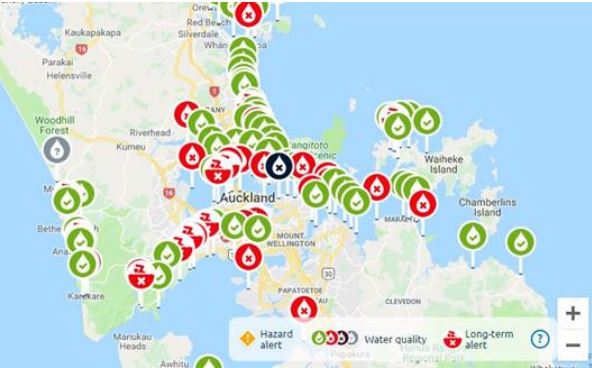
Rather than having a vague sense of where and when water quality suffers, anyone can access a map of real-time water quality ratings. Every time you open the map, you see that there are several areas of the city where there are long-term alerts about unsafe levels of faecal indicator bacteria. If it has recently rained, you see clusters of red icons in the area, indicating that the water quality is unsafe for swimming.
This transparency, which is a good thing and a major improvement in the level of service, has had the further effect of increasing service level expectations. Because they are more aware, Aucklanders are expecting improvements to water quality to solve this problem.
To reduce the number of combined sewer overflows, Watercare has several ongoing capital projects including the Central Interceptor, which is expected to reduce annual overflow volume into the harbours by up to 80%. In Ponsonby, the combined sewers are being separated, and in other areas, storage tanks are being used to store excess sewage during wet-weather events. These are part of at least $6 billion of investment to improve water infrastructure in Auckland over the next 20 years.
Learning lessons from the past
Solving Auckland’s congestion and water quality problems is taking considerable effort and a massive amount of money. These solutions highlight the constant tension between keeping rates low, correcting decisions that were made decades ago at costs of billions of dollars, and delivering ever higher levels of service.
Considering the environmental impacts and huge cost to fix the decisions made in the past highlights two things.
First, the growth of Auckland has inevitably exceeded the expectations of the planners of the day. We need to think big in our infrastructure and city planning. It’s easier to slow down the rate at which we deliver infrastructure than to speed up or try to retrofit. If our forebears had thought about the fact that people might live in large numbers near the Manukau Harbour, they wouldn’t have run slaughterhouse effluent directly into it. We’d have built a bigger cross-harbour bridge if we thought about how it would induce demand for travel to the north of the city.
Second, we need to make good, economically rigorous decisions today. And by “economic”, we mean the real definition of the word – decisions that maximise the financial, environmental, social, cultural and community wellbeing of all Aucklanders today and into the future. In many cases, this will mean taking the long view and avoiding the cheap and dirty decisions that we may later regret.
*Shane Martin is an economist in the chief economist unit at the Auckland Council. This article was first published here.
We welcome your comments below. If you are not already registered, please register to comment
Remember we welcome robust, respectful and insightful debate. We don't welcome abusive or defamatory comments and will de-register those repeatedly making such comments. Our current comment policy is here.