
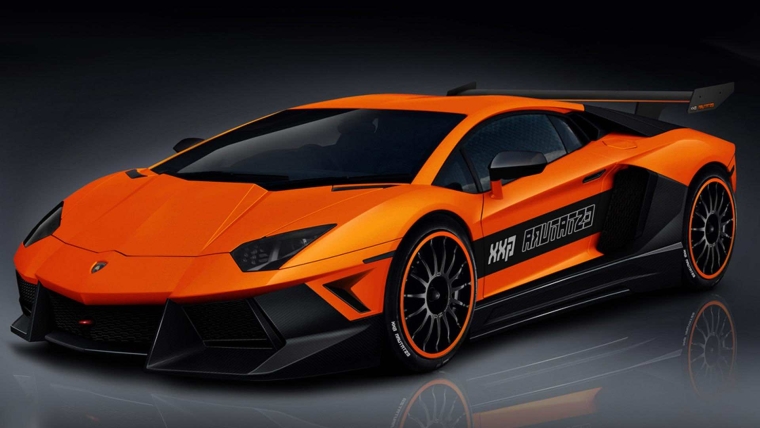
Official figures show a surge in the number of luxury cars on New Zealand streets in the last two decades.
There are more than eight times as many cars of five luxury marques registered by Waka Kotahi now than there were in the year 2000.
The fast-rising value of investment property over most of that time is being credited for funding this opulent expenditure.
Interest.co.nz sought hard numbers from Waka Kotahi to verify anecdotal suggestions that bigger numbers of extravagant cars are cruising New Zealand streets these days than previously.
We chose five famous makes: the Ferrari, the Lamborghini, the Aston Martin, the McLaren and the Maserati.
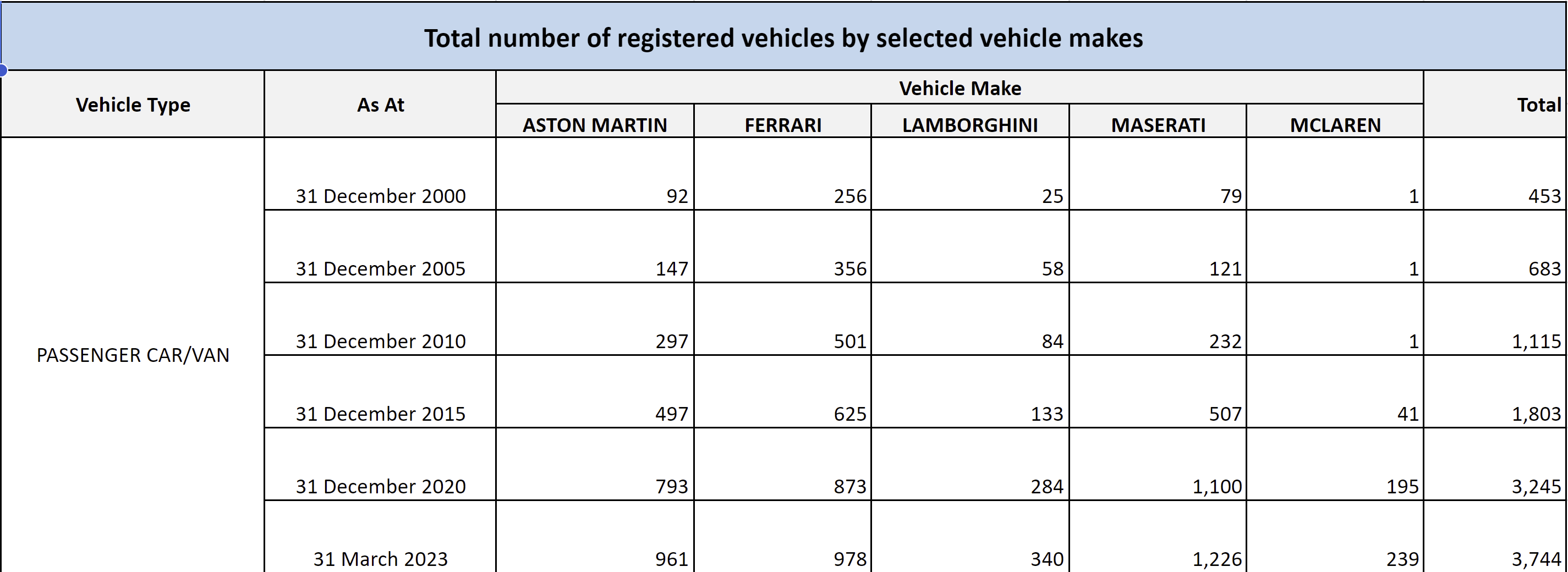
The figures provided by Waka Kotahi show that across all five marques, the total number of registrations showed a gigantic increase from just 453 in December 2000 to 3,744 in March 2023.
To left wing critics, this is more proof of just how rotten New Zealand has become. The rich are getting richer and the poor are getting poorer, they say. And the rich are flaunting their wealth, parking their glittering vehicles amid homeless people sleeping rough, creating a Dickensian world when seen in a wide shot.
But there might be more to it than that. The figures do not prove that the poor are getting poorer, just that the rich are definitely getting richer. And they are getting richer mainly due to property prices sprinting in the fast lane for most of the past two decades, running shoulder-to-shoulder with an equally athletic stock market.
Source: Waka Kotahi
Lamborghini leads the way
Looking at the actual car numbers, the fastest riser of the five marques was the Lamborghini, with registrations growing from 25 in 2000 to 340 this year. Aston Martins rose from 92 in 2000 to 961. Ferraris went from 256 to 978, and Maseratis from 79 to 1226.
There are now 239 McLarens in NZ ownership, up from just one in 2000. To be fair, that number is distorted by the fact that McLaren had just one road car available for years, the F1. It was one of these vehicles that was famously crashed twice by the English comedian Rowan Atkinson, leading to a reported record insurance payout for a road smash worth $NZ1.88 million. At any rate, just over a decade ago, McLaren began producing a wider range of cars, which helped boost total sales numbers.
Complicating the raw statistics is the fact that most prestige car makers have moved beyond producing sports cars for the Monte Carlo set. They now make other cars including SUVs. These are also expensive, but they dilute the impact of raw numbers of luxury car purchases.
“The growth in sales is largely down to the commensurate increase in model ranges,” says a senior manager at the Giltrap Group, Shaun Summerfield.
“Today, not only does every brand have a variety of models, but most have an SUV as well.
“The SUV has changed the landscape.”
But this tells only part of the story. A Lamborghini SUV, the Urus, still costs $395,000 and more, which completely eclipses the price of most SUVs.
Who is buying?
So, who is paying this sort of money for these sorts of cars? Almost universally, they are self- employed, dealers say. There are also a large number of property developers. But beyond those parameters, buyers of luxury cars cover the full gamut, from old families with large farms to brash young entrepreneurs. But there seem to be few bucket-list types, who turn 50 and buy a Ferrari because life is passing them by.
One thing is sure, there appears to be no shortage of people turning up on the forecourt wanting to buy a car costing six or more times the average annual income.
“The car we sell the most of would be the Mercedes Benz G-Wagen,” says a senior Wellington luxury car dealer, Oliver Gazley.
“When they come up second hand, they sell really quickly…….and the price can range from the mid to the late 300-thousand-dollar mark,” he says.
“At one stage there was a year-and-a-half waiting list for one of these cars.”
Where are people getting the money to buy these sorts of cars? Gazley doesn’t know and won’t ask, because he says the finances of his clients are their own private business. And sometimes, his sales are done remote, and he doesn’t even get to meet his clients.
Summerfield is a bit more forthcoming, pointing out that 40 years ago, a Ferrari cost more than a house but now it is the other way around. And he suggests that steady increases in property values are pushing luxury cars within the range of people who could never afford them on their monthly salary.
“Property values have grown four times faster than most high-end cars over the past few decades and that, combined with removing import restrictions has increased sales,” he says.
Summerfield’s comments are given some supporting evidence by official statistics. According to the Property Investors Federation, there are 600 thousand rental properties in New Zealand. The vast majority of those are owned by mum and dad investors who in most cases own one to three rental houses.
According to the Real Estate Institute, the median price of a house is $780,000, which would give two-rental investors over $1.5 million in property, according to nominal values. If they had bought those properties at the start of this period, in the year 2000, they would now hold most of that value in equity, perhaps $1 million.
And property people using geared investment techniques, which involve employing borrowed money to gallop ahead of inflation, could have pushed their wealth still higher, to $1.5 million, or more. That sort of money could snap up a Ferrari and still have change left over.
Source: Stats NZ
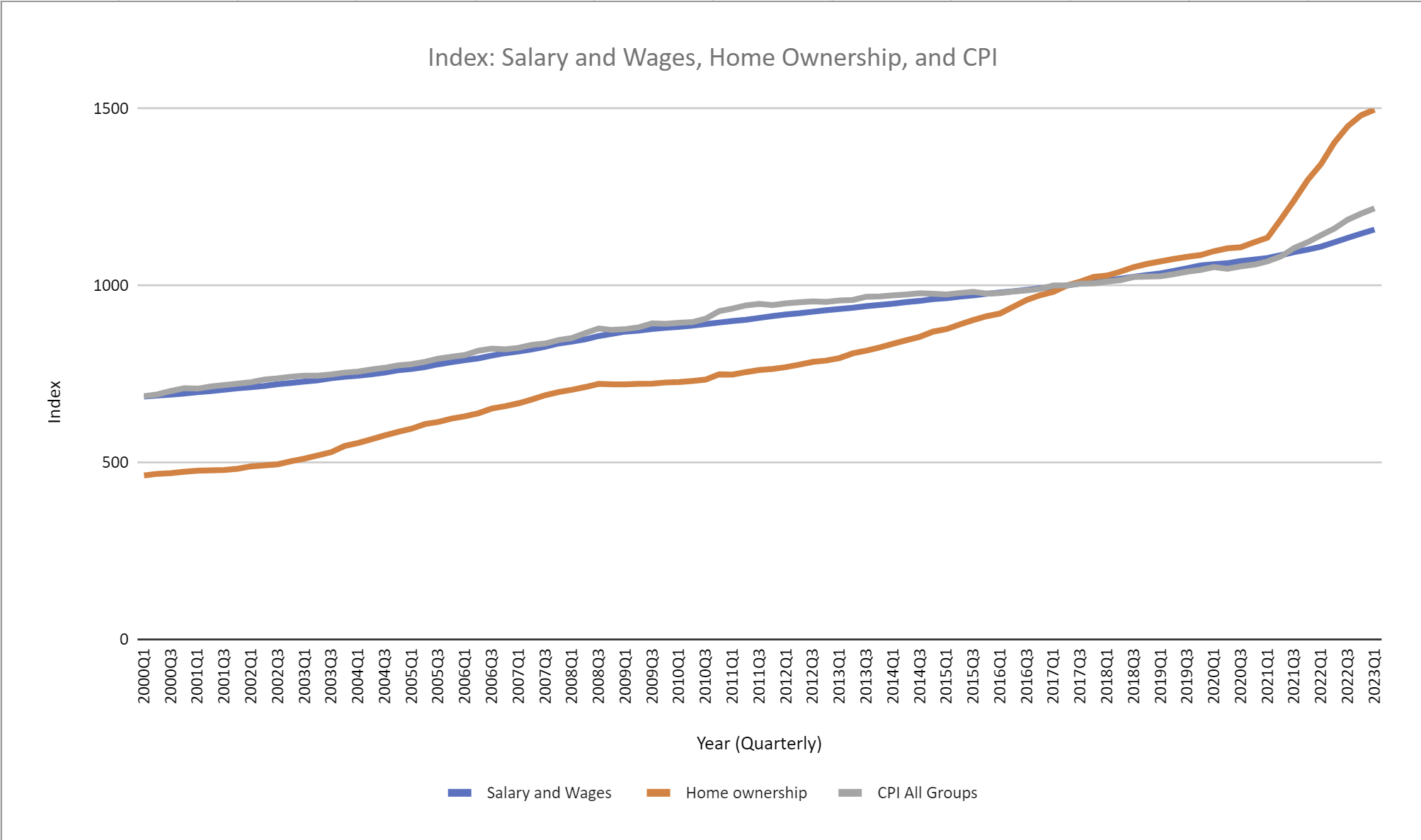
Figures from Statistics NZ make all this official, on the record. They show a big increase in property values since 2000, which dwarf the rise in general prices. The figures show the Consumers Price Index (CPI) rose from a statistical figure of 687 in 2000 to 1218 in 2023. House prices rose from an index number of 463 to 1497. In other words, while general prices didn’t quite double, house prices more than tripled.
And shrewd people have noted these trends and made the most of them. They have taken the money and, not run, but driven off in a flash car. An analogy would have surfers seeing a large wave with a perfect curl rising behind them, who then ride it for all it is worth, rather than choosing that moment to paddle to shore.
But where did that wave come from? Why have house prices risen so fast? There could be many reasons, such as a rising global pool of investment money, with some of it finding its way to New Zealand. Donald Trump’s tax cuts would have helped to do this, since they transferred wealth from US Federal Government finances to private investment accounts. Barack Obama’s Quantitative Easing would have had a similar impact.
What about homegrown influences? A common drumbeat of criticism says central and local Government in New Zealand have made housing expensive by restricting the supply of land for building homes on and burdening the people who build them with expensive layers of red tape.
According to this theory, government rule-makers have inadvertently gifted wealth to speculators, who resemble roaming cats discovering a random bowl of cream, which was left there by accident.
The falling interest rate & leverage effect
The independent economist Tony Alexander says government red tape certainly plays a part in causing housing inflation. But he says there have been bigger factors that have pushed house prices so fast and so high.
“One of the key ones was that interest rates have been falling – until recently they have been falling for decades. And as mortgage rates have been falling, housing affordability, from a debt servicing point of view, has been getting better.
“People could afford to borrow more money and they did borrow more money, so they could pay a higher price at auction.”
Alexander adds houses have also been going up in price because they are getting bigger, and better, with more rooms and more facilities such as better insulation. The cost of construction is also rising, pushing up the cost of a completed home. And he says a rising population is also pushing up the price of a house by increasing demand for homes.
There could be other factors. One of them puts the Reserve Bank in the frame. This theory says the bank acted too slowly in raising the Official Cash Rate during the 2003-08 housing boom and again in the aftermath of the Covid crisis. According to this theory, procrastination by the central bank gave investors cheap money for far too long, and they made the most of it, bidding competitively for houses and pushing up the price.
An extremely erudite document issued by Treasury in March last year gave some support to this theory, with the following comment: “There is some evidence to suggest that expansionary monetary policy has worsened the wealth inequality in advanced countries by its impact on asset prices.”
Whatever the cause, the historical evidence is undeniable. Large sums of money have built up in people’s accounts, and some of them used it to satisfy a passionate, if expensive hobby.
“Some people collect art, I collect cars,” says one avid car enthusiast, who used the profits from his property investment business to acquire around 40 cars, including four Ferraris and seven Porsches.
“It is in the blood”, he says. “Some people love aircraft, others might buy a motor yacht, others adorn their home with fine art. But there is a growing number of people who just enjoy fine motor vehicles."
”You work hard, you play hard, and you have got to do something with your money when you make it so you might as well do something that you enjoy.”
Other people have discovered an extra factor: some luxury cars appreciate in value over time, and can even rise faster than the share market.
“If you had bought a mid-1980s Ferrari, of the right model, you could have quadrupled your money," says one man.
All this can mean that buying a luxury car is not just fun, it is a smart economic move, which provides some contrast with another property deal.
Dealers say in most cases, owners keep their cars locked in a garage, and bring them out only for special occasions. They use a relatively average vehicle for daily chores, since they don’t want to ding the Ferrari in a supermarket carpark, or get the kids’ sticky sweet wrappers or hair from the family dog all over the upholstery.
The Covid effect
Dealers add that Covid-19 actually helped sales of luxury cars because the lockdown stopped rich people from spending their money on expensive overseas holidays.
So, what about the argument that these luxury cars are flamboyant and showy, and do not represent the sort of country that New Zealand used to be?
One owner says this view sometimes leads to insults from other drivers.
“You do get some detrimental comments which come back to the tall poppy syndrome,” he says.
“I find this a bit frustrating but it seems to be part of the New Zealand psyche. It doesn't really bother me too much.”
According to Gazley, sales of luxury cars were booming six to eight months ago, but have slowed down recently, possibly matching New Zealand’s current minor recession.
But this might not last, due to global influences. A report last month by the Boston consultants, Bain and Co, said the luxury goods market across all sectors was booming internationally, and would continue to grow.
*This article was first published in our email for paying subscribers on Thursday. See here for more details and how to subscribe.
We welcome your comments below. If you are not already registered, please register to comment
Remember we welcome robust, respectful and insightful debate. We don't welcome abusive or defamatory comments and will de-register those repeatedly making such comments. Our current comment policy is here.