
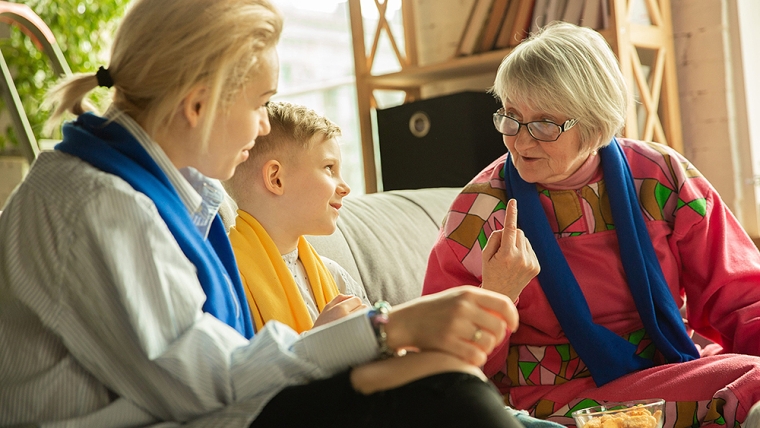
It seems that mum and I have become part of a trend. Intergenerational living. We didn’t know that was what we were doing, we just wanted to live closer to each other. So that’s what we did.
A year after my dad died, mum and I had pooled our resources and were on the move to Motueka, and we were doing it together.
It felt obvious at the time. She shouldn't be alone in a big house full of thirty years of memories, and I didn't want her to be. So, we moved to Motueka and found a property where I could build my own place right beside hers. Close enough that I can see her lights on at night. Far enough that we both still have a front door that's ours alone. We live completely separately, I’ll pop a chicken curry in her fridge if I make too much, and she takes Jett (the labrador) out for his ablutions in the evening if I’m out. It works well for us both.
What I didn't expect was how much research would go into what looked, from the outside, like a simple decision. I've spent years helping clients think through the financial side of big life transitions, and here I was living one myself, running the same numbers I'd run for other people, except this time it was my own and mum’s future on the line.
The first year was super practical, the challenge of building a second dwelling on a shared property, then the settling in process, the landscaping, the enjoyment of a new home, and before I knew it another year had passed. But in the back of my mind, I knew there was a whole other project to be done, and that was going to be much harder.
Why? Because the harder research was about what happens later. Because building beside mum wasn't just about now, it was about having a plan for whatever comes. So out came the post it notes, and I started asking myself questions about different scenarios. What does it look like if she needs help with day-to-day things but wants to stay independent? What's the actual cost difference between funded home support and residential care, and at what point does the means-testing change the picture entirely? If a hybrid of home visits, day programmes, and the odd respite stay becomes the right fit, how does that even get arranged?
It was at that point, that I started to feel overwhelmed and decided I needed a glass or two of chardonnay to keep going.
I found myself mapping out something close to three financial pictures rather than one, an early stage where she needs almost nothing from me, a middle stage where we'd be layering in home support and day programmes, and a stage further off, if it ever comes, where residential care might be the honest answer. Each one has a different cost, a different funding pathway, and a different emotional weight.
Then the next thought hit me… I can’t assume that just because mum is older than me, that she’s going to need care first, what if something happens to me? Have we got the financial resources and the right structure for both of us? So, it was back to the post it notes, and the chardonnay.
That's the part I want to talk about, because I think it's the part most families skip. It's far easier to talk about drainage and building consents than it is to say out loud, "what happens when you can't manage on your own anymore." mum and I started those conversations when Dad was diagnosed as terminal, we had that ‘what if’ conversation more than once. These kinds of conversations don't get easier with repetition, they get more honest. We've now talked about what independence means to us. What she wants me to do and not do for her. What I can carry alongside my own life and business. None of that came from a spreadsheet. It came from sitting down and asking, and then asking again a few months later, because the answer changes as circumstances do.
Intergenerational living is having a real moment here in New Zealand, extended families sharing a household have grown by more than a quarter in the past decade, and a growing number of Kiwi families are choosing it deliberately, not settling for it. Some of that is affordability. Some of it, like ours, is about not wanting to do the hardest chapters of life at a distance from the people you love. Both reasons are valid, and both come with the same two homework assignments: get honest about the money and get honest about the feelings. Do them separately first, if that's easier, then do them together, out loud, more than once.
I won't pretend our arrangement is friction-free, but we both know we have each other’s best interest at heart and that’s what gets us through those little moments where I still feel like a three-year-old being told off and mum feels her daughter might be being just a little bit bossy (I wonder where I learned that from?).
We went into intergenerational living with our eyes open, on purpose, with the numbers done and the hard conversations had. That's made all the difference between an arrangement that survives on love alone and one that's built to last. The other thing that in some ways made it easier, but also maybe a bit harder as well, is, I don’t have siblings, so we didn’t need to consult anyone else. We didn’t have to think about the impact on other family members and how their values and beliefs about what was best for mum needed to be considered.
If you're thinking about something similar with your own family, I encourage you to do what I have done, get the post it notes out, go through all the various scenarios you can think of, look at the numbers around each scenario, then talk about it, document it legally so it’s very clear to everyone in the family that this has been well thought out and you have considered everyone needs. If you set it up right for your generation, you will make it much easier for the next generation who follow in your footsteps.
*Lynda Moore is a Money Mentalist coach and New Zealand’s only certified New Money Story® mentor. Lynda helps you understand why you do the things you do with your money, when we all know we should spend less than we earn. You can contact her here.
We welcome your comments below. If you are not already registered, please register to comment
Remember we welcome robust, respectful and insightful debate. We don't welcome abusive or defamatory comments and will de-register those repeatedly making such comments. Our current comment policy is here.