

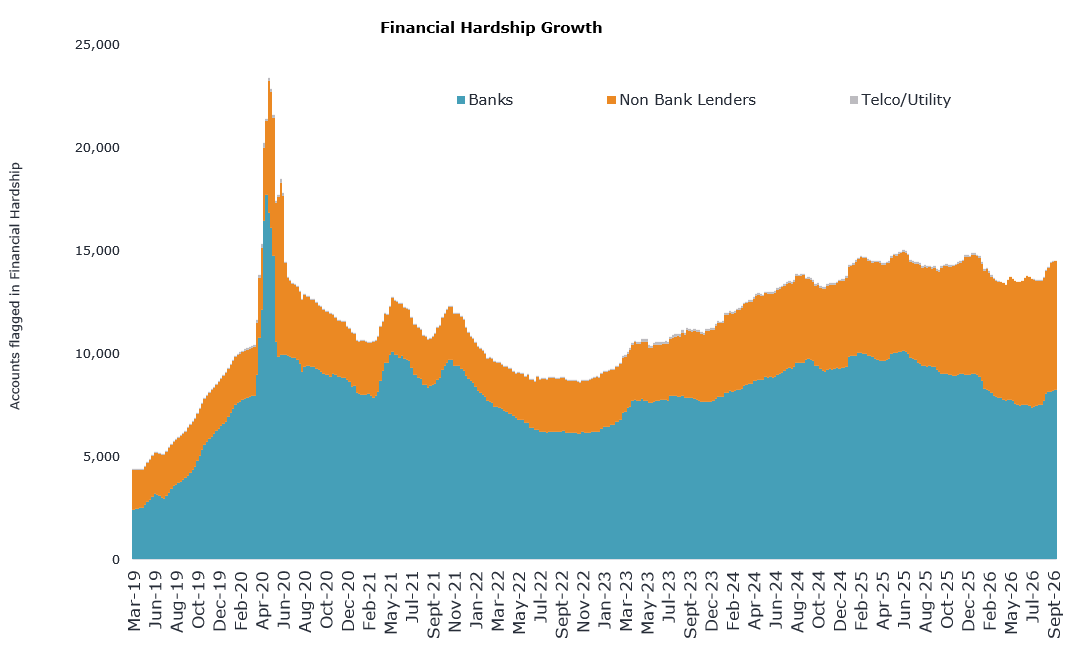
Accounts in financial hardship have surged 40% over the three years to September, data from credit bureau Centrix shows, with personal loan hardship volumes more than doubling.
Figures in Centrix's September Credit Indicator show 14,521 financial hardship cases, a rise of 4,158, or 40%, since September 2023.
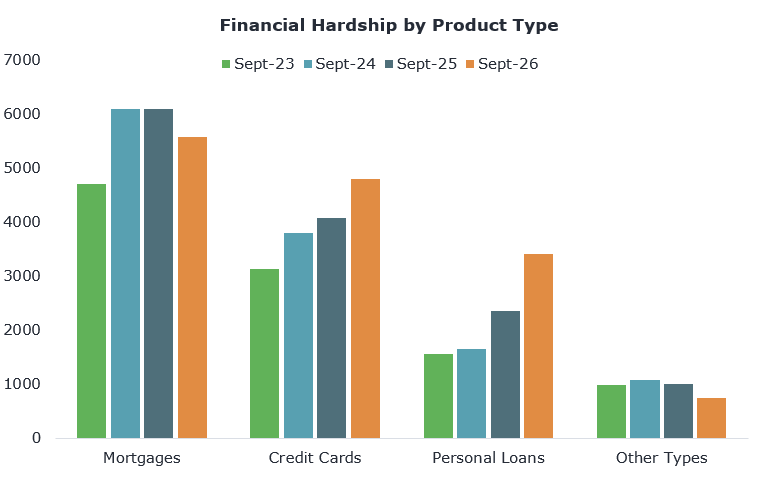
Personal loans in financial hardship surged 1851, or 119%, to 3,411 over the three year period. Credit cards customers in financial hardship increased 1670, or 53%, to 4,797. And financial hardship cases stemming from mortgages rose 871, or 19%, to 5567.
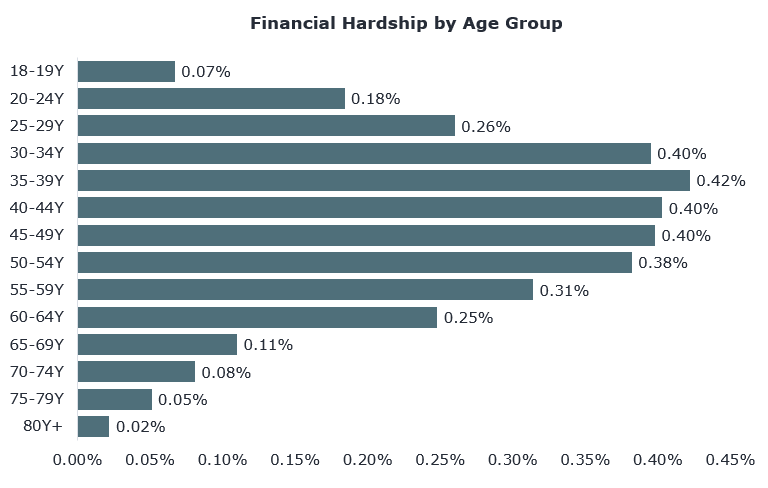
"Personal loan hardship volumes have more than doubled since 2023 and are 46% higher year-on-year, making personal loans the fastest-growing source of financial hardship. Mortgages remain the largest contributor, accounting for 38% of hardship cases, followed by credit cards at 33%. Consumers aged 35–39 continue to record the highest incidence of hardship," Centrix says.
"Consumer credit defaults have also increased 19% [to 103 in August] from a year ago, suggesting a subset of consumers remains under pressure despite broader improvements in credit conditions."
Centrix data dating to 2019 shows financial hardship volumes peaked above 23,400 in May 2020, dropped below 10,000 in February 2022, rising back above 10,000 in April 2023, and are now at their highest level since topping 14,700 in January this year. Accounts reported in financial hardship are up 2.2% year-on-year.
Financial hardship numbers come from financial institutions, rather than Centrix, which says when a customer is approved for financial hardship support, the credit provider flags the account accordingly in its reporting.
Financial hardship is defined in the Credit Contracts and Consumer Finance Act, and can be when a debtor is unable, reasonably, because of illness, injury, job loss, a relationship ending or another reasonable cause, to meet their obligations under a consumer credit contract. A debtor can apply to the creditor for a change of terms. As a result, the terms of a contract may be extended or postponed.
There's also guidance on the hardship process in the Responsible Lending Code, and information from the Financial Markets Authority here, and the Banking Ombudsman Scheme here.
Meanwhile, Inland Revenue data shows more than $538 million worth of early KiwiSaver withdrawals were made in the June year due to financial hardship.
The charts below come from Centrix.
We welcome your comments below. If you are not already registered, please register to comment
Remember we welcome robust, respectful and insightful debate. We don't welcome abusive or defamatory comments and will de-register those repeatedly making such comments. Our current comment policy is here.