

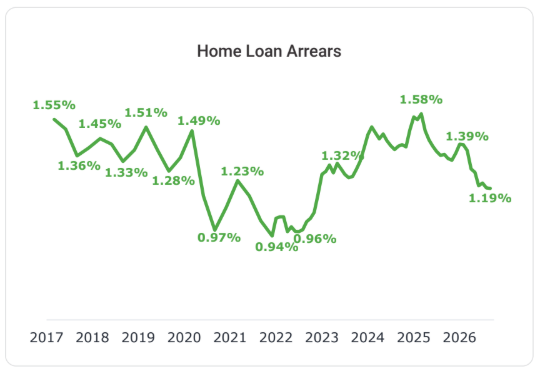
Mortgage arrears are at an almost four-year low, according to the latest data from credit bureau Centrix.
Figures in Centrix’s October Credit Indicator report, which tracked September statistics, show mixed borrowing activity during the month of September, amidst an “uneven” economic recovery, although home loan arrears showed signs of improvement.
“Mortgage arrears held at 1.19%, their lowest level since December 2022,” Centrix chief operating officer Monika Lacey said.
On an annual basis, mortgage arrears were 13% lower than a year earlier, with 19,600 home loan accounts past due by the end of September.
Centrix found the improvement in mortgage arrears also extended to longer-term mortgage repayment difficulties. Mortgage repayments overdue on a 1–29 day seasonally adjusted basis declined 11% year-on-year, while mortgage repayments overdue by 90 or more days, also on a seasonally adjusted basis, fell by 14%.
Centrix also reported that mortgage enquiries increased 14.4% year-on-year in September, while credit card demand rose 9.5% and auto loan enquiries increased 4.7%. Personal loan demand was up just 1.2%.
Despite this annual jump in mortgage enquiries, approved new mortgages were 16% lower in September compared with a year earlier. Overall household lending was down 14% year-on-year.
“Borrowing activity remains mixed. Mortgage and credit card enquiries have strengthened, but overall consumer credit demand remains below last year’s levels. New household lending has also softened, largely due to weaker mortgage approvals, while non-mortgage lending has remained relatively stable,” Lacey said.
The Reserve Bank's credit sector update for September showed housing lending rose at an annual growth rate of 5.4% in September, down from 5.5% in August, to $404.758 billion. Consumer lending rose at an unchanged annual rate of 2.2%, reaching $14.636 billion.
Financial hardship on the rise
Centrix said the proportion of credit-active consumers in arrears “increased slightly” from 10.74% in August to 10.88% in September, with 430,000 people currently behind on payments.
However, the total arrears rate remains 9.3% lower than a year ago, according to Lacey.
There are currently 81,000 consumers in arrears who are 90+ days past due on repayments, pointing to continued pressure among borrowers experiencing more persistent repayment difficulties, she said.
The Financial Services Federation (FSF), the industry body for specialist lenders in NZ, said the latest figures from Centrix showed many households are managing their repayments better than they were a year ago, which is encouraging.
“But we know the picture is not the same for everyone and some households and businesses are still under real pressure,” FSF executive director Lyn McMorran said.
“Rising hardship is a reminder that financial circumstances can change, even for people who have previously managed their repayments comfortably.”
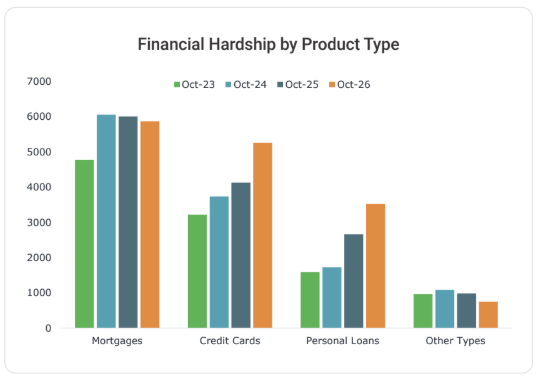
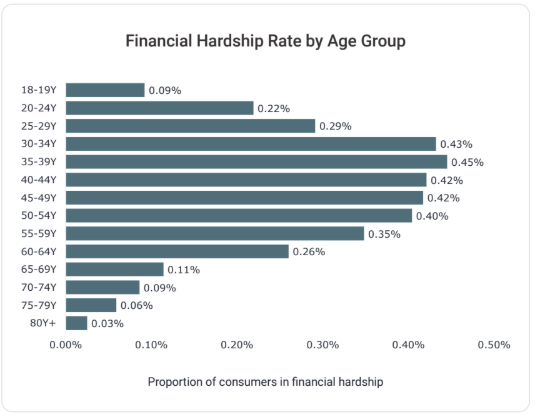
Centrix found financial hardship cases have started to increase again and hit 15,300 in October, up 800 from September and a 7.8% jump year-on-year. Consumers aged 35-39 continue to record the highest incidence of financial hardship.
Mortgages account for 38% of reported hardship cases, while credit cards account for 34%.
Personal loan hardship volumes were up 32% year-on-year and have more than doubled since 2023, making them the fastest-growing source of financial hardship.
Centrix said personal loan credit performance “differs materially” between bank and non-bank lenders, with 10.4% of non-bank personal loans in arrears during September, compared with 4.6% of bank-issued personal loans.
“This difference has persisted during the past two years. Nevertheless, there has been an improvement in the earliest stages of delinquency. Personal loans 1–29 days past due fell to 3.1%, from 3.6% a year ago, their lowest level since the end of 2021. This suggests recent repayment performance has improved for some borrowers even while formal personal loan hardship continues to increase.”
The charts below come from Centrix.
We welcome your comments below. If you are not already registered, please register to comment
Remember we welcome robust, respectful and insightful debate. We don't welcome abusive or defamatory comments and will de-register those repeatedly making such comments. Our current comment policy is here.