
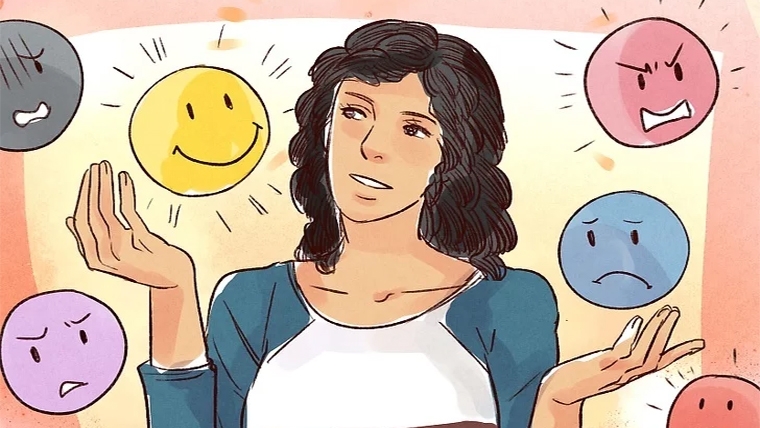
What were you feeling just before you spent?
There's a question that I ask almost every new client, and it often stops them in their tracks: what were you feeling just before you spent?
Not what did you buy, or how much did it cost. What was going on for you in the minutes beforehand? One client answered with ‘it depends how many beers I’ve had.” While he was joking, once we started to look at his spending we could see patterns emerging depending on where he was in his beer cycle.
Most people have to think hard about it. Spending usually feels like a single act: see it, want it, buy it. But there's almost always a moment before it, and that moment holds most of the answers.
The moment before
We know money is emotional, and it’s very easy to use money to fill the gap. Sometimes it's boredom. A quiet evening, the phone in your hand, and a scroll that turns into a basket. Sometimes it's stress, a hard day and a sense that you've earned something. Sometimes it's loneliness, celebration, guilt, or wanting to belong, shopping with a friend who spends freely, or a group dinner where nobody wants to be the one who suggests somewhere cheaper.
None of these feelings are wrong. The trouble starts when spending becomes the automatic answer to them. Over time we build a cycle. The feeling, the purchase, a brief lift, and then often a dip, whether regret or simply nothing much at all, that brings us back to the start.
When I first spoke about this at an event in 2018, the triggers I listed were emotions, friends, online shopping and credit cards. All still true. But the landscape has shifted a lot since then.
I also talk about our money personality, the behaviour traits that we have with money. For those of us (yes this is my style) who are spenders, awareness of the moment before can have a bigger impact on changing or behaviour than for example a hoarder, who is naturally more cautious.
Spending has never been easier
Today we can pay with a phone, a watch, or a saved card that fills itself in. Buy now, pay later breaks a purchase into pieces small enough that the full price barely registers. And the apps and websites we use every day are designed by very clever people to find our moments and fill them. If you've noticed ads arriving just when you're tired, or a "you might also like" that's uncannily accurate, you've met the algorithm working on your triggers.
I'm not anti-technology. I use it for convenience myself, but when paying takes no effort, the pause that used to happen naturally disappears. Finding your wallet, counting out cash, signing a slip: that pause was doing more work than we gave it credit for.
The research backs this up. In 2024 a team from the universities of Adelaide and Melbourne pulled together four decades of studies: 71 papers from 17 countries, covering more than 11,000 people. They found we consistently spend more when we don't pay with cash, whether by credit card, debit card, phone or buy now, pay later. The effect on any one purchase is small, but it's persistent, and small things done every day add up.
The researchers put it down to what psychologists call the "pain of paying". Counting out notes and handing them over feels like losing something. A tap doesn't. Interestingly, the effect was stronger in situations where other people could see what we were buying.
Other research suggests cards don't just numb the pain, they add pleasure. In a 2021 study at MIT, researchers scanned people's brains while they shopped with their own money. Paying by credit card switched on the brain's reward centre, the part linked to anticipation and craving, and that response had little to do with the price of the item. Over time, the card itself had become a cue to buy.
The pleasure/pain principle is an important lesson for children to learn, which is why I highly recommend you teach your children about money with cash, certainly in the early stages so they get to experience firsthand what that principle means.
Business owners aren't immune
It's tempting to think this is only about personal spending, but I see the same patterns in business. The panic purchase after a slow month, as if buying something will make the business feel busier. The shiny new software that promises to fix everything. Matching what a competitor has just bought.
And my favourite, as an accountant, around the end of March: "We should buy it before year end, it's tax deductible." A deduction is worthwhile when you genuinely need the thing. But it only saves you the tax on the purchase. You still spend the rest. If you wouldn't buy it in June, it's worth asking why you want it in March.
Way back in the day when I was working in someone else’s business, a client every year would buy an expensive piece of machinery just before year end, often not needed and on finance, just to be able to claim a year’s worth of depreciation (that was of course before the rules changed).
Putting the pause back
The goal isn't to stop spending, or to feel guilty about it. Being too restrictive usually backfires. The goal is to put a gap between the trigger and the tap, so spending becomes a choice rather than a reflex.
Start by noticing. For a couple of weeks, each time you spend outside your usual bills, jot down what you bought and how you were feeling just beforehand. Awareness first, judgement later. Patterns appear surprisingly quickly: the same time of day, the same mood, the same app.
This is what I call the Money Diary, it’s just like a food diary, but you are tracking your spending instead. Week one, just get into the habit of writing down your spending. Week two, add the feeling, that’s when this exercise gets interesting. Remember if you cheat, you are only cheating yourself.
Then add a little friction back in. Remove saved card details from the sites you use most. Unsubscribe from the marketing emails that seem to arrive at your weakest moments. Turn on instant notifications from your bank, so every purchase arrives with a small nudge. Put things on a wish list and wait 48 hours. For the one category where you know you overspend, try using cash for a month. Small obstacles give the thinking part of your brain a chance to catch up with the feeling part.
Finally, look for other ways to meet the need underneath. If the trigger is stress, what else genuinely helps? If it's boredom, what would you rather be doing? If it's wanting to connect, is there a way to do that without the bill?
One of the key things that Professor David Krueger taught me, when I was having to untangle my own relationship with money was, the aim is never to judge the feelings behind our money decisions. It's to understand them well enough that they no longer make the decisions for us.
So next time you feel the pull, try asking yourself the question: what am I feeling right now? The answer won't change what you do every time. But it gives you back the choice.
*Lynda Moore is a Money Mentalist coach and New Zealand’s only certified New Money Story® mentor. Lynda helps you understand why you do the things you do with your money, when we all know we should spend less than we earn. You can contact her here.
We welcome your comments below. If you are not already registered, please register to comment
Remember we welcome robust, respectful and insightful debate. We don't welcome abusive or defamatory comments and will de-register those repeatedly making such comments. Our current comment policy is here.