
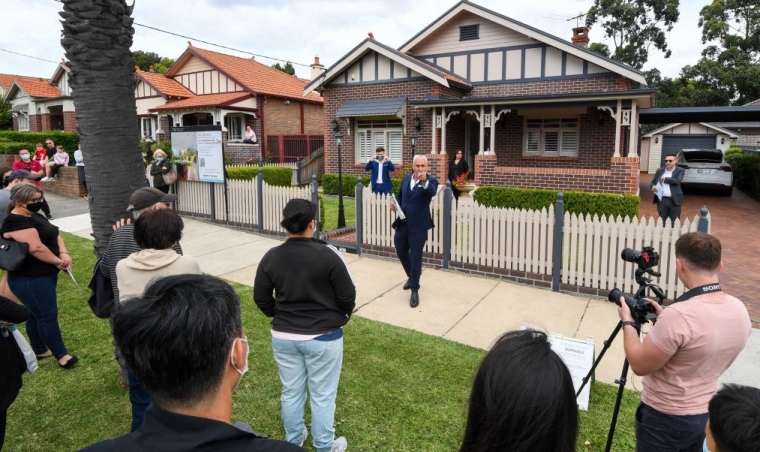
Historically at least, home ownership has been the goal for most young Australians (and Kiwis). The ease of achieving that goal fluctuates depending primarily on property prices and interest rates.
Spare a thought then for would-be purchasers over the last four years. In both countries, we’ve seen house prices rise and fall dramatically through the Covid-19 pandemic, and the central banks rapidly raise cash rates from record lows to levels not seen for more than a decade.
Timing a house purchase is never straightforward. Under these conditions it’s fraught with risk, including overpaying and getting caught with an unsustainable mortgage.
In New Zealand, the picture is starting to look a little less volatile for potential home buyers. It appears that interest rates are at or near their peak and there’s a growing view that house prices are no longer dropping in most areas. That probably makes a purchase less risky than it has been for some time.
The picture in Australia is very different.
Last week the Reserve Bank of Australia (RBA) raised the cash rate again, by .25% to 4.35% - the thirteenth rate hike in eighteen months. Inflation is not easing as quickly as the RBA expected and there is still the possibility of another rate rise. That means an eventual drop in rates is further away than originally anticipated.
Australia may be paying the price for the RBA’s tardiness in raising rates compared to many of its overseas counterparts. Even at 4.35%, Australia’s cash rate is still well below NZ’s 5.5%.
The latest RBA rate rise will quickly flow through to bank lending rates in Australia, putting even more pressure on the many existing borrowers who are already experiencing financial difficulty. It will also increase the interest rates payable by would-be property purchasers. For those purchasers, the increase translates into reduced borrowing capacity.
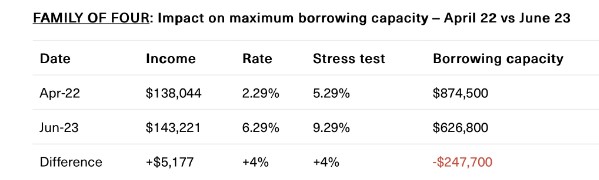
Financial website RateCity.com.au recently did an analysis of the impact of the previous twelve interest rate hikes on borrowing capacity. Here’s an example for a family of four with one parent working full-time and one part-time, and a pay rise of 3.75%.
Source: Rate.City
In this example, the effect of the first twelve rate rises was to reduce the amount that the family could borrow by nearly a quarter of a million dollars, or 30%.
Last week’s RBA rate increase will have reduced that borrowing capacity even further.
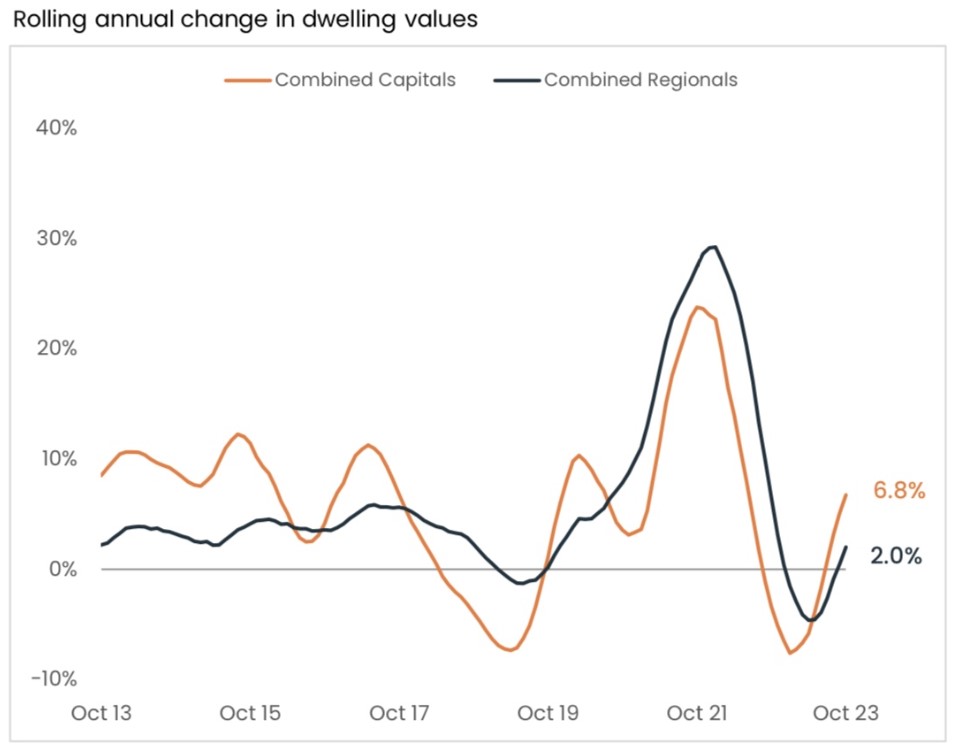
This trend was not a problem when house prices were falling in 2022. Unfortunately for those not yet in the market, that’s no longer the case. House prices are now lifting across Australia.
Source: CoreLogic
According to the latest figures from CoreLogic, house prices in the capital cities were up 2.6% in the three months to the end of October and 6.8% for the year. Some cities are rising much faster than that. Perth is up 4.6% over the quarter and 10.8% over the year. For Brisbane, the rises are 3.8% and 7.8% respectively.
The dilemma for first-time home buyers is obvious. For nearly a year, the amount they can borrow from the bank has been sliding while the price they’d have to pay for a house has been rising. That either reduces the choice of housing available to them or eliminates them from the market altogether.
That dilemma will only get worse if house prices continue to climb and/or the RBA raises the cash rate again.
To make matters worse, the cost of the alternative housing option, renting, has been rising even faster than house prices. According to the latest Rental Report from PropTrack, advertised rents increased 3.8% nationwide over the quarter to the end of September and 14.6% over the year. In Sydney, they were up a remarkable 18.2% for the year.
This is a grim situation for many younger Australians. Their rent is going up while the amount they can afford to spend on buying a house is declining in an environment of rising house prices.
And all this against a background of falling real incomes for the many people whose pay packets are growing slower than the rate of inflation.
Immigration is playing a major role in the current housing predicament. Net migration was around half a million people over the last twelve months, driving demand for accommodation. The solution is to build more homes but that takes time and there are a range of challenges facing the construction industry.
The one hope for many would-be home buyers is that last week’s cash rate hike by the RBA will dampen the animal spirits that appeared to be emerging in Australia’s housing market. Given the four-month pause since the last rate hike, many people had begun to think that the rate rising cycle was over.
CoreLogic executive research director Tim Lawless thinks the RBA’s latest move ‘is likely to disrupt confidence’ and may take some ‘heat out of the housing market rebound’. However, he thinks ‘it’s hard to see prices going backwards over the near term’.
To buy or not to buy? Succumb to ‘fear of missing out’ or play it safe? It’s a tough call in such volatile times.
*Ross Stitt is a freelance writer with a PhD in political science. He is a New Zealander based in Sydney. His articles are part of our 'Understanding Australia' series.
We welcome your comments below. If you are not already registered, please register to comment
Remember we welcome robust, respectful and insightful debate. We don't welcome abusive or defamatory comments and will de-register those repeatedly making such comments. Our current comment policy is here.