

sign up log in
Want to go ad-free? Find out how, here.

Potential buyers likely to have all the power in negotiations as the housing market heads into what could be a rough summer for residential real estate

Property / analysis
Potential buyers likely to have all the power in negotiations as the housing market heads into what could be a rough summer for residential real estate
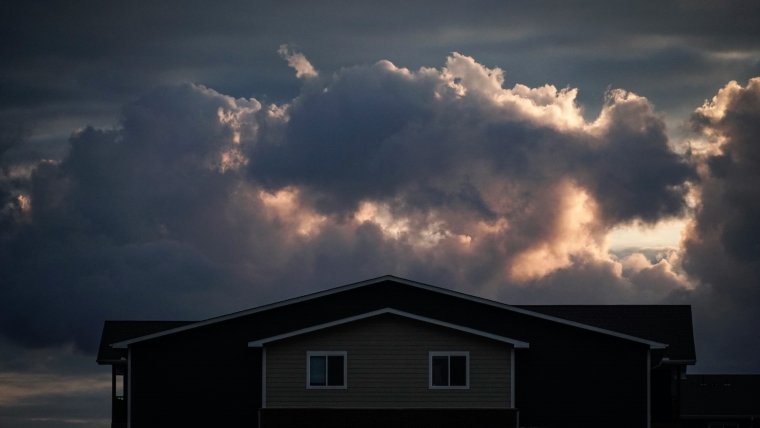
pic
Photo by Eastman Childs on Unsplash.


The advantage is all with the buyers as the housing market readies for what could be a rough spring/summer season.

September is usually a shoulder month as the market transitions from the quieter winter period to the more buoyant summer season, but there are several indicators from the September figures this year suggesting it will be a sluggish market this summer.

Firstly, stock for sale is already at very high levels for the time of year.

Property website Realestate.co.nz reported having a total 34,001 residential properties available for sale at the end of September, up 11% compared to September 2025, up 15% compared to September 2024 and up 50% compared to September 2023.

Which of course is good news for buyers because it gives them plenty of choice. Not so good for vendors though, who face tough competition to secure a sale.

Perhaps even more telling is the ballooning overhang of unsold properties on the market.

The overhang is the number of properties that remain unsold after they've been on the market for more than a month.

That means they would generally have completed their normal promotional cycle with no sale eventuating and are in danger of languishing on the market as potential buyers start to lose interest.

Interest.co.nz estimates there was an overhang of about 24,500 properties at the end of September, up 15% compared to September 2025, up 18% compared to September 2024 and up a whopping 52% compared to September 2023.

And we think those estimates are on the conservative side.

Looked at another way, the estimated overhang was more than four times as large as the total number of residential sales reported by the Real Estate Institute of New Zealand in September, up from being three times as large in September last year.

Another indicator of the current state of the market is the high number of dropouts.

Dropouts are properties which have either been withdrawn from sale completely, or remain technically for sale but are no longer being actively marketed, usually because their owners have unrealistic price expectations and refuse to meet the market.

Interest.co.nz estimates there were more than 2600 dropouts in September this year, up 13% compared to September last year.

Realistically, given the current market conditions, such properties are dead in the water.

All of this will weigh on prices heading into summer.

And with mortgage interest rates on the rise, buyers are likely to be driving even harder bargains as they negotiate a deal because the advantage lies squarely with them.

The comment stream on this article is now closed.


We welcome your comments below. If you are not already registered, please register to comment

Remember we welcome robust, respectful and insightful debate. We don't welcome abusive or defamatory comments and will de-register those repeatedly making such comments. Our current comment policy is here.

22 Comments

Let's rephrase that.

My son is looking to buy a house. So.  "This summer is looking bright"

Up
8

Yes, there is uncertainity in the future trend of the housing market and mortgage interest rates. 

However, despite the continuous repetitive claims of some posters on this site that house prices are going to crash considerably further, the Reserve Bank while cutting its house price growth forecasts in its Pre-election Economic and Fiscal Update, sees future longer term upside. I give Treasury forecast grater credibility than some random anonymous biased poster. 

Treasury forecasts are 2026: -0.4%, 2027: 0.6% (down from a previous estimate of 4%), 2028: 2.4%, 2029: 3.7%, 2030: 4.1%, 2031: 4.8%. 

I expect responses of these are nominal figures rather than real inflation adjusted figures. While this argument is true, it is conveniently overlooked that equally one’s real mortgage payments will reduce. 

Up
0

it is conveniently overlooked that equally one’s real mortgage payments will reduce

I think it's a reasonable assumption that mortgage rates are lower than whatever the real rate of inflation is. 

But that opens up a whole new can of worms. We can say that the Ponzi is a product of inflation itself (broad money growth is driven by mortgage issuance). 

But what if house prices are not compensating for the weaker purchasing power in our money?

Imagine if we need the housing stock / land values to be increasing at a rate of 10-12% pa just to keep an even keel / break even? It's something that you're not going to hear at the property seminars or on the spruiker podcasts. 

Up
2

I don't think it is reasonable to assume interest rates are below inflation.  It has been an anomaly in a post GFC world while Government's kept pumping debt rather than face reality.  But, in reality, interest rates are usually above inflation - else someone with a warehouse of widgets could just sit on them and watch the prices go up more than the finance costs

Up
0

I don't think it is reasonable to assume interest rates are below inflation.  It has been an anomaly in a post GFC world while Government's kept pumping debt rather than face reality.  But, in reality, interest rates are usually above inflation 

You're wrong. Interest rates are essentially the price of debt - suppressing the cost of credit has been important for the developed economies to maintain a facade of economic vitality. That includes Aotearoa. The developed economies in particular are financialized to the point where falling asset prices have an outsized impact on economic activity. Blind Freddy knows that the Aotearoa economy would sink if interest rates were anywhere near 10%. 

Up
3

Warehouse if goods appreciate... 

Food, petrol, untreated timber, IT assets, tyres, some drugs, battery's, most chinese made plastic etc all age and become near term landfill. Even clothing falls from fashion quickly. 

Goods come and go. Warehouses however...

Up
0

“I give Treasury forecast grater credibility than some random anonymous biased poster.”

And yet, the Treasury did not anticipate or forecast the major house price correction of 2022 until it was already happening…

So there goes that credibility claim


Up
6

And yet, the Treasury did not anticipate or forecast the major house price correction of 2022 until it was already happening

 The forecasting team at the Treasury received an OIA re their rather accurate forecast: "annual house price inflation would peak at 17.3% before dropping to 0.9% in June 2022." [https://www.treasury.govt.nz/sites/default/files/2022-03/oia-20210304.p…]

Treasury explains that house-price forecasts are primarily produced within its macroeconomic forecasting model, rather than a separate standalone housing spreadsheet. Its description identifies three main influences: Interest rates, Population growth, extrapolating past growth in to the near future. 

They use monthly REINZ housing-market data, new lending statistics and other economic indicators for near-term outlook. 

Treasury doesn't have a model or methodology that they share publicly about house price forecasts. I believe they should. We pay their salaries after all. 

Up
2

Interesting thanks for that 

Their 'models' predicted a nice soft landing then..  I’ll give them half a point

Perhaps if they released their formula, we’d then see how much glazing gets added on top to help guide the market

Up
1

Time Lord

There is one poster in particular who has been calling a housing crash for the past 12 years so no credibility there. Let’s keep it balanced especially as a number of posters have been calling a continuing market crash when over the past two years or so it has been relatively flat with only minor falls and in parts of the South Island have seen increases.

As I said, there is uncertainty as to the future of the market. There are many unpredictable factors  for any certainty but I would give more credibility to Treasury than an anonymous poster. 

Up
0

Treasury's track record on predicting house price change is really bad. Their analysis is based on issues of equity and capital formation - rather than picking house prices specifically.   The house prices are an accident of their economic modelling rather than a specific measure they count on.

Up
2

House prices sliding a couple of percentage points while inflation is 4% legitimately looks like an on-going crash.  That equates with a 7% loss in real value in the past year.

Up
4

Looking bright for your son to buy, then what...?   I guess you'll be hoping that values rise because he bought.  It doesn'  work like that though.  He'll buy and values will keep falling.   What then ?

Up
1

Yvil

My understanding is that homes are owned on average for seven years (possibly longer at the moment due to the current market.) Fluctuations in the value during that period are not realised gains or losses. So are you going to call the housing market seven years out with any confidence? 

Up
1

KH,

I wish him well. The only downside would be if he had to move within a few years. I look at the market from a slightly different perspective. The eldest of my 4 grandchildren is now 17, so buying property is some years off. I would like to see the median price to income at 5 or less and that would require further sharp falls in prices, or preferably, perhaps a decade of static prices while incomes rise albeit modestly.

Up
1

Higher listings, dropouts, failed auctions, inflation pressure, potential tax stress, and interest rates...but,  lower sales, buyer pressure, spec interest.

Do the math.

Up
8

We are now living in whatever is the complete opposite of the 'be quick' paradigm. 

Up
7

"Be slow" perhaps ?

Up
2

Be willing to lowball and walk away

Up
2

Put an offer in on a place the other day. Not that far under CV. Rejected. Been on the market since March. Best of luck to them. 

Up
5

 Clearly we are well into the bubble pop phase with vendors in denial/fear. Even Hamilton developer/investor John Kenel says cash buyers should make "ruthless offers". Agent friends also advise they pass on vendors with la la land expectation.

Up
5

Vendors will always be able to find an agent wanting his face on a listing... 

You are the worst Pirate I've ever heard of..

Yes, but you have heard of me

Up
4