
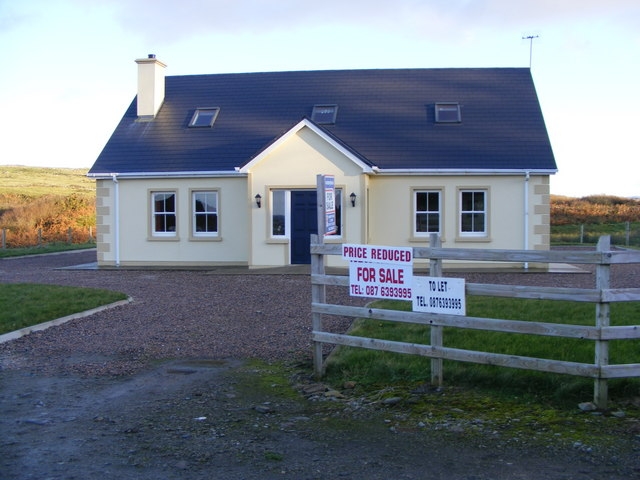
The number of homes being sold at a loss reached 15.8% of total nationwide sales in the September Quarter (Q3), while more than a quarter (25.5%) of residential sales in Auckland were loss making, according to property data company Cotality's latest Pain and Gain Report.
The percentage of properties selling at a loss, compared to their previous purchase price, has been steadily increasing since the fourth quarter (Q4) of 2021 when less than 1% of sales were loss making.
The percentage of loss making house sales is now at its highest level since 2012, 14 years ago.
Around the main centres, Auckland had the biggest proportion of loss making sales in Q3 at 25.5%, followed by Wellington 20.4%, Hamilton 19.1%, Tauranga 15.3%, Christchurch 7.5% and Dunedin 6.9%.
In terms of types of housing, apartments were the worst performers, with almost half (48%) sold in Q3 selling for less than they were bought for.
Townhouses were the second biggest loss makers with 22.5% selling at a loss, while stand alone houses fared best with just 13.4% of their sales made at a loss.
The length of time properties had been owned for appears to be the main determinant of whether they were sold for a gain or a loss, with loss making properties being owned for a median 4.5 years, while those sold for a profit had been owned for a median 10.4 years.
Cotality NZ Chief Economist Kelvin Davidson said owners who purchased more recently had been more exposed to the market downturn.
"Most buyers would not have purchased with the intention of selling again so soon, but circumstances might have worked against them, such as a family or job change, or financial strain brought on by previously sharp rises in mortgage rates," he said.
Overall, the size of gains was generally greater than the losses, with a median gain $270,000 for properties sold at a profit, while the median loss was $60,000.
Both of those figures exclude selling costs such as agent's fees, which would increase the size of losses and decrease the size of gains.
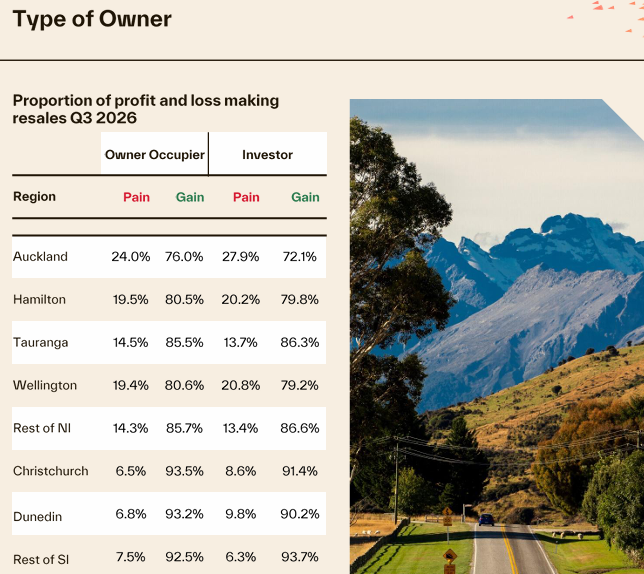
On average, residential property investors were slightly more likely to make a loss than owner-occupiers, with 16.4% of sales by investors in Q3 achieving prices lower than the properties were purchased for, compared to 15.0% of sales by owner-occupiers.
The table below shows the split between investors and owner-occupiers in each of the main centres.

We welcome your comments below. If you are not already registered, please register to comment
Remember we welcome robust, respectful and insightful debate. We don't welcome abusive or defamatory comments and will de-register those repeatedly making such comments. Our current comment policy is here.