
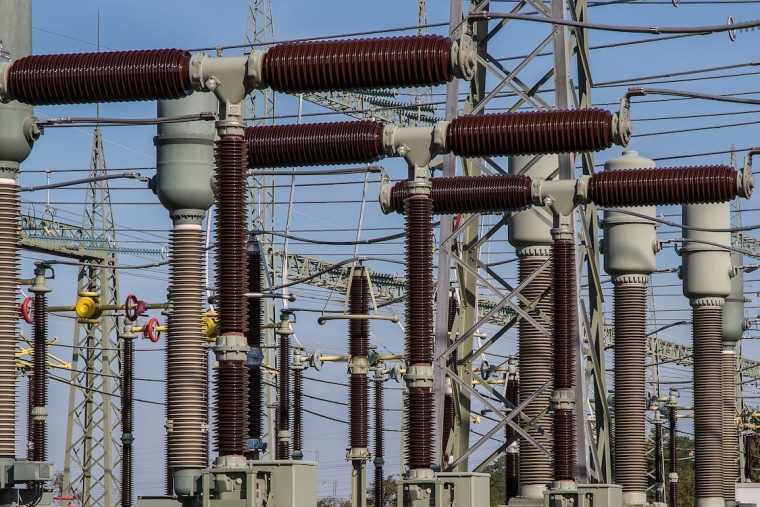
Electricity wires will need to be become more resilient to cope with climate change, according to the Commerce Commission.
The cost of doing so is unclear, but it could run into the tens of billions of dollars, which would be passed on to the customer in the end.
This issue has emerged in the wake of Cyclone Gabrielle, which cut off power in some places for days on end.
The Commerce Commission is involved in this matter because local lines companies and the national grid operator Transpower are natural monopolies. That means they are constantly scrutinised by the commission over the prices they charge and the quality of their service.
In the wake of Cyclone Gabrielle, Transpower wrote to the commission asking for a partial reprieve on quality grounds, saying damage from the cyclone was not its fault.
The Commissioner, Vhari McWha, agreed to exclude outages caused by the cyclone from Transpower's annual performance quality assessment.
But the impact of the weather highlighted a "new normal" for power line companies.
"Recent extreme weather events have served to reinforce the important of resilience planning......while keeping costs reasonable," she says.
"Transpower and the 29 local electricity lines companies that the commission monitors need to ensure their future plans give the right consideration to the impacts of climate change and network resilience.”
McWha says Transpower demonstrated good industry practice, and should not be penalised for outages that were beyond its reasonable control.
"But planning for severe weather events should now be front of mind in every part of the electricity networks that we rely on every day.”
McWha says the commission will focus on weather resilience in its upcoming review of Transpower’s forecast expenditure for 2025-2030.
"And this applies more broadly across all the lines companies, which are equally important to keeping the power on for New Zealanders.”
It is unclear how much it would cost to upgrade transmission and distribution lines to make them more weather-resistant. But a report done last year by the consultancy, Boston Consulting Group (BCG), gave a clue.
It said $8 billion would need to be invested in transmission in the 2020s, $10 billion in the 2030s and $11 billion in the 2040s. This would cover the national grid alone.
In addition, $22 billion would have to be invested by local lines companies in the 2020s, $25 billion in the 2030s and $24 billion in the 2040s.
To be fair, these numbers were not related directly to weather - they were the cost of upgrading wires so they could carry enough electricity to decarbonise the energy sector. They would allow people to use relatively clean electricity, not fossil fuel, to power cars, heat up factories and do other things.
Strengthening the network to make it more weather resistant might increase these costs still further, but they might equally be incorporated within them.
Either way, the sums of money are huge, and the Commerce Commission is doing work on how transmission and distribution companies might be able to pay the interest bill on loans large enough to meet some or all of those costs.
The problem is deemed urgent, since New Zealand is in danger of failing to meet the pledges on emissions reductins made at the Paris conference on climate change.
Meanwhile the lines companies' umbrella group, Energy Networks Aotearoa (ENA), points to a partial fix of electricity vulnerability which would be a lot cheaper.
It says reforms such as clearing away trees so branches don't hang over electricity wires could have reduced power outages from Cyclone Gabrielle by about half.
But it says the current rules make it hard for lines companies to deal effectively with this problem.
A review of these regulations was announced in March.
We welcome your comments below. If you are not already registered, please register to comment
Remember we welcome robust, respectful and insightful debate. We don't welcome abusive or defamatory comments and will de-register those repeatedly making such comments. Our current comment policy is here.