
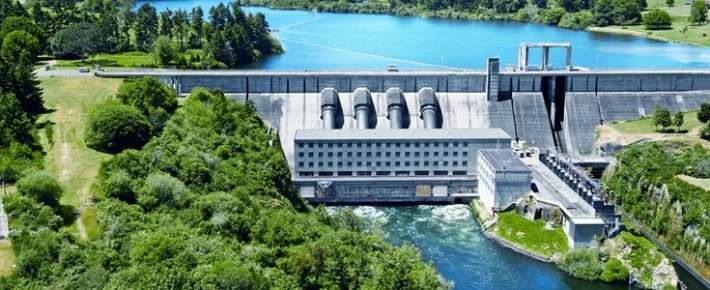
The man who came up with the idea of a Lake Onslow pumped hydro scheme says the Government was wrong to cancel research into it so soon after it was elected.
Earl Bardsley was speaking as renewed worries about the supply of electricity hit New Zealand for the second year in a row.
Bardsley is research associate at the School of Science at the University of Waikato, and campaigned many times for the Lake Onslow scheme. This project would have used cheap, off-peak electricity to replenish upper level reservoirs so water could run back down through turbines to generate electricity during times of peak demand, but would have cost billions to develop.
He says Lake Onslow was not necessarily "the best thing since sliced cheese," but research should have been continued into making a business case for Onslow, along with alternatively using either back-up geothermal or the burning of wood pellets at the Huntly thermal power station.
“I think it’s rather ironic that such a short time after that particular report was cancelled, we’re getting the situation where all those hydro schemes are running low," says Bardsley.
The NZ Battery Project was established within the Ministry of Business, Innovation & Employment (MBIE) in 2020 to explore possible renewable energy storage solutions for when New Zealand's hydro lakes run low for long periods. A pumped hydro scheme at Lake Onslow was one of the options being explored. The current government stopped the Lake Onslow investigations in late 2023, although MBIE continues work on the question of security of supply during extended periods of low hydro inflows as part of its wider electricity system work programme.
Ending work on the Lake Onslow project was a priority of the Coalition Government's 100-day plan, with Energy Minister Simeon Brown announcing in December last year all work had been halted.
"This hugely wasteful project was pouring money down the drain at a time when we need to be reining in spending and focusing on rebuilding the economy and improving the lives of New Zealanders," Brown said.
Tiwai Point scale back
Bardsley’s comments come after the latest symptom of NZ’s energy malaise was made public. This was the decision by the Tiwai Point aluminium smelter in Southland to cut its electricity consumption by 185 megawatts.
This is an increase on last week's pledge of a 100 megawatt cut, and is equivalent to 4% of the country’s total electricity use.
It will mean production at New Zealand Aluminium Smelter, which is majority owned by Rio Tinto, will be scaled back by one third.
New Zealand Aluminium Smelter’s chief executive, Chris Blenkiron, says this decision was made in response to a call from its majority supplier Meridian Energy to conserve electricity.
“With lake storage near their lowest levels historically, we will commence ramp-down to enable 185 MW to flow into the system, to help ease tight supply,” Blenkiron says.
“The team at Tiwai understand the importance of playing our part in the wider electricity system to ease the stress the system is now under, from tight hydro and gas supplies.”
While the undertaking given to Meridian lasts only until 24 September, the slow, subsequent ramp-up of the idled aluminium potline will mean production will be reduced until next April.
Despite this, Blenkiron says the decision to cut output validates the hard work that went into negotiating the agreements signed in May. These pledged to keep the smelter open until 2044, and were based on new electricity supply contracts signed with Meridian and its minority partner, Contact Energy.
The smelter gets paid for agreeing to cut power useage in principle, and gets a further payment if an actual cut is required.
Energy security getting more difficult
The smelter’s pledge came within days of the latest Security of Supply Assessment (SOSA) from Transpower, which repeated earlier suggestions that energy security was getting more difficult.
“South Island energy security over the 10-year horizon has worsened….due to a significantly higher demand forecast, no South Island generation projects reaching the completed or committed stage, and some South Island generation projects dropping out of the future pipeline,” wrote Transpower.
The company was speaking it in its role as the so-called system operator, which oversees the economics and technicalities of the entire electricity mechanism. That is in addition to its job as controller of the National Grid.
“New North Island capacity supply is required more urgently…..a key reason for this is that the supply pipeline is primarily made up of intermittent generation, which makes a lower contribution to peak capacity than do controllable power system resources,” Transpower wrote.
This document repeats the familiar argument, that when the wind doesn’t blow and the rain doesn’t fall, renewable electricity must be augmented from other sources, chiefly the burning of fossil fuel. Repeated findings that New Zealand is running short of gas has prompted greater use of carbon-intensive coal in its place to fill this gap.
In matching information, the electricity consultancy, Energy Link, reports falling inflows into New Zealand’s biggest complex of hydro power plants. These are the Waitaki River set of stations, as well as Lake Taupo, which is the source of water for eight North Island dams on the Waikato River.
Transpower says these problems must be faced up to.
“We have been calling for some time for a step-change in investment in flexible power system resources like fast-start peaking plant, grid-scale batteries and demand response,” the company says.
Along with the lower supply of electricity were higher prices, which passed $400 a mewawatt hour, up from the mid 300s a week earlier.
*Listen to Bardsley in an episode of our Of Interest podcast here; Could a pumped hydro scheme in Otago free NZ from fossil fueled electricity & help enable a green transition?
We welcome your comments below. If you are not already registered, please register to comment
Remember we welcome robust, respectful and insightful debate. We don't welcome abusive or defamatory comments and will de-register those repeatedly making such comments. Our current comment policy is here.