
With Russia under pressure on multiple fronts, President Vladimir Putin finds himself in a tighter spot than at any other moment of his quarter-century in power. Putin remains firmly in charge of the Kremlin, but there is a growing risk that he will try to escape his current predicament by escalating his conflict with the West.
Putin’s first problem is that his war in Ukraine has no momentum. Recent territorial gains have come slowly and at the cost of enormous loss of life (some 450,000 killed, almost eight times the US body count in Vietnam) and economic damage. After four years and four months, Russian forces control about 20% of Ukraine’s territory—the same percentage they held three years ago. Ukraine, meanwhile, continues to demonstrate its determination to win, its resilience in the face of Russian missile and drone attacks, and its remarkable capacity for innovation in weapons and battlefield tactics. Its successes have emboldened it to go on offense.
Most notably, Ukraine has successfully brought the war to the Crimean Peninsula, which Russia has occupied for a dozen years. Crimea is a crucial arena for both strategic and symbolic reasons. It was there, in 2014, that Russia began its war on Ukraine.
Putin has treated the territory as the crown jewel of his “New Russia” and invested heavily in its development, both to connect it to the Russian mainland and to make it an attractive place for Russians to live and visit. Crimea is also strategically vital for Ukraine’s continued access to the Black Sea, an economic lifeline.
In recent weeks, Ukraine has sent swarms of drones to attack military sites, power plants, and railway stations on the peninsula. It has struck Crimea-bound Russian trucks traveling through occupied eastern Ukraine and across the expensive Kerch bridge that Putin built after illegally annexing the peninsula. And it has hit Russian cargo ferries resupplying the region by water. As a result, Crimea’s residents face shortages (particularly of gasoline to fuel their cars) and frequent power outages.
But Putin’s greatest frustration is Ukraine’s success in striking deep inside Russia itself. It was embarrassing enough that fears of a Ukrainian attack kept Russia from rolling its arsenal through Red Square during this year’s Victory Day parade, which is supposed to be a celebration of Russia’s greatest military achievements.
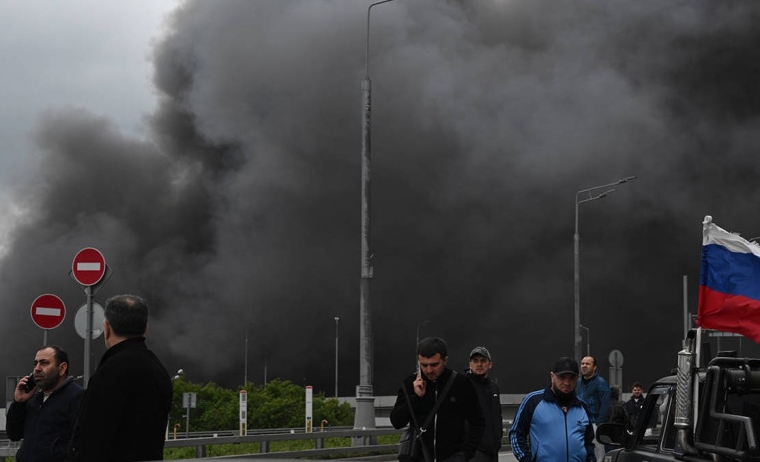
But even more humiliating was Ukraine’s use of missiles and drones to attack energy facilities and other sites in Moscow and St. Petersburg, as well as additional targets hundreds of miles from the war’s frontlines. Ukraine has shattered the illusion for many Russians that the war could never arrive on their doorstep.
Ukraine’s successes have become so obvious that, on June 28, Putin was forced to acknowledge them on Russian state television. He admitted that the recent strikes, which he referred to only as “terrorist attacks on our territory,” have created shortages that force the government to import more fuel as repairs are made. He is publicly signaling that he knows Russians face hardships, which are compounded by internet disruptions stemming from the Kremlin’s attempt to force the public onto state-controlled sites.
Russia’s broader economy, now heavily focused on supporting the war effort, faces headwinds, too. The central bank has warned that growth in 2026 could fall to as low as 0.5%.
Yet Putin still hopes Russia can win a war of attrition. In recent days, state media has made much of military advances on the city of Kostyantynivka, which might serve as a gateway to broader territorial gains in eastern Ukraine. Putin is still betting that US President Donald Trump will actively undermine the resupply of Ukraine’s military and further disrupt NATO, and perhaps hoping that elections next year in France, Britain, Italy, and some key German states could upend European support for Ukraine as well.
But Russia’s battlefield performance over the past several years suggests that any further gains will continue to come slowly and at a high human and economic cost. Russian casualties (killed and disabled) now outnumber new recruits. And Trump seems to have lost interest in helping Russia, particularly as successful Ukrainian strikes have changed the war.
Moreover, Europeans have become more serious about longer-term investments in their own defense. Although big elections loom across the continent, they remain many months away, and populist victories that reduce support for Ukraine are no sure thing.
Despite the setbacks and embarrassments, there is scant evidence that Putin is in trouble at home. Some Russian media have hinted at growing public frustration with the war, but there remains no alternative to Putin’s leadership, and he still appears uninterested in peace talks.
Thus, Europeans and Russia’s nearest neighbors worry about what Putin might do were he genuinely backed into a corner. We are sure to see a continued expansion of Russian missile strikes at Ukrainian cities—like the major July 2 drone and missile attack that killed at least 27 people in Kyiv. We can also expect more military provocations involving NATO countries, particularly with drones that Europeans remain unprepared to handle. Last year’s arson attacks against property linked to British Prime Minister Keir Starmer, and last month’s episode in which a Russian warship fired warning shots at a British yacht in the English Channel, offer hints of what may be coming.
If Ukraine can continue to disrupt Crimea, strike more targets in the heart of Russia, frustrate Russia’s frontline forces, and pile more pressure on Russia’s hobbled economy, an isolated, aging, and frustrated Putin may decide he needs a game-changing attack.
The use of a tactical nuclear weapon in Ukraine, a direct frontal assault on the former Soviet republics of Latvia and Estonia (now NATO members), and major cyberattacks on European or American targets remain extremely unlikely for now. But aggressive provocations against NATO countries, even if they fall short of clear acts of war, can still create serious security, economic, and political risks. And if Putin concludes that his political or physical survival are in danger, his willingness to gamble will grow quickly.
Ian Bremmer, Founder and President of Eurasia Group and GZERO Media, is a member of the Executive Committee of the UN High-level Advisory Body on Artificial Intelligence. Copyright: Project Syndicate, 2026, and published here with permission.
We welcome your comments below. If you are not already registered, please register to comment
Remember we welcome robust, respectful and insightful debate. We don't welcome abusive or defamatory comments and will de-register those repeatedly making such comments. Our current comment policy is here.