
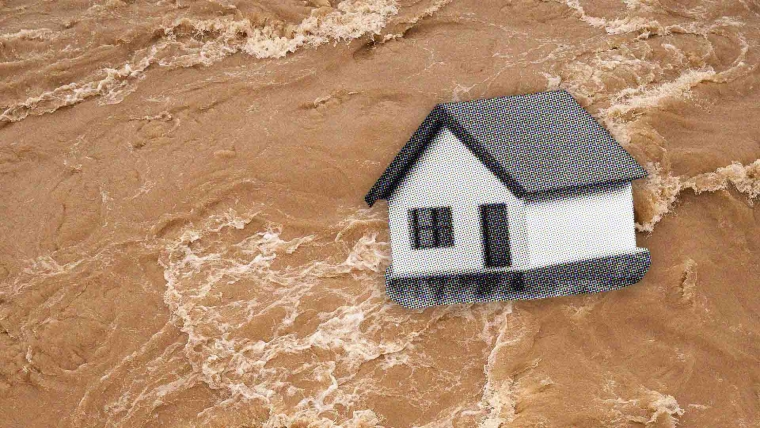
New Zealand is already paying for the impacts of natural hazards and climate change, the Climate Change Commission says, and delaying action will only increase these costs.
“Nationwide action to adapt is not keeping pace with growing climate risks, leaving Aotearoa New Zealand inadequately prepared,” the commission said in its 2026 national adaptation plan progress assessment released on Tuesday.
Natural hazards, including climate change, were costing Central Government and insurers over $4 billion a year - and those are just the direct costs, Climate Change Commission chief executive Jo Hendy said.
And 97% of the central government's spend has gone into response and recovery, while just 3% goes towards reducing future risk, she said.
"New Zealand is already paying for the impacts of climate change and other natural hazards," said Hendy.
"As we've seen this year, damaging storms are becoming more frequent and unpredictable, affecting homes, businesses, infrastructure and communities.”
Hendy said delaying action increased costs, leading to higher recovery, rebuilding and disruption costs later.
“Investing now can reduce future harm and avoid larger costs later, with every $1 invested potentially delivering up to $10 in benefits.”
"The next two years are a critical opportunity to close these gaps before the costs of delay grow even higher,” Hendy said.
“The longer key gaps remain unresolved, the harder and more expensive it will be to protect communities, infrastructure and businesses from growing climate risks."
Overall action has been too slow, too uneven and too poorly coordinated, commission's CEO says
The commission’s latest progress assessment comes two years after the first one was conducted.
The commission did find progress in some areas in its latest report such as some positive action to support climate-resilient, healthy, connected ecosystems, and to strengthen biosecurity. Understanding of infrastructure exposure was also improving along with improved focus on hazard information, the commission found.
Alongside this, the commission said: “Improved focus on hazard information, planning tools and reforms that help avoid or limit development in areas with high exposure to climate risks are giving councils and communities a stronger basis for future decisions – for example, provisions in recent resource management reforms to clarify and strengthen councils’ ability to decline land-use consents or impose relevant conditions where there is significant natural hazard risk.”
But overall, Hendy said action had been too slow, too uneven and too poorly coordinated.
"Too many of the key gaps identified in our first assessment remain unresolved.”
Because the Commission thinks progress has been too slow, it has identified six areas that need urgent action. The commission is calling for:
- Central government to establish funding and financing pathways to enable adaptation at a local level, being clear about how the costs of adaptation will be paid for
- Legislative requirements be put in place for local adaptation planning, along with appropriate tools and guidance, to ensure that adaptation planning is a priority for local government
- Climate change to be embedded into key pieces of legislation
- Central Government to coordinate, govern and invest in building and maintaining national climate risk information and guidance to assist informed decision-making at all levels
- Ensure Māori have funding and financing mechanisms and models so they can continue adaptation efforts in line with tikanga and whakaarotau (priorities)
- Central Government to make sure the next national adaptation plan has goals and objectives that drive action at the pace and scale needed, prioritises action based on urgency of climate-related risks, and has investment and workforce strategies to support the implementation of this plan
"These six essential areas are the foundations of an effective adaptation system. They are not a pick-and-mix of recommendations and must be addressed together,” Hendy said.
"Preparing for climate change is complex and requires difficult decisions across all levels of government, communities, businesses and households. With growing climate risks, the pace of action and the scale of effort need to increase significantly to avoid greater damage, disruption and costs."
'Our focus remains on practical action'
Climate Change Minister Simon Watts welcomed the commission's report, saying the Government would carefully consider its recommendations.
Watts said: "Our focus remains on practical action to help communities prepare for the impacts of climate change while protecting taxpayers' money."
He pointed to the Government's investment in flood resilience and the resilience of the country's road network, as well as the development of NZ's first national flood hazard map, and requiring councils to undertake adaptation planning in high-priority areas.
"It is encouraging that the Commission recognises the progress already being made, including on flood mapping and improving local planning. There is more to do, but New Zealand is better prepared today than it was three years ago because this Government has moved from talking about adaptation to delivering it."
'A concerning indictment of the Government’s lack of progress'
Labour climate change spokesperson Deborah Russell said the report's finding that NZ is inadequately prepared for growing climate risks is "a concerning indictment of the Government’s lack of progress".
"New Zealanders are already experiencing the devastating impacts of extreme weather. These events carry huge human and financial costs and Labour recognises that delaying climate action only increases the financial burden for kiwi households, councils, businesses and communities."
Russell said her party supported the commission's findings and its calls for urgency. "Labour supports climate adaptation as a cross-party effort to ensure lasting policies that provide economic certainty."
She said it was a national embarassment that, instead of heeding repeated warnings, "the Government is going backwards on climate action" - pointing to the removal of agriculture out of the Emissions Trading Scheme, reversing the ban on new offshore oil and gas exploration, and "rolling back environmental protections".
'Difficult and unpopular decisions will be required soon'
Founding director of Climate Prescience Ltd and adjunct senior research fellow at Victoria University's NZ Climate Change Research Institute Nathanael Melia told the Science Media Centre: "There are valuable population and infrastructure-based exposure mapping statistics within the report, and the report is strongest where the science is clearest."
"The case for increased coastal flooding is clear. As the planet warms, oceans absorb heat and expand, while land ice melts; both raise sea levels. When this rising baseline coincides with high tides and storm conditions, damage to coastal homes and infrastructure becomes increasingly likely.
"Because so many New Zealanders live and work near the coast, we face serious and vexing questions about adaptation, insurance availability and retreat. The relative simplicity of thermal expansion leaves governments with an uncomfortable certainty: difficult and unpopular decisions will be required soon," Melia said.
The Greens have been contacted for comment.
We welcome your comments below. If you are not already registered, please register to comment
Remember we welcome robust, respectful and insightful debate. We don't welcome abusive or defamatory comments and will de-register those repeatedly making such comments. Our current comment policy is here.