
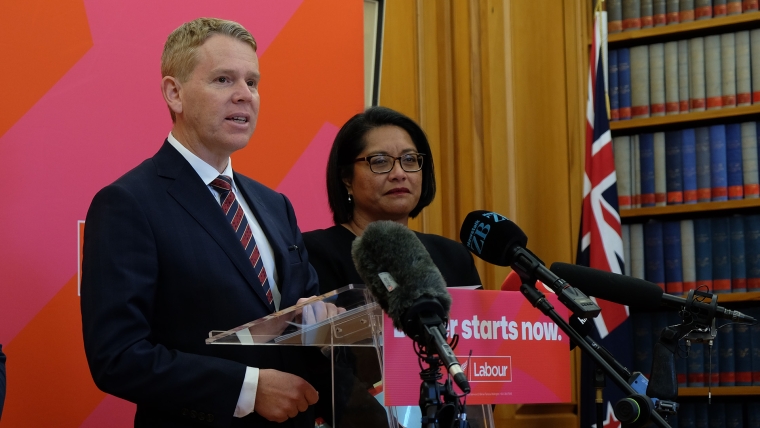
The Labour Party is confident every election commitment it has made is fully costed and fully funded, and is promising to return the government books to surplus in 2028/2029.
“The numbers add up and we have left room to confidently respond to whatever comes next," Labour’s finance and economy spokesperson Barbara Edmonds says when sharing the party’s fiscal plan on Sunday afternoon.
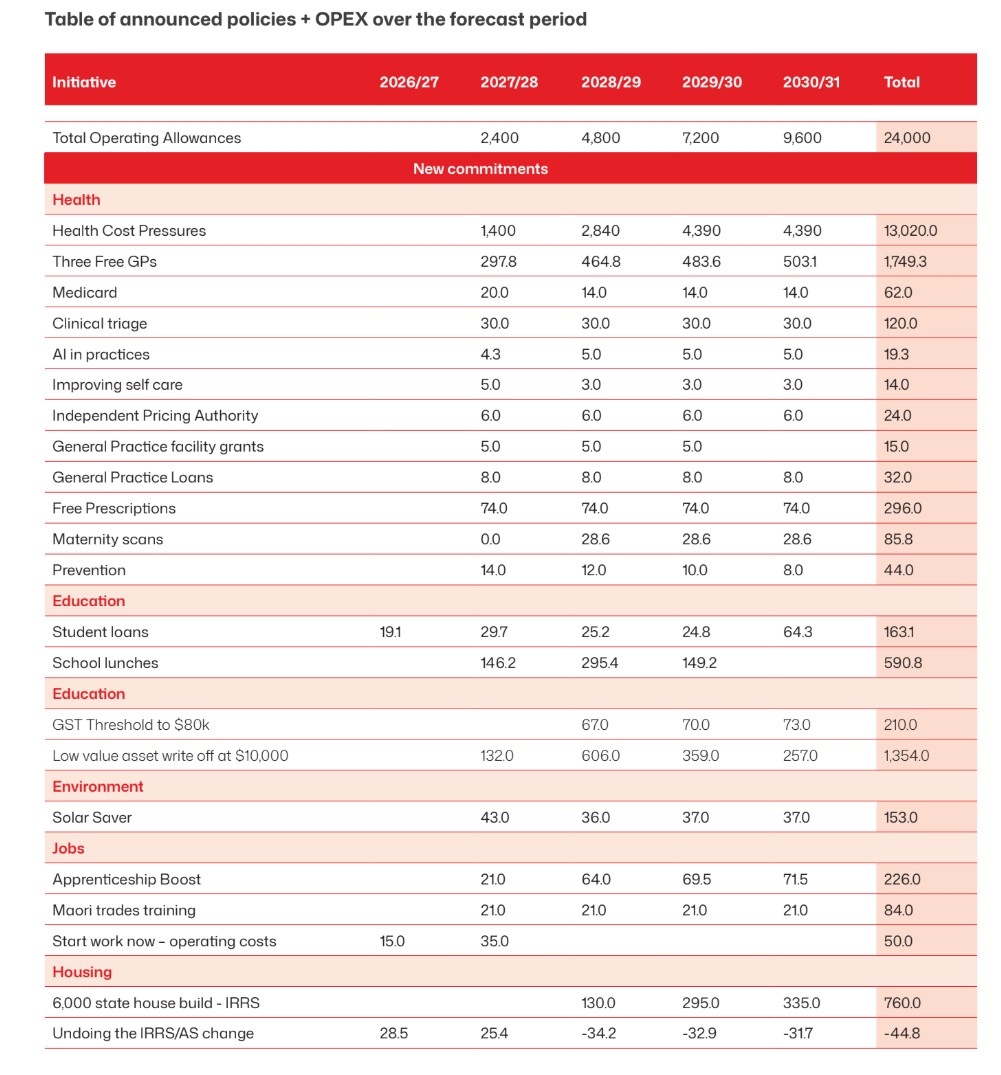
She says Labour will keep operating allowances at the $2.4 billion set at Budget 2026.
The party’s fiscal plan document also shows Budget 2027 through to Budget 2030 will have operating allowances of $2.4 billion.
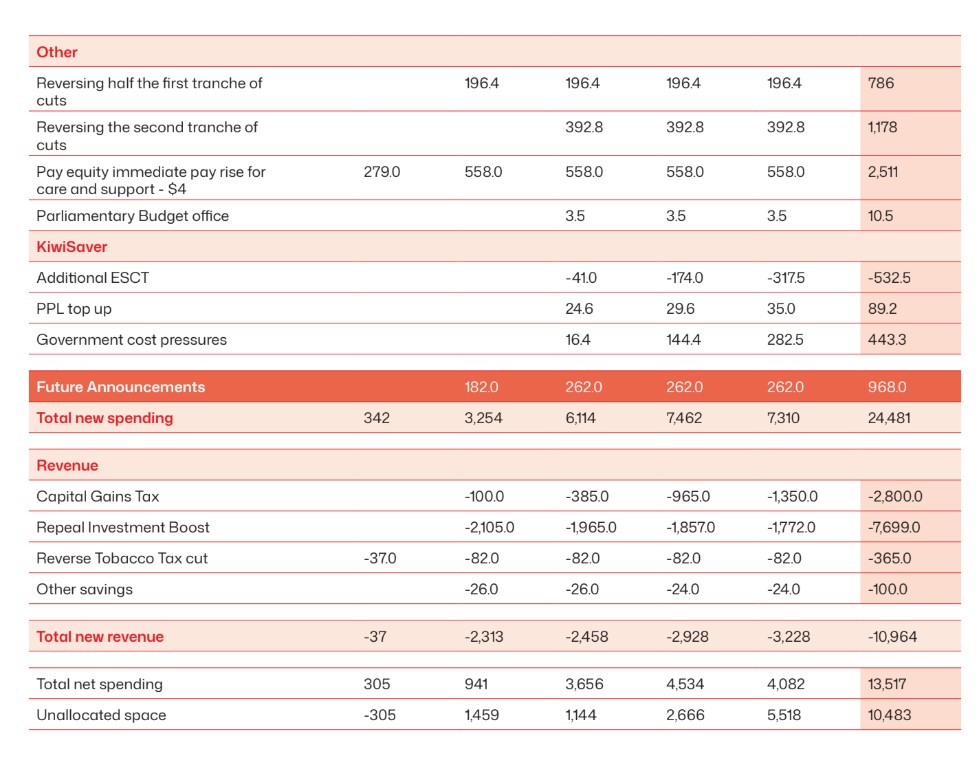
“Our announced capital commitments fit comfortably within the $12 billion of future capital allowances. We also have almost $10.5 billion of future operating allowances unallocated. We can deliver what we have promised without increasing those allowances,” Edmonds says.
For capital investment, the party’s fiscal plan says capital allowances for Budget 2027 and Budget 2028 are $3.5 billion each, and the allowance for Budget 2029 is $5 billion - which means a total of $12 billion in future capital allowances.
So far, Labour has announced these capital commitments:
$200 million capital injection for the New Zealand Future Fund
$420 million for the initial student loan write-off
$200 million for hospitals
$400 million for schools
$2.9 billion for Kāinga Ora housing spread over four years
$7 million for the Ratepayer Assistance Scheme solar expenditure
“These commitments are fully provided for within the future capital allowances. They leave almost $8 billion unallocated, preserving room to respond to changing need and invest in high-value projects as they are ready.
Surplus and debt
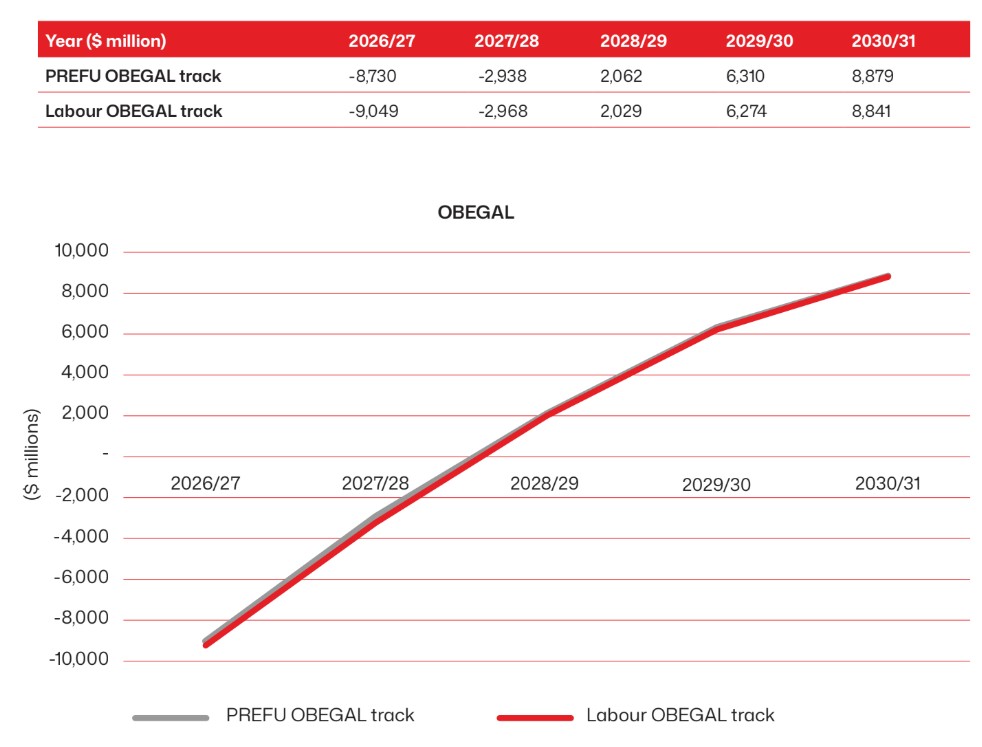
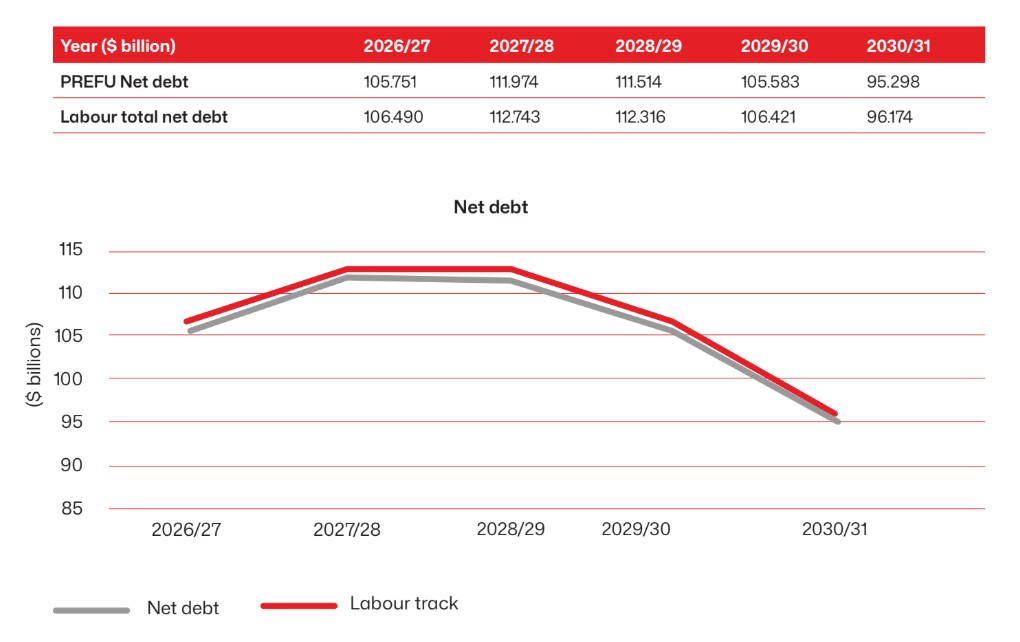
Labour is also committing to returning the government books to surplus in 2028/2029 - expecting to return it to $2 billion which is the same forecast in the pre-election economic and fiscal update - and bringing net debt down below 20% of gross domestic product (GDP) over time.
Labour will use the Operating Balance Before Gains and Losses (OBEGAL) rather than OBEGALx, which excludes the Accident Compensation Corporation, and was introduced by Finance Minister Nicola Willis.
“Returning to surplus matters. So does paying for every promise and being clear about the choices required to get there.
“We will not pursue short-term cuts that increase unemployment, weaken essential services or create greater costs in the future. We will return the books to surplus while strengthening the foundations for long-term economic growth.”
The party is projecting total net debt to be $106.49 billion in 2026/2027, $112.74 billion in 2027/2028, $106.42 billion in 2029/2030 and $96.17 billion in 2030/2031.
The fiscal plan says while debt must be managed responsibly, “borrowing for high-value capital investment can be the sensible choice when the asset will serve New Zealanders for decades and failing to invest would leave a larger bill later."
Core Crown expenditure and revenue
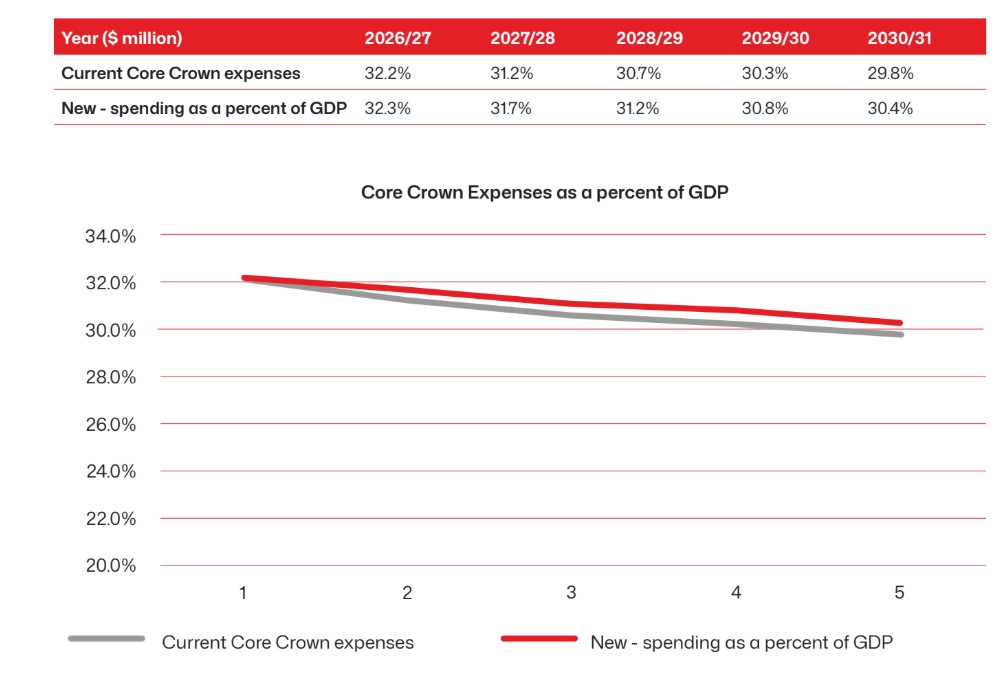
In Labour’s fiscal plan, the party’s objective is to keep core Crown expenditure and revenue down below 33% of GDP, “when our simple, targeted capital gains tax is fully implemented.”
Health
Labour says it will follow the health cost-pressure track which was set out in the pre-election economic and fiscal update (PREFU).
“That provides an additional $1.4 billion from 2027/2028, a further $1.44 billion from 2028/2029, and a further $1.55 billion from 2029/2030.
The party says with its announced health policies, “Labour’s plan puts $15.5 billion of additional funding for health over the forecast period.”
‘It’s all about choices’
Put to Edmonds at a media stand up that the party wasn’t looking at much more spending and having previously claimed the current coalition government was austere, she told reporters: “Giving more money for school lunches is not austere. Giving more money for primary healthcare is not austere. Ensuring that our women [in care and support work] get a $4 paid increase from 1 January 2027 is not austere.”
Asked what she would say to people who would like Labour to be more ambitious, Edmonds says it’s all about choices.
“You'll have seen with our policy that we release, we're providing real cost of relief pressure, cost of living relief pressure for our families. We are moving as much as we can to ensure that the money goes to the places it needs to,” she says.
Asked if most of Labour's "big ticket" policies had already been announced, Labour leader Chris Hipkins says yes.
Asked by reporters about the party’s fiscal plan and the impact of any future coalition negotiations, Hipkins says he was responsible for setting out Labour’s plan.
“It shows how we’re going to pay for all of our promises. Our promises are fully costed. Our numbers add up. I stand by it completely.”
Read the fiscal plan here.
We welcome your comments below. If you are not already registered, please register to comment
Remember we welcome robust, respectful and insightful debate. We don't welcome abusive or defamatory comments and will de-register those repeatedly making such comments. Our current comment policy is here.