
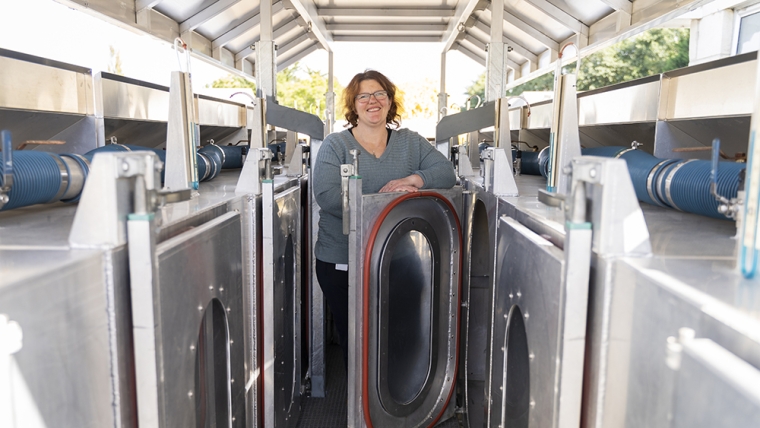
A while back I discussed with senior scientist Suzanne Rowe from Ag Research about low emitting sheep. So where are we at with this and does an animal that is better for the environment sacrifice performance or quality? She joined me again this week to discuss.
New Zealand is a world leader in the recent development of breeding sheep that burp less methane which is – a relatively short-lived but greenhouse gas that contributes to climate change, this is well documented.
After three generations of breeding, the lowest emitting sheep in a research flock produced close to 13% less methane than the highest emitters, per kilogram of feed eaten. But questions have remained about whether this low methane trait means sacrifices for the health or quality of the animals, including quality of the meat that is destined for New Zealand’s international markets.
Research relating to the health of the sheep also suggests that breeding for low methane is unlikely to affect issues such as internal parasites, the fertility of adult ewes and the survival of lamb litters. When it comes to wool, low methane breeding was favourable to fleece weight, while it was also favourable to the weight achieved by the animal before slaughter and its body condition.
“Once we knew we could breed for less methane, we set about determining what the impact on the animal might be from birth through to parenthood,” Dr Rowe says. “The work was carried out in flocks across New Zealand using thousands of measures over several years to demonstrate that low methane emissions can be included into breeding goals without sacrificing other key health and performance traits.”
“What we have found is that breeding for lower methane, and the physiological changes we see in these lower emitting animals, do not negatively affect meat quality or those things meat producers are looking for in the animal carcass. The story has some complex biology behind it as we saw that low-emitting animals have different eating behaviours, tending to be grazers rather than gorgers - eating more feed than their high-emitting counterparts, even though the high emitters had bigger stomachs. This ‘little and often’ approach seems to favour laying down muscle instead of fat under the skin, whilst keeping the healthy fats that provide flavour, so meat quality is retained along with the reduced emissions.”
“We think the low-emitting animals may in fact have even greater economic value through decreased fat and increased meat yields. This is critical because farmers need to know that if they are committing to breeding their animals for lower methane, that they are not going to go backwards in their productivity and earnings. This knowledge provides greater incentive to make changes on farms that contribute to New Zealand’s methane reduction goals, and to climate change globally.”
I have not yet met a scientist working in the Ag sector that does not have one eye firmly focused on not only the future of farming in New Zealand but also constantly driving for further improvements in the area of sustainable farming practices. So sheep breeders now have the ability to breed animals with a low methane trait that does not compromise on animal health, lambing percentages or carcass yields. There is a lot to celebrate here and I have no doubt we will achieve the same results in our beef herd through the Informing New Zealand Beef Program. It is gains like this along with all the other environmental work that farmers are doing, that will well and truly set us apart from the rest of the world.
Listen to the podcast to hear the full story
Angus Kebbell is the Producer at Tailwind Media. You can contact him here.
We welcome your comments below. If you are not already registered, please register to comment
Remember we welcome robust, respectful and insightful debate. We don't welcome abusive or defamatory comments and will de-register those repeatedly making such comments. Our current comment policy is here.