
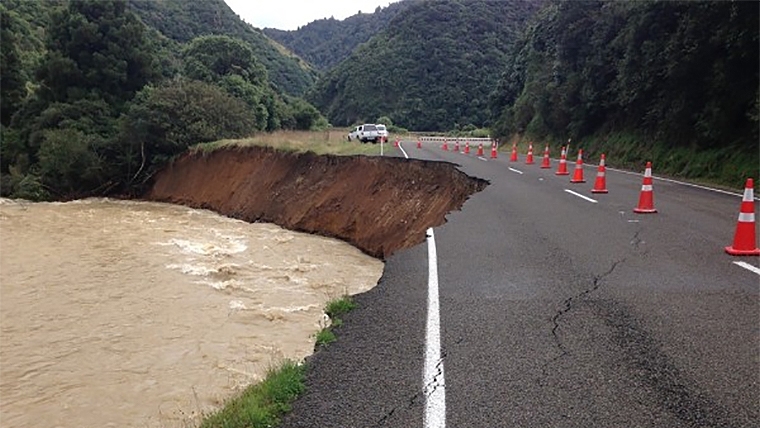
As I pen this comes the news that yet more rain and wild weather is affecting the east coast of the North Island. Focusing on Gisborne or Te Tairawhiti as it is increasingly being known as, it is a province that always had the reputation of being one of the more isolated provinces in New Zealand and always considered a destination rather than some where you pass through, perhaps en-route to somewhere else.
In the past this was not seen as such a major issue as there was plenty to attract people to Gisborne, the destination. An abundance of surf and swimming beaches, good climate and vineyard tours and scenic drives meant there was plenty to attract tourists to the region. Even though largely summer based it still was enough to keep a strong economic tourism base.
Unfortunately, the ongoing weather extremes of the last couple of years have eroded much of this.
Apart from just the lack of warm clear summer weather, the beaches are smothered in logs and roads are in a severely unreliable state.
Unfortunately, the weather extremes and the issues created have also affected to productive base of the region., partly through the flooding and accompanying silt and logs but arguably more so through the devastation to the roading infrastructure and its impact upon the region’s logistics. The impact of Cyclone Gabrielle in particular must be creating real concerns for those who control the purse strings around reinstating the infrastructure.
Gisborne and Wairoa lost rail services back in 2012 (due to damage and reinstatement expense to the line) and was reinstated back to as far as Wairoa in 2020. However, Cyclone Gabrielle has closed the rail line yet again with no date as to when it will reopen.
In 2022 there were conversations taking place that the possibility of extending rail from Wairoa right to Gisborne; it is likely these are firmly on hold at the moment.
The main SH2 south was also closed for 3 months and only opened in mid-May. The road north (SH2) is still subjected to closures for repairs and a general warning “Due to multiple road dropouts, State Highway 2 is open from Matawai to Te Karaka in both directions with convoys or temporary signals with a 30km/h temporary speed restriction in place. Road users are advised to take extra care and expect delays travelling through this area” is in place on the Waka Kotahi site.
The East Coast route (SH35) still has multiple sites where major repairs are required and it takes a robust traveller to go that way (or a local). “SH35 from Ōpōtiki to Gisborne will be closed to through traffic from 7pm tonight. However, motorists should be aware, there’s a strong likelihood the road will be closed earlier than that – at some point this afternoon. SH35 has also been closed this afternoon between Te Puia Springs and Ruatoria, because of flooding”.
The Gisborne region is used to transport disruption with Cyclone Bola having similar impacts to the current situation, the difference seems to be, there was a more positive outlook to the future back then. Climate warning extremes have dissipated some of this resolve.
So, looking ahead, transport of short shelf life products is now both riskier and more expensive to get to market and the attraction of both getting tourists to come into Te Tairawhiti region is going to be a difficult sell.
The logs on the beaches will disappear eventually, presumably. But how long that takes and the subsequent loss of supporting infrastructure such as motor camps, motels in the meantime as the economic grip tightens will mean Gisborne will take a long time to regain its position as a destination. Along with the lack of visitors for locals one of the attractions of living (remaining) in Gisborne was the access to the ocean. Some of my more pleasant past-time was spent at the Gisborne Yacht Club taking part in Sunday race days. These also took place in Mahia and Wairoa. It would now be a brave sailor to risk yacht and crew sailing these waters with the risk of hitting semi submerged logs so high. My point being the hold on young and old talent has diminished and getting good staff to come or remain in Gisborne must be going to become more difficult.
I don’t doubt Waka Kotahi are putting all efforts into getting the roads open and more reliable. The route north’s major problem appears to be issues with the Otoko hill and its very unstable geography. I presume someone has reminded Waka Kotahi that there was a rail route from Gisborne to Motuhoura (5miles beyond Matawai) and the Otoko section had a tunnel to avoid some of the ‘geography’ impacting upon the road. The rail was closed in 1959 with the 'improvement' of the roading system.
When discussions around the impacts of climate change were had much of the conversations focused on sea level rising and the impact of drought (all still ahead of us). The impending isolation of provinces, as Northland, Coromandel and Marlborough are also affected, did not feature and yet they are perhaps more challenging than any sea rise.
You do not have to look far from Gisborne to see what the impact of a lack of support does when the economic base is removed. The whole of the East Coast from at least Tolaga Bay to Hicks Bay shows the remnants of better times and when nothing was done to replace it.
What the solutions are for the region are no doubt will be challenging and expensive. But as a nation these regions can’t be allowed to be just written off as too expensive to maintain. If the rot is allowed to start at the provinces it will soon gobble up the rest of the country.
We welcome your comments below. If you are not already registered, please register to comment
Remember we welcome robust, respectful and insightful debate. We don't welcome abusive or defamatory comments and will de-register those repeatedly making such comments. Our current comment policy is here.