
The issues around the Emissions Trading Scheme (ETS) and farmer have gone below the radar recently. Mostly overtaken by the rolling out of the various parties’ election policies and promises. However, Beef+Lamb NZ have (last week) released an updated report commissioned by them from law firm Meredith Connell (MC).
Although the document states that it is written “as the starting point for a national discussion on the role forestry offsets play in our country’s climate strategy”, it should perhaps be better considered as a ‘submission’ to MPI for the re-evaluation of the Permanent Forestry Category of the ETS programme. This was called for back in May and submissions have (as of last week) now closed.
Even the MC title “Planting out our rural communities? What is wrong with forestry offsets in the ETS and what needs to be done” leads the reader down this pathway. The timing of the government review is perhaps unfortunate as it is not likely that any real progress is going to be made this side of Christmas, given the upcoming election and even if Labour manage to get back in, it will be with a mix of absent current members and presumably some new faces.
As the report title indicates the focus is on the impact permanent (exotic) forests are having (or potentially having) on both rural communities and New Zealand food production base. It continues to show how out of step the New Zealand approach to using trees as offsets is with the vast majority of other countries. “Typically, participants (other countries) are restricted to offsetting no more than 10% of their gross emissions surrender obligations. In contrast, the primary purpose of the New Zealand ETS is to achieve net emissions reductions, allowing unlimited use of forestry units to meet surrender obligations”. To be fair to the government, (even) they have realised this now and the review has been to focus on better ways forward.
The B+LNZ report goes further than just looking at the problem, but also provides a range of potential solutions and picks what it believes are the ones more favoured to work.
The graph below shows MPI’s 2021 Survey of Afforestation Intentions which clearly shows the spike occurring post 2012 as the price of carbon increased and appears to be at the expense of indigenous forests.
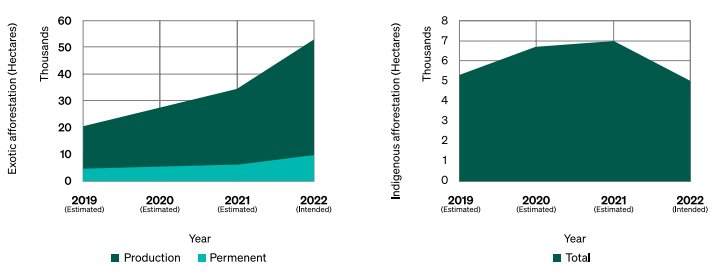
The lifting of the cap on the ETS in 2019 was meant to discourage ‘polluters’ from emitting but in reality it just drove them to invest in offsets leading to what many on the land would believe is the worst of both worlds; still emitting and gobbling up land at the same time.
The graph does show that production planting has increased at a greater rate than ‘permanent’ but given that time will fudge this, many don’t believe these numbers correctly reflect what the real purpose of the plantings are for, but it will take 25 plus years to find out.
If they are truly production plantings then there is going to be a lot of timber to be milled from 2050 onwards and it also would mean that the more remote steeper country which maybe could benefit from permanent plantings will not be (assuming production plantings need to be within an economic hauling distance from ports or mills).
It is also worth mentioning that the 50,000ha being planted it is around double the area the Climate Change Commission estimated as being needed to reach “net zero emissions”. If this rate was to be achieved it also raises the question as to what would be the price for ETS credits. I presume exceeding net zero targets would mean the price could be significantly reduced from the predicted highs.
The B+LNZ report hopefully has finally put to bed the argument that forestry creates more jobs than existing on farms. The table below clearly shows the negative impact on employment and resulting downstream impact on rural communities

Source: B+LNZ report 2023
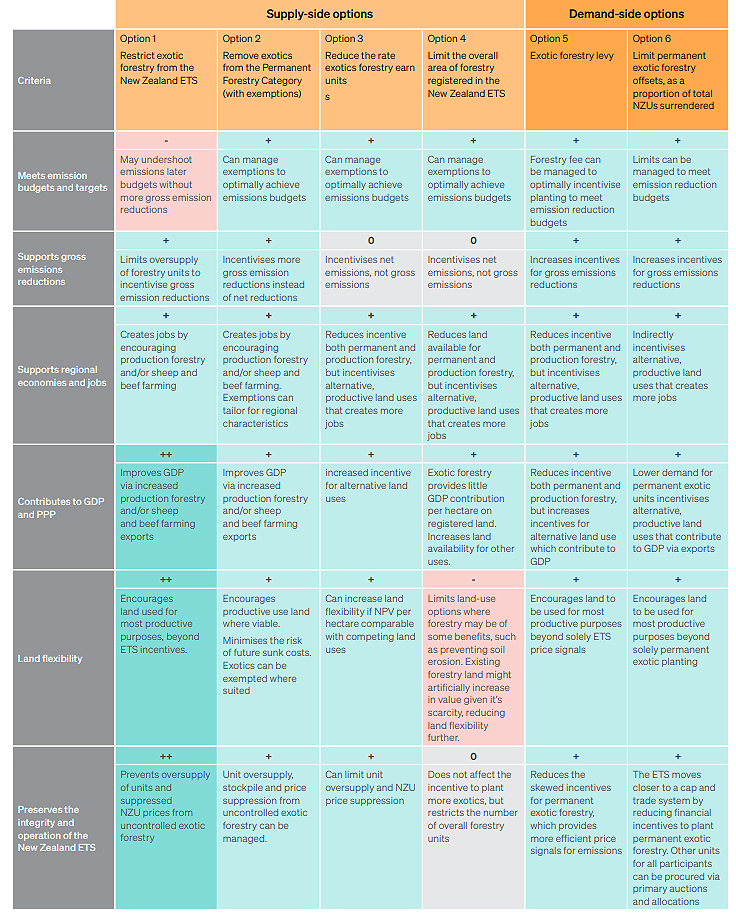
The report authors have proposed six potential ways forward of which four are on the supply side:
Option 1: Restrict exotic forestry in the New Zealand ETS
Option 2: Remove exotics from the Permanent Forestry Category (with exemptions)
Option 3: Reduce the rate at which exotic forestry earns NZUs
Option 4: Limit permanent exotic forestry by land area
And on the demand side:
Option 5: Permanent exotic forestry levy
Option 6: Limit permanent exotic forestry offsets, as a proportion of total NZUs surrendered
The table below lays out how they believe the different options compare to each other.
Source: B+LNZ report 2023
They have selected two options, one each from supply and demand as to how they see the way forward to be best served.
Option 2: Remove exotics from the Permanent Forestry Category (with exemptions); and
Option 6: Limit permanent exotic forestry offsets, as a proportion of total NZUs surrendered.
Whether ’hitting’ the issue with both barrels will mean that New Zealand fails to reach the number of hectares required to be planted to achieve ‘net zero’ largely depends upon how accurate the MPI Survey of Afforestation Intentions is. I tend to believe under the suggested settings a lot of those ‘production’ hectares may disappear into hot air. However, the report is an easy read with clear assumptions for most of their reasoning and will lend good information to the debate ahead.
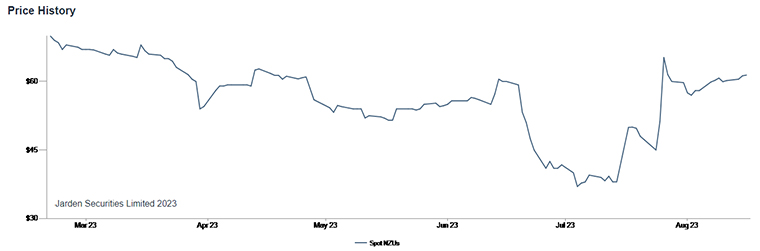
In the meantime the government has maintained the settings on the next September ETS auction but has lifted them for the following December auction. The current price of trade NZ credits is in the graph below. As always, interesting time ahead.
Source: Jarden: CarbonNews
We welcome your comments below. If you are not already registered, please register to comment
Remember we welcome robust, respectful and insightful debate. We don't welcome abusive or defamatory comments and will de-register those repeatedly making such comments. Our current comment policy is here.