
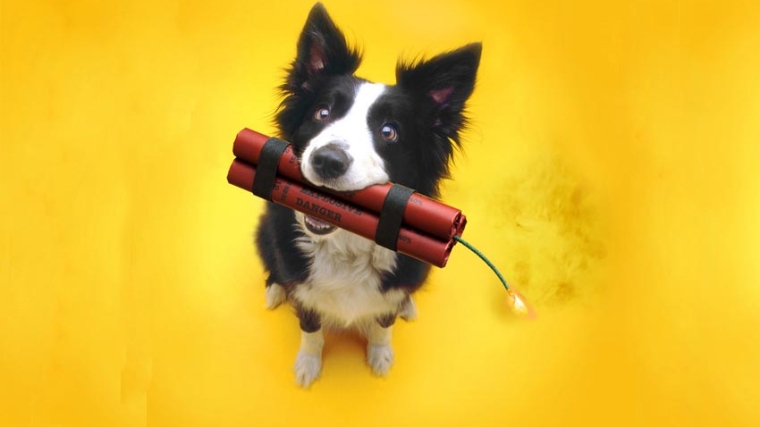
The old saying is a metaphor for New Zealand’s infrastructure deficit, hospital system, and education although it could also cover any number of other areas of our lives which are governed by noble but often impractical aims and goals. Every three years the country votes for the mob it sees as most capable of running the country the way the majority prefers, but invariably we end up being disappointed by the outcome.
The early signs this time are slightly better, because of the statements of intent to take necessary action to get rid of red tape, cut the number of bureaucrats, and undertake large infrastructure projects, although the last government’s delivery record doesn’t set a good precedent. As well the divergent views of the three coalition partners and the compromises needed to keep the two smaller members happy give cause for concern about disapproval of various policies by large groups of voters.
At least the rural sector can be encouraged by the RMA Amendment Bill’s proposed changes to winter grazing, stock exclusion, and the definition of significant natural areas. Beef + Lamb chair Kate Acland said, “Farmers need clarity and certainty to make on-farm investments and changes to their farming systems safe in the knowledge that regulations will be science based, practical and enduring. Farmers have made significant environmental improvements in the last few years by excluding stock from waterways and better managing the risks of winter grazing…… the government’s promise of a more practical and enabling framework will support continued improvement in these areas.”
The last government was characterised by good intentions, a massive number of reviews and reports, and remarkably little tangible achievement. The reasons it declined from a record MMP era majority to losing last year’s election were its inability to deliver outcomes as well as ham-fisted attempts to take the country down a path of social reform it had not campaigned on. Electorates tolerate neither failure to deliver nor unexpected surprises about which they should have been warned, and therefore vote accordingly.
At this point, in spite of the moaning and handwringing by the opposition, the coalition negotiations should have made clear what each partner’s agreements entailed. In general none of these should have contained any surprises – they were a predictable outcome of the election result which saw National returned as the preferred party to form the government, but without having earned the outright mandate to govern on its own. This can be seen either as the problem or the advantage of MMP, depending on your viewpoint.
Democracy, according to Winston Churchill, has been said “to be the worst form of government except for all those others that have been tried from time to time.” In essence in a democracy voters usually get what they vote for which is at best an imperfect system of government put into practice by public servants at the behest of the elected politicians. There are inevitably problems with this: not all politicians are competent or blessed with much commonsense, MMP enables individuals to enter parliament without submitting themselves to voter approval, and many politicians have very limited experience of the real world. Some will be driven by a particular ideology which may be noble, but impractical, or worse, unpopular with a majority of voters that didn’t know they were voting for it.
A magnificent example of well-intentioned policy which has clearly got ahead of the public’s willingness to adopt it at the speed intended is the UK and EU governments’ legislation to ban petrol and diesel vehicles within 10-15 years, to be replaced entirely by EVs. In spite of incentives to buy them, sales of EVs across Europe have plummeted and an estimated 18 months of inventory is currently sitting in storage depots and on wharves. The global car industry is on course to produce 20 million more electric battery powered cars over the next three years than the market can absorb.
It doesn’t take much imagination to realise the logical outcome of this misguided policy – prices will drop, EV manufacturers will go bankrupt, second hand values will completely collapse. The much touted commercial EV ute and truck manufacturers have already hit the rocks with Swedish and British truck startups going broke. Conversion to EVs will undoubtedly occur, just not necessarily as fast as politicians hope.
This scenario bears a striking resemblance to the alternative protein industry which has already claimed some American scalps and also the first New Zealand casualty with the closure of chicken-free chicken maker Sunfed Foods last month. Questions have been asked about the future viability of high profile Los Angeles alternative protein company Beyond Meats. At least the alternative proteins industry has not been financially or legislatively incentivised by politicians who have not yet informed the public what food they will be allowed to eat after a certain date.
Nevertheless the rush to become carbon neutral has dictated strict controls on livestock numbers in some countries, in spite of the requirement to produce enough food to feed the world’s population. As we have seen the Climate Change Commission in New Zealand is also eager to see a reduction in stock numbers here.
These cautionary tales suggest politicians should tread warily when introducing measures which attempt to force change on the public too fast or without adequate explanation. But history shows governments tend to lose sight of the essentials like investment in infrastructure and maintaining services when they are captured by the latest fad. This government is certainly more pragmatic than its predecessor, as demonstrated already by the removal of Melissa Lee and Penny Simmonds from Cabinet due to their failure to perform. Worryingly Luxon will not be able to do the same with ACT and NZ First Ministers when he wants.
Whatever else it does, this government must focus on delivering what it has promised, especially essential public services like health and education and well-planned and funded investment in infrastructure.
Current schedule and saleyard prices are available in the right-hand menu of the Rural section of this website.
We welcome your comments below. If you are not already registered, please register to comment
Remember we welcome robust, respectful and insightful debate. We don't welcome abusive or defamatory comments and will de-register those repeatedly making such comments. Our current comment policy is here.