
By Peter Drennan*
A recent NZ Herald story about orchardist John Bostock sent me down a rabbit hole on how the New Zealand kiwifruit industry is structured, and the history of New Zealand cooperatives more generally. The questions I was left with: Could the rules that turned kiwifruit into one of our export success stories now be holding it back?
Bostock holds the Southern Hemisphere commercial rights to Haegeum, a gold kiwifruit variety bred in South Korea, and he wants to grow and export it from New Zealand. The catch is that owning the variety doesn't give him the right to export the fruit. Under the Kiwifruit Export Regulations, Zespri is the only authorised exporter of New Zealand-grown kiwifruit to every market except Australia. Anyone else has to get approval from the industry regulator, Kiwifruit New Zealand, and export in collaboration with Zespri. Bostock is unlikely to get this approval.
A system built on real success
Zespri isn't technically a co-operative, but it is owned and controlled by growers, and it sits inside a legally protected single-desk export regime. Without knowing enough about this particular industry, I'll take it at face value that Zespri has created real value. It developed excellent varieties, built a powerful global brand, imposed strict quality standards and built international distribution at enormous scale.
Zespri says it manages around 30% of global kiwifruit volume. Last year it sold a record 248 million trays, with global fruit sales of $5.9 billion. The premium its growers earn has a genuine economic foundation, and this isn't simply a story about a monopoly extracting rent.
The price of entry
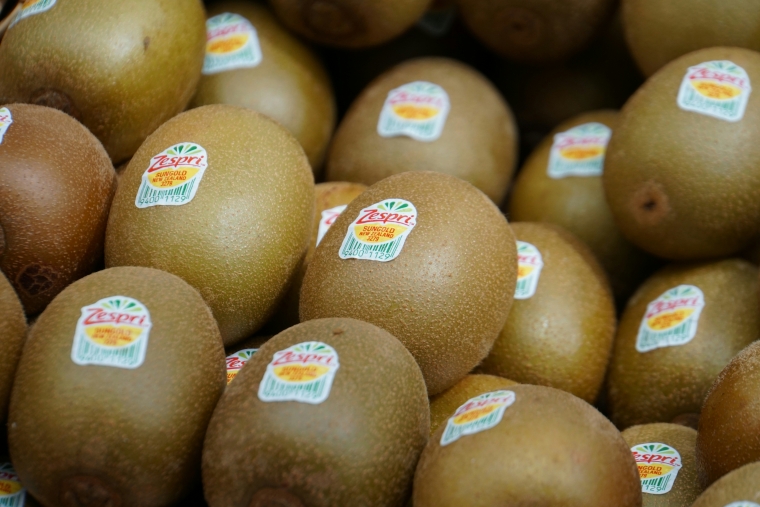
Zespri owns the varieties that have driven much of the industry's growth, above all SunGold. It releases the right to plant them in limited quantities, and growers bid against each other for those licences. This year, SunGold licences cleared at an extraordinary $684,000 per hectare, with 416.78 hectares allocated. At that price, the licences were worth around $285 million.
That $684,000 is only the right to plant. The grower still has to buy the land, put in the vines and wait for the first crop. An investment like that only makes sense if the grower expects the whole structure behind SunGold's premium to last: the intellectual property, the marketing system and the export regulations. Part of those licence payments also flows into Zespri's profits and on to its shareholders.
The taxi medallion problem
This reminds me of the old New York taxi medallion system. A medallion became extraordinarily valuable not because the piece of metal was worth anything, but because it gave its owner entry into a legally restricted market. Once someone had borrowed heavily to buy one, their finances depended on the restriction staying in place. Then Uber arrived and attacked the scarcity the investment had been built on.
There's a softer parallel in housing. Someone paying several million dollars for a Ponsonby villa may support more housing supply in principle, but they have also made a large, leveraged bet that benefits from scarcity. The higher the entry price, the stronger the incentive to protect the conditions that justified paying it.
I wonder whether something similar has happened in kiwifruit. Scarcity lifts orchard returns, and higher returns push up licence prices. Higher licence prices mean bigger sunk investments, which make growers more dependent on scarcity continuing. That dependence, in turn, hardens resistance to any competitive threat. In other words, the system creates its own constituency for staying as it is.
John Bostock's attack on Zespri
What makes the Bostock case so interesting is that he isn't trying to copy Zespri's variety or borrow its brand. He has secured competing intellectual property of his own. In a normal market, the questions would be simple: can he grow the fruit profitably, and can he persuade customers to buy it instead of SunGold?
Under our system there is an extra hurdle. The stated purpose of collaborative marketing is to increase the overall wealth of New Zealand kiwifruit producers. That's quite a different economic test, because a disruptive competitor often reduces the wealth of existing players even while it increases competition, innovation and benefits for consumers. Uber would certainly have failed a test based on the wealth of existing taxi owners.
Remember, Zespri already has legal protection for its cultivars, and the Zespri brand, so Bostock's attack is on its monopoly on the marketing and sale of all Kiwifruit varieties.
Scarcity doesn't stop at the border
New Zealand can control who plants Zespri's varieties here and who exports New Zealand fruit. What it can't control is the global market for gold kiwifruit.
China is the obvious warning. Zespri has spent years dealing with unauthorised plantings of SunGold there. At the end of 2024 it estimated around 8,400 hectares, and by July this year it put the figure at 7,100 to 8,100 hectares producing roughly 45 million trays a year. Zespri has had success enforcing its rights in Chinese courts, including a 2025 judgment ordering 260 hectares of infringing vines to be removed. Even so, Chinese production of the variety is now on a scale comparable to New Zealand's own plantings.
So while New Zealand growers pay hundreds of thousands of dollars per hectare to join a tightly managed system, Chinese growers have reproduced a large part of the same advantage outside it. Zespri itself describes these plantings as a threat because of the risk of oversupply.
Bostock's Haegeum cultivar shows the other side of the same problem. Bostock says that if he can't develop the variety from New Zealand on acceptable terms, he will develop it in Australia, Chile and South Africa instead. Those growers won't disappear because New Zealand protects its single desk. They will simply grow a different gold variety and compete with New Zealand fruit in the same Asian markets we are trying to defend.
A familiar pattern
A supply-management system can preserve scarcity at home, but it can't necessarily preserve scarcity globally. Eventually the premium itself attracts the very things the system is designed to hold back: new varieties, foreign production, leaked technology and alternative routes to market.
That seems to be the recurring pattern with regulated scarcity. High returns attract new entrants, and the restrictions push some of those entrants outside the system. Sooner or later, the protected value is challenged by new technology, foreign competition, deregulation or some combination of all three.
Zespri can reasonably point to record grower returns, premium prices, a strong brand and growing volumes as evidence that its model is working. The harder question is whether the structure that created that success becomes a liability once competitors can innovate outside it. The Bostock case isn't really about whether Zespri has succeeded, because it clearly has. It's about whether protecting the value the system created has begun to hold back the next round of innovation.
So is the single desk still the engine of the industry's success, or is it starting to become the quicksand?
*Peter Drennan is Christchurch Manager at Waterstone Insolvency. This article first ran here and is used with permission.
We welcome your comments below. If you are not already registered, please register to comment
Remember we welcome robust, respectful and insightful debate. We don't welcome abusive or defamatory comments and will de-register those repeatedly making such comments. Our current comment policy is here.