
Many dryland soils are now devoid of moisture, and feed deficits in some eastern areas of both islands are as bad as they were last year.
Demand for surplus feed has increased quickly as pasture shortages are exposed as managers look for feed before the winter brassica crops are utilized.
Surplus grains are available at prices that are the lowest seen for 6 years and dryland sheep and deer farmers are using this quality option to survive.
Irrigation continues to be used even though it is May, and properties with water are enjoying good pasture growth rates with above average soil temperatures.
Cows are being dried off on BCS and calving dates, and pastures are being prepared for the winter cover targets, so quality and volume are supplied for the calving cows in the spring.
Northern herds are now on their winter grazing rotations while Southland managers are using the opportunity of mild weather and plentiful grass to squeeze more production out of the milkers before dry off.
Dairy advisers report that cow empty rates in Canterbury and the Waikato have been higher than expected, but a plentiful supply of cheap IC heifers have allowed these dry cows to be replaced at low cost.
Fonterra shareholders fear the proposed governance changes may see a loss in voting power, as the company sells some of it’s Farm Source stores to release capital and drops one dryer from its Studholme expansion plans.
The global dairy market has also hit hard in Australia, as Fonterra follows the big Murray Goulburn downgrade, with a 50c/kg ms drop of it’s own and suppliers voice their disapointment with the companies timing.
They also surprised the market by lifting the payout for NZ organic milk by $3.55 to $9.20/kg ms for next season, as this niche operation reveals the demand for milk produced this way.
Commentators and existing suppliers remind farmers of the cost to farm organically and one experienced organic farmer revealed that it takes 3 years for certification, and he was losing money at the previous payout level of $5.65/kg ms.
Global market news suggests Chinese demand is lifting and European supply is easing, but US production has grown by 1.8% this year and their cows are producing with the highest per head levels since 2003.
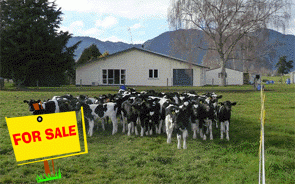
The Reserve Bank in it's stability report noted that credit growth is growing faster than deposit growth, and that the banks so far have been supporting the dairy sector with few forced sales.
However they did note that dairy farm prices had fallen by 13% and warned if the future prospects don't improve soon they could fall further, with some studies suggesting by as much as 63%!!!
We welcome your comments below. If you are not already registered, please register to comment
Remember we welcome robust, respectful and insightful debate. We don't welcome abusive or defamatory comments and will de-register those repeatedly making such comments. Our current comment policy is here.