
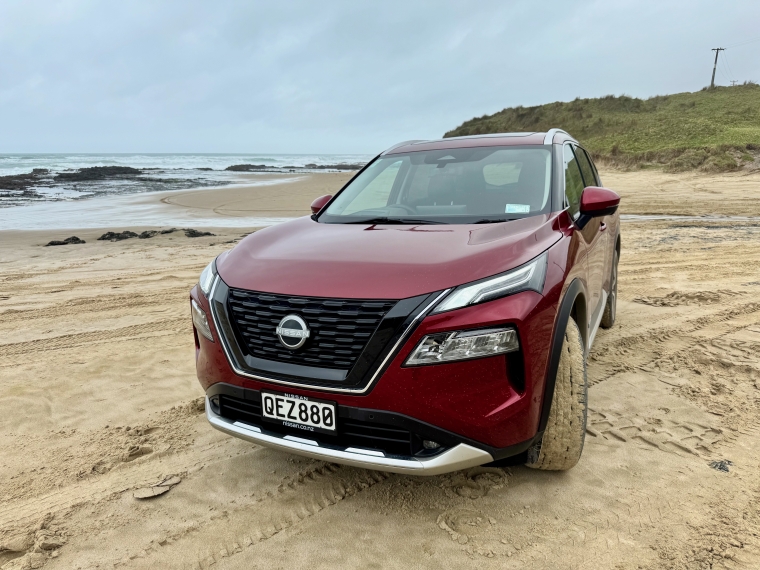
Former X-Trail owner here, finally getting a chance to go for a spin in the range-extender top of the line five-seater e-POWER e-4ORCE Ti-L version. I'm only going to use those difficult to type e-MONIKERS once up here and refer to the X-Trail as a "hybrid" from now on.
The Ti-L version has lots of luxo equipment, including a sunroof, Bose sound system and leather interior, but it was the hybrid powertrain that I was the most curious about because it seemed pretty weird.
With this hybrid, Nissan appears to have sought to balance the equation of providing power and performance in a large-ish SUV, along with long range, while delivering frugality and meeting tailpipe emissions standards.
Hang on, it’s still a chunky SUV, you say. That's correct and there’s no escaping the laws of physics, but the hybrid drivetrain bends them a little with its intricate mix of technologies.
First, there’s a small 1.5 litre three cylinder petrol engine that is really quite advanced. It uses variable compression ranging from 8:1 to 14:1 for the air-fuel mix, which is why Nissan recommends using 95 octane petrol. This is a technological feat, as internal combustion engines usually have static compression ratios that can’t be changed on the fly.
It’s turbo charged as well, and the three cylinder engine is listed in the Wards Auto Top Ten power plants. Nissan came up with its complex variable compression ratio engine design a few years ago, as a way to get the best of both worlds, namely performance combined with good fuel economy.
Update More on the VC engine here. Saab which was Swedish once upon a time appears to have pioneered the idea.
In the X-Trail hybrid, the petrol engine isn’t connected to the drive wheels. Well, not directly: the 116 kW and 240 Nm petrol engine charges a little 1.8 kWh lithium-ion battery under the rear seat. This in turn powers the 150 kW electric motor driving the front axle, and the 100 kW counterpart spinning the rear wheels.
The front motor provides 330 Nm of torque, and the rear one 195 Nm. I haven’t been able to confirm this yet but when the small battery is depleted, the petrol engine can also act as a generator to power the electric motors.
Why such a small battery though? A guess would be it's a compromise to keep the weight and cost down, while still providing a boost for the economy. But it would be interesting to see some more research on this to understand where the capacity sweet spots are.
There’s no gearbox involved, just a single-speed reduction drive for the two electric motors. This is a different way of "hybridising" compared to, say, the new Toyota Prius plug-in electric, which has a gearbox that both the electric and petrol motors are connected to.
All in all, Nissan quotes the power output for the hybrid setup as 157 kW and 525 Nm of torque combined. Getting those figures out of a pure ICE, petrol or diesel, would require a big engine with high fuel consumption.
It's definitely complicated but it gets you the immediacy of EVs with the electric engines providing full torque from standstill unlike petrol motors that have to rev up. What you don't need to do is to charge a big battery either at home or at a public charging point, and simply keep the tank topped up with 95 octane unleaded petrol.
The car can also adjust the drivetrain electronically for better traction with electric drive.
Nissan also offers a pure petrol variant of the X-Trail, but in that car the power is down to 135 kilowatt from a 2.5 litre four cylinder engine, and 244 Newton metres of torque.
Looking at the figures for the two variants, I think the numbers stack up for the hybrid: the specified weight for the hybrid X-Trail is 1911 kg, whereas the 2.5 litre petrol-only car weighs less, 1672 kg.
Despite the 239 additional kilos for the hybrid X-Trail, which also lowers the braked towing weight to 1650 kg from 2000 kg, the electrified model uses less petrol: Nissan says 6.8 litres per 100 km, with the standard petrol car going through 8.7 l/100 km.
As both have a 55 litre fuel tank, you’re looking at just over 800 km range for the hybrid, and 630-ish km for 2.5 litre petrol X-Trail.
According to the Worldwide Harmonised Light Vehicles Test Procedure (WLTP) standard, the hybrid X-Trail emits 154 grams of CO2 per km, and the 2.5 l one 204 g/km (both are the Ti-L spec models with all wheel drive).
For another two grand, $59,990 vs $57,990, the hybrid with its lower fuel consumption and increased range seems a no-brainer, particularly since it does the 0-100 km/h dash in 7 seconds instead of 9 seconds. I can’t imagine anyone hitching a two-tonne trailer to an X-Trail either, but if towing’s important, pick the 2.5 l car.
It's an X-Trail, but not how we knew them
How does all the tech in the X-Trail hybrid add up then? Pretty well actually. For the type of driving I do which is mostly out of town on highways, occasionally venturing off the pavement (gingerly!) the X-Trail hybrid ticks most boxes.
There’s ample performance for the open road, fairly OK ground clearance and an off-road mode with hill descent control as well.
Inside, the car is nothing like my X-Trail tractor that I drove around in many years ago and thank goodness for that. It was utilitarian, not quite tractor-esque but noisy and uncomfortable with slide-y seats.
The X-Trail hybrid is luxurious and quiet thanks to active noise cancelling, with comfortable seats and decent handling courtesy of big 20-inch wheels and a good suspension set up.
Actually, at first I thought the handling was a bit off and too soft, but then I aired up the tyres to the pressures the car’s dashboard recommended, and everything became more sorted. Without road noise increase, I should add.
No spare tyre is provided, not even a space saver one. Instead, you get a repair kit and a compressor to inflate the tyre with. I’m deeply suspicious of that setup, and hope I’ll never have to test such a thing somewhere remote without mobile phone coverage.
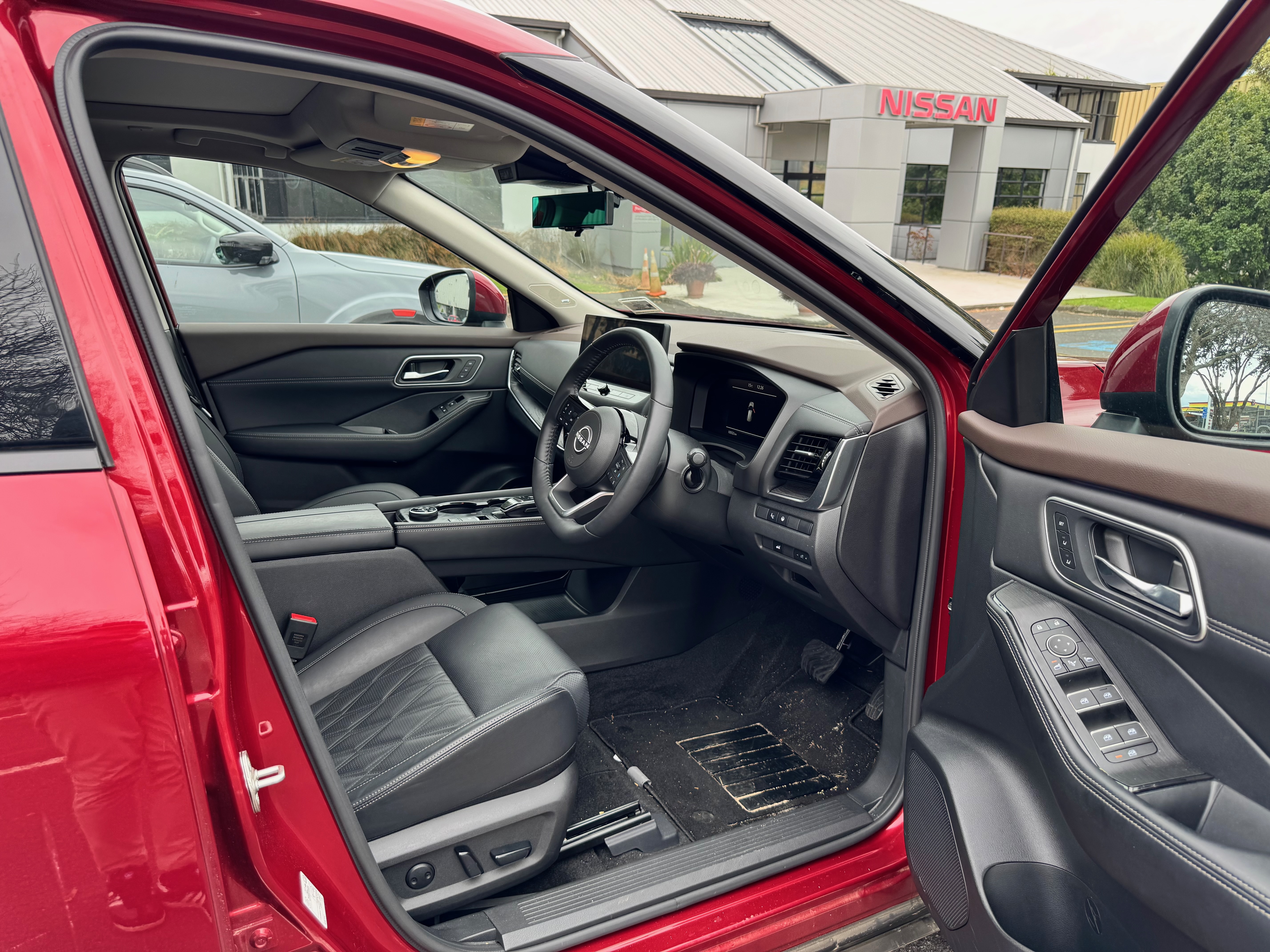
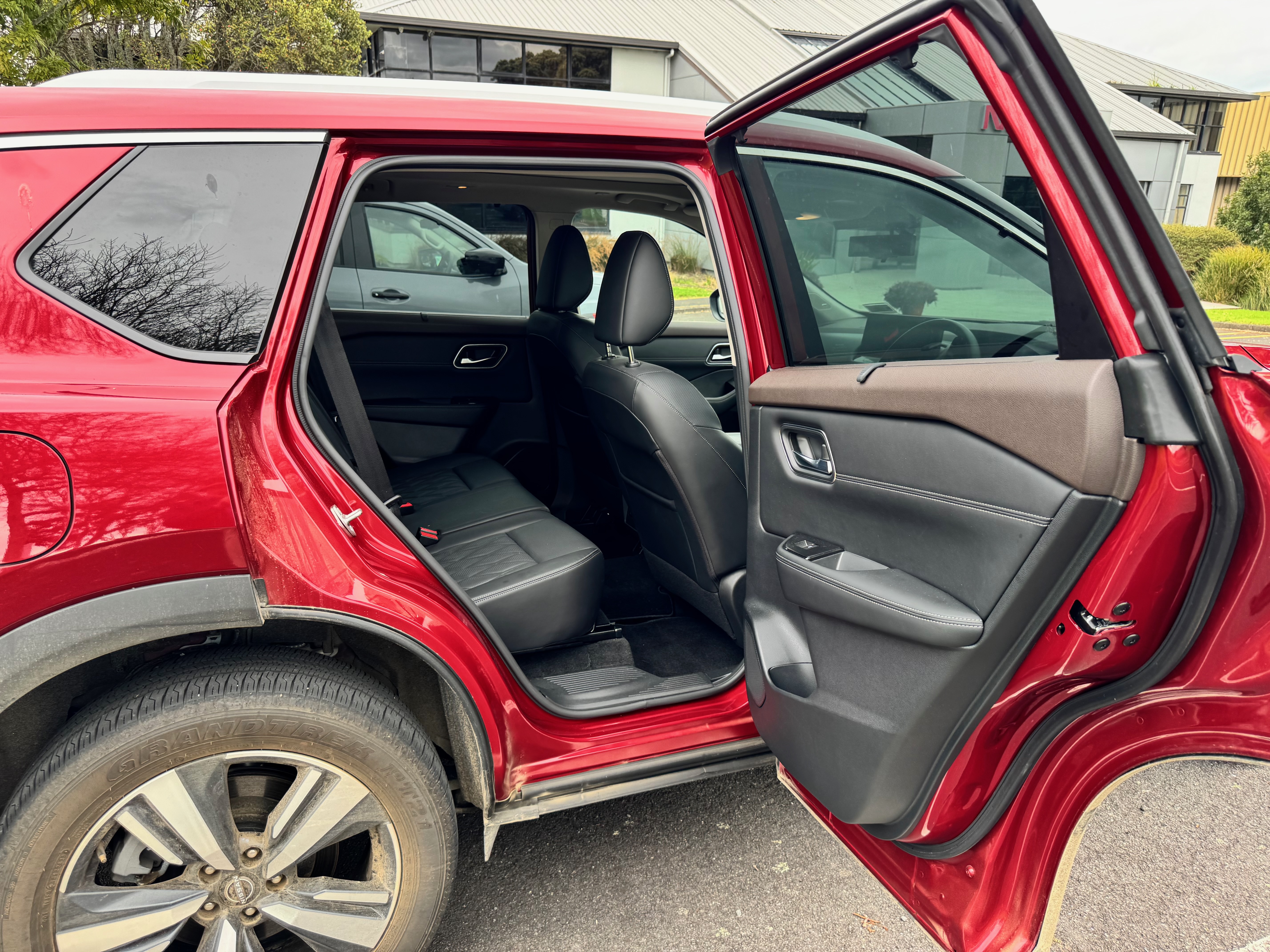
Add to that comfortable and power adjustable seats front (sadly without ventilation though) and manually movable ones in the back, plenty of cabin space and the X-Trail feels like a good choice as a long distance commuter and family vehicle.
The X-Trail hybrid isn’t without its foibles though. Provided there’s enough charge in the small capacity battery, you set off in complete silence for a few kilometres. Then the petrol engine kicks in to charge the battery. It’s not particularly noisy, but the car itself is rather quiet so the petrol engine firing up is quite noticeable.
What’s more, when the petrol engine is cold, it sounds pretty odd, a bit like an old AM radio with interference. The noise becomes much less obtrusive as the engine warms up.
At standstill with the car switched on and the air conditioning running, but the petrol engine off, you can hear the compressor and various other things working away at the front of the X-Trail. The manual says to expect this and it's nothing too dramatic, but yes you do notice it.
Nissan’s user interface designers do things the other way round to those working for many other car brands, so you don’t have heaps of configuration and control options in the centre 12.3-inch touchscreen. Instead, they’re in the display in front of the driver, accessed via buttons and thumbwheels on the tiller.
This is good as it’s all there in front of you and you don’t need to look at a screen in the middle of the car, away from the road, but it takes a while to figure out how to access the different features. And, to remember in which menu they are located.
Most other things are activated with buttons and knobs, including the air conditioning.
Driving the X-Trail is otherwise a nice, relaxing experience. The driver assistance systems work fine on good roads, but are better left off on the twisty and narrow bits of State Highway 1. Unfortunately, Nissan NZ didn’t include self-parking in the ProPilot suite of driver assistance systems, but the X-Trail has a clear and responsive 360-degree view camera for that purpose.
But why did Nissan have to configure the camera so that it switches off when you take the gear selector out of park and put it into drive to manoeuvre it forward though? You have to manually turn on the camera again in that situation, which is just annoying as you try to quickly park in a tight spot.
I ended up driving with the digital rear view mirror enabled most of the time, as it provides a wider and brighter view of the road. There’s a little loss of three dimensionality compared to a standard glass mirror, but it’s not too bad.
As it happens, the X-Trail used less fuel than what Nissan specifies when I drove the car. I got 5.4-6.1 l/100 km on hilly Northland highways which is pretty good. In town, the consumption was more and could reach 7 l/100 km which is still not bad all things considered.
In terms of EV features, the X-Trail has a blue ePedal button that maximises the battery regeneration, so that you can do one-pedal driving with the accelerator and not use the brakes often.
The onboard computer suggested the ePedal added 55 km to 60 km of range on a 300 km journey, which is great. However, you have to enable the ePedal each time the car starts up which is probably for safety reasons, and it takes a while getting used to as the regen feature moves the brake pedal.
I was also told of a trick to further reduce fuel consumption: Drive uphill with the car in EV mode, and then coast downhill with the ePedal to regenerate the battery. Doing so can get you fuel consumption below 5 l/100 km apparently, but it complicates the driving of course, so I don’t know how many people would do it apart from the person who shared the trick and who really, really enjoys eco-driving.
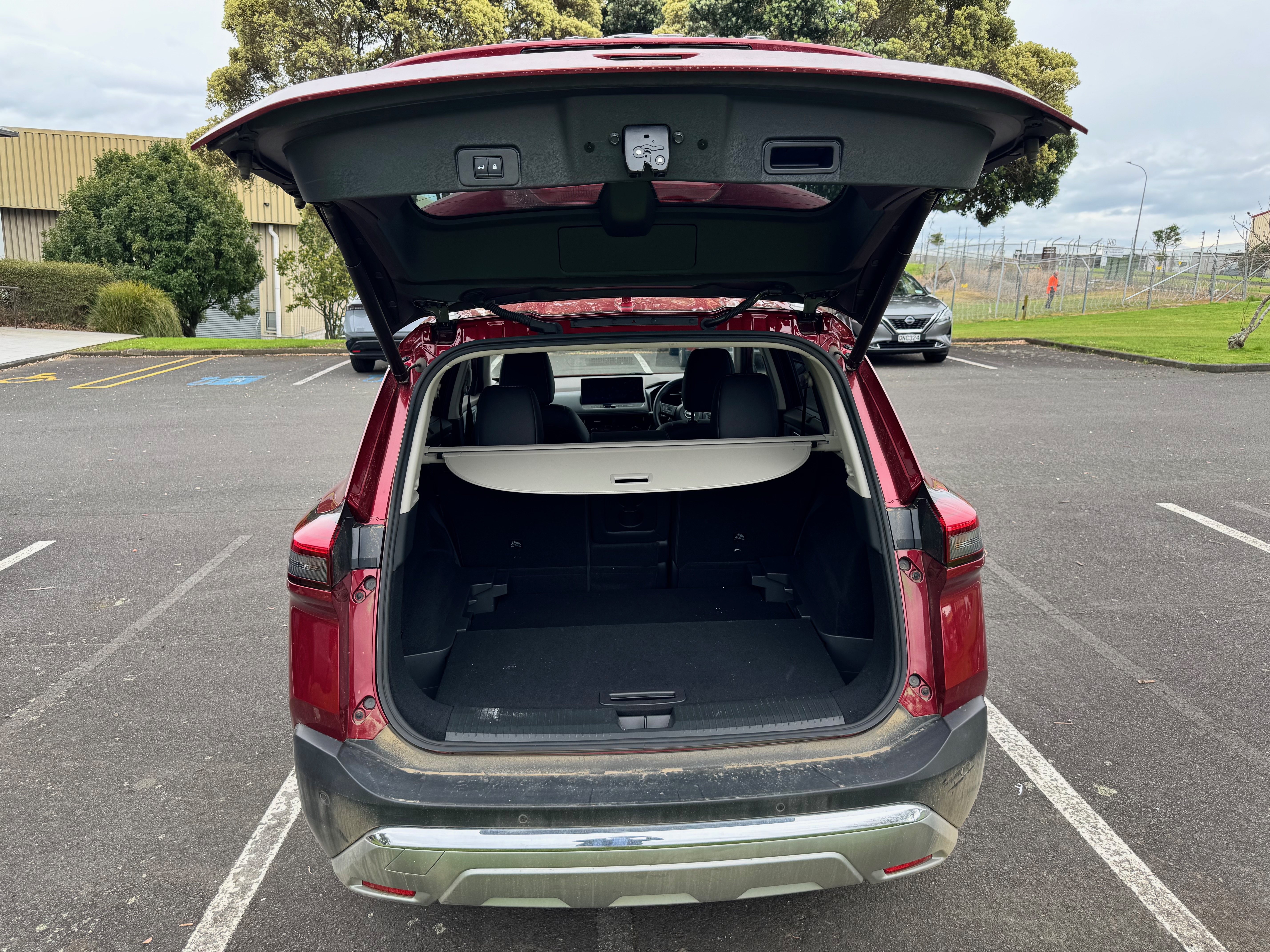
Either way, for a number of people, one of them being yours truly, an X-Trail hybrid makes sense. No road user charges to pay, decent fuel economy, great comfort and load carrying ability without the car being gigantic makes for a pleasant and easy motoring experience on highways and out in the country in particular. It looks pretty good too, particularly in the burgundy colour that I had.
We welcome your comments below. If you are not already registered, please register to comment
Remember we welcome robust, respectful and insightful debate. We don't welcome abusive or defamatory comments and will de-register those repeatedly making such comments. Our current comment policy is here.