
Broadband service delivery from Low Earth Orbit (LEO) satellites is a concept that's caught on thanks to SpaceX's success with its Starlink offering. Competitors to SpaceX are racing to fire rockets into space, and it must be getting crowded up there.
This includes Amazon's Project Kuiper, which aims to have 3000 satellites orbiting the planet, and which has established a New Zealand presence already; Lynk which is aiming for 5G direct-to-cell with mobile broadband capability, with 2degrees being a triallist, and AST SpaceMobile in the United States (also 5G and broadband, direct to phones) that Vodafone is working with.
Globalstar and Apple have been partners for a while, providing satellite capability since iPhone 14. Europe has woken up too, with the IRIS2 service set to become operational by 2030. That's quite late in scheme of things, with Starlink likely to be well-established and entrenched by then. Starlink is estimated to have over 6700 working satellites currently, aiming to have around 42,000 when the network is fully built out.
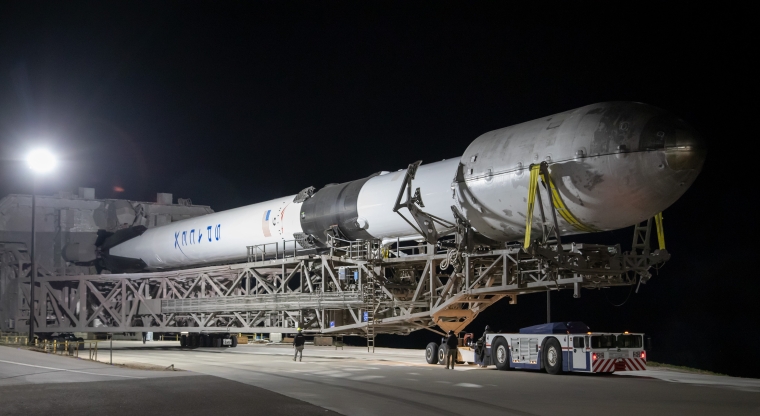
China's, Guowang which apparently means national network, looks like it's pulling out all stops to catch up with the US company . Earlier this week, the first 10 satellites of the Guowang constellation, said to comprise 13,000 satellites, were launched into low Earth orbit from southern China.
Not a great deal is known about Guowang or the company behind it, China Satnet. The satellites are in a higher orbit, at 1100 kilometres, but that and the planned number is about all the public knowledge about the project there is currently.
What service options will be available, where and the cost of terminals isn't clear at this stage.
In news stories this week, Guowang is billed as a competitor for Starlink, which is not allowed to operate in China. In a narrow sense, Guowang could be, but only in China and its allied nations where Earth gateways could be built. New Zealand is unlikely to ever allow that to happen, with the government last week saying it intends to introduce legislation "to manage risks posed by ground-based space infrastructure" next year.
Furthermore, a broadband service that's filtered by the "Great Firewall of China" is unlikely to appeal to customers in nations that value free and uncensored Internet access.
Instead, the Guowang satellites, along with the others being deployed in large numbers, are liable to make congestion in space worse, and increase the incidence of "conjunctions". There are over 12,500 satellites orbiting the planet, plus pieces of space junk; some sources estimate that the number of satellites will increase eight-fold in a decade.
Unless that increase is managed through international cooperation, there could be a risk of the Kessler Syndrome cascading collisions occurring that the United States National Aeronautics and Space Administration has warned about for some years now.
Update More details on Guowang (which is also spelt as Guo Wang), thank you to Huttman for finding the proper search terms.
| Constellation | Orbit Altitude | Inclination Angle | Orbital Planes | Satellites Per Plane | Total Satellites |
|---|---|---|---|---|---|
| 59-1 Sub-constellation | 590 km | 85° | 16 | 30 | 480 |
| 59-2 Sub-constellation | 600 km | 50° | 40 | 50 | 2000 |
| 59-3 Sub-constellation | 508 km | 55° | 60 | 60 | 3600 |
| Subtotal (GW-A59) | 6080 | ||||
| 2-1 Sub-constellation | 1145 km | 30° | 48 | 36 | 1728 |
| 2-2 Sub-constellation | 1145 km | 40° | 48 | 36 | 1728 |
| 2-3 Sub-constellation | 1145 km | 50° | 48 | 36 | 1728 |
| 2-4 Sub-constellation | 1145 km | 60° | 48 | 36 | 1728 |
| Subtotal (GW-2) | 6912 | ||||
| Total Satellites | 12992 | ||||
The satellites could apparently have direct-to-cell capacity at a later stage.
We welcome your comments below. If you are not already registered, please register to comment
Remember we welcome robust, respectful and insightful debate. We don't welcome abusive or defamatory comments and will de-register those repeatedly making such comments. Our current comment policy is here.