
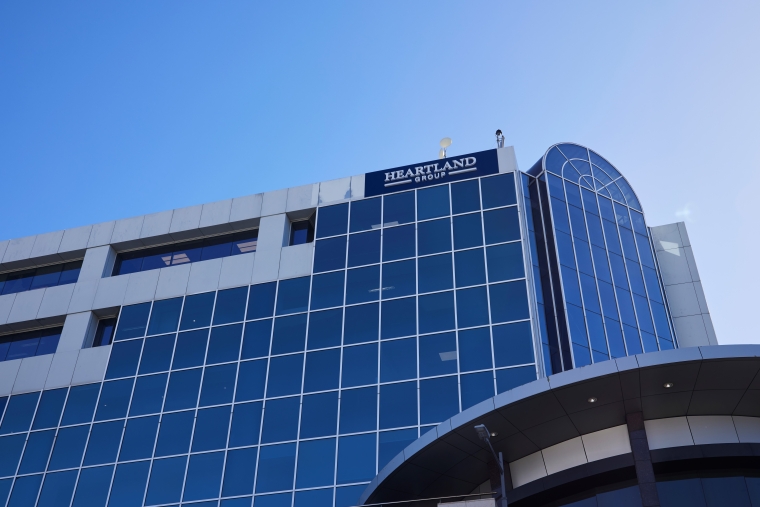
Heartland Group has beaten its full-year net profit guidance by almost 10% on the back of margin expansion, steady growth in its reverse mortgage book and strengthened asset quality.
The group, which has banking operations in both New Zealand and Australia and specialises in reverse mortgages, reported a net profit after tax (NPAT) of $93.2 million in the 2026 financial year.
The net profit figure jumped past Heartland's earlier full-year guidance of at least $85 million and is $54.4 million higher compared to the $38.8 million in net profit that Heartland posted in the 2025 financial year.
Underlying net profit was $90.4 million in the twelve months to June, up from $46.9 million in the previous period.
The bank reported steady growth in its reverse mortgages book on both sides of the Tasman, up 16.8% in NZ and 19.7% in Australia.
In NZ, annualised reverse mortgage growth increased from 14.0% in the first quarter to 18.5% in the fourth quarter. NZ reverse mortgage receivables jumped $207.4 million to $1.440 billion in the June year. The growth in NZ was due to increased investment in market awareness, regional presence and product process improvements.
Heartland’s lending also focuses on the rural sector, motor loans and business assets.
Heartland’s rural receivables from its NZ banking arm were up 10.8% or $66.0 million to $674.8 million in the twelve months to June. This growth was supported by strengthened livestock finance intermediary partnerships, expanded regional presence and improved market optimism, according to Heartland.
Motor finance receivables in NZ edged up just 1.5% or $25.2 million to $1.719.5 billion as of June 2026. Heartland said NZ motor finance arrears improved across all non-performing loan (NPL) cohorts, with all NPLs greater than 180 days past due (DPD) now cleared.
“The portfolio’s arrears continue to outperform the industry average of 5.2% and are at historical lows for Heartland Bank,” the company said.
Heartland Bank’s business finance receivables for its NZ arm were down -18.1% or -$140.9 million in the 2026 financial year to $638.8 million. Its business finance portfolio includes asset finance lending to small-to-medium businesses so they can purchase assets such as trucks, trailers, machinery and other equipment used in day-to-day operations, rather than refinance existing assets.
Heartland said this result was within guidance and reflected the bank’s “continued focus” on asset quality and pricing for risk amid subdued demand and ongoing economic challenges, particularly in construction and transport, key lending industries for the bank.
Non-strategic asset realisation program wraps up
According to the company, Heartland reset its “core strategic foundation” in the 2026 financial year.
“This included restoring margin and asset quality to target levels as Heartland Bank’s enhanced collections, recoveries and write-off strategies were embedded as business-as-usual, and the NSA realisation program successfully concluded,” Heartland said.
The NSA is a non-strategic asset realisation program implemented by Heartland Group to wind down, sell off, or exit its non-core lending portfolios and non-performing assets.
It comprised of business and rural relationship loans, home loans and other property loans. Heartland said the programme had concluded with a 94% recovery rate and the total value of NSAs reduced by $270.7 million during the June year, creating $31.7 million of available capital.
The bank said its net interest margin (NIM) rose by 34 basis points to 3.95% and the exit NIM increased 2 basis points to 4.15% in the June year.
Heartland’s board declared a final dividend of 3.5 cents per share (cps), taking the total dividend for the June year to 7.0 cps. This is 3 cents higher than a year ago.
All speed ahead
For the 2027 financial year, Heartland is targeting a lift in profitability to at least $102 million and a return on investment (ROE) of at least 7.5%.
Heartland’s goals for the 2027 financial year include achieving growth in its reverse mortgages greater than 18% in both countries and executing the next phase of Heartland Bank and Heartland Bank Australia’s technology transformation programs.
Heartland has invested in technology programs across the Tasman to improve its technology and operating environments. Both programs progressed to plan in the 2026 financial year, according to Heartland, and remain on track, with no change to delivery timetables or implementation costs.
The bank also wants to complete its proposed merger with TSB in the year ahead. Heartland is currently in the middle of trying to get a deal over the line with TSB, after signing an agreement in June with TSB's parent, the Toi Foundation, to buy TSB for $620 million in order to create “a New Zealand challenger bank of scale with a regional focus.”
If the proposal proceeds, Toi Foundation would hold a 17.5% shareholding in Heartland Group. TSB and Heartland Bank would merge and be renamed TSB Heartland Bank.
Heartland said on Thursday that, subject to satisfaction of the Toi Foundation trustee approval condition, Heartland now expects to submit its regulatory application to the RBNZ and to dispatch its notice of special meeting to shareholders at the end of August 2026.
We welcome your comments below. If you are not already registered, please register to comment
Remember we welcome robust, respectful and insightful debate. We don't welcome abusive or defamatory comments and will de-register those repeatedly making such comments. Our current comment policy is here.