

ASB is introducing a low equity margin, or LEM, on residential mortgages with high loan-to-value ratios (LVRs) from February 23 in place of a low equity fee, or LEF.
The bank says all new "residentially secured" lending where the LVR is greater than 80% will have a low equity margin added to the agreed loan interest rate. The LEM will vary by LVR as per the chart below.
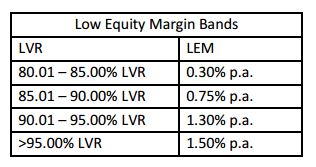
In a letter to mortgage brokers, ASB's head of third party banking, Marc Oliver, said the new LEMs reflect the costs associated with high LVR lending.
"These include increased capital adequacy requirements on high LVR lending imposed by the Reserve Bank of New Zealand," Oliver said.
ASB's existing LEF applies when a borrower borrows more than 80% of the property’s value. The bank says calculation of the LEF excludes all other capitalised fees and charges and is non-refundable. The LEF is assessed by the borrower's LVR, with the LVR calculated as total borrowings divided by the total value of the secured property. Thus the fee varies and the move to a margin is effectively a flat "fee" approach.
However, a table on ASB's website - which it says estimates LEFs - touts a 0.25% LEF for a loan with an 80.01% to 80.99% LVR, 0.33% for an 81% to 82.99% LVR, 0.50% for an 83% to 85.99% LVR, 0.65% for 86% to 87.99%, 0.75% for 88% to 90%, and 1% for a 90.01% or higher LVR.
Under the LEM system, ASB says after at least six months customers will be able to apply for a reduction to a lower LEM band or removal of their LEM where an updated valuation and/or where the current loan balance indicates a LVR reduction. The bank also says it'll proactively review LEMs on customer's loans regularly and reduce or remove them where the current LVR indicates this is appropriate.
ASB grew home loans by a net $1.086 billion, or 2.43%, in the December quarter to $45.671 billion. The percentage growth outstripped the 2% increase recorded by Reserve Bank housing sector credit data. ASB's home loan market share was up to 21.8% at December 31 last year from 21.7% at June 30.
We welcome your comments below. If you are not already registered, please register to comment
Remember we welcome robust, respectful and insightful debate. We don't welcome abusive or defamatory comments and will de-register those repeatedly making such comments. Our current comment policy is here.