
Transpower is putting a $500 million to $600 million price tag on upgrading the national grid to get electricity from the Manapouri hydro station in Fiordland, up north.
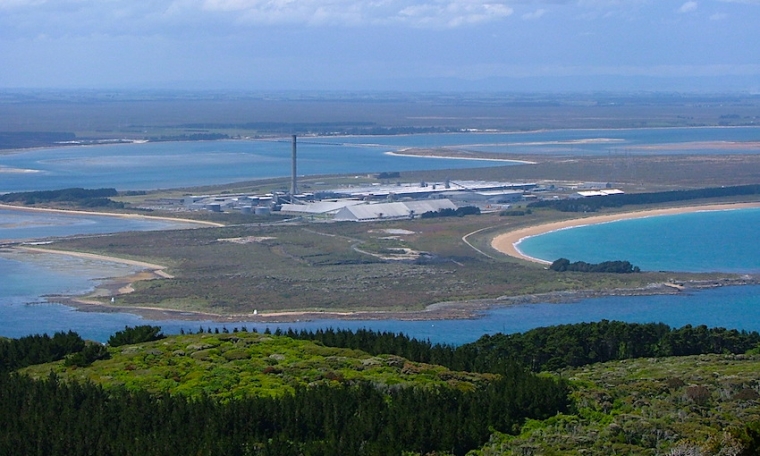
Manapouri was built to provide electricity for the aluminium smelters at Tiwai Point.
But with New Zealand Aluminium Smelters’ (NZAS) operations likely to be wound up August 2021, the country’s energy systems will need to be rebalanced. NZAS accounts for a significant 13% of electricity demand.
Transpower, which owns and operates the transmission network connecting areas of generation with towns and cities, is assessing whether it can get upgrades off the ground more quickly than planned.
On June 30 it committed to continuing work with the remainder of the Clutha Upper Waitaki Lines Project at an estimated cost of $97 million.
This will enable excess generation from Manapouri to be utilised within the South Island and will see most of it transferred across the Cook Strait via the High Voltage Direct Cable (HVDC) and used in the North Island.
Work on this project will start in spring. It’s is expected to be completed by the winter of 2023.
Transpower’s general manager of grid development, John Clarke, said the company would also work with the electricity industry on “other improvements needed to realise the full economic benefits to New Zealand from the surplus electricity”.
Upgrading the HVDC is expected to cost $150 million to $200 million. Meanwhile upgrading capacity on the central North Island’s system, including the Wairakei Ring, is expected to cost $400 million to $500 million.
The CEO of Trustpower (the gentailer), David Prentice, was confidence the sector could adapt to the closure of the smelter and rebalance New Zealand’s electricity system over a relatively short period.
“Longer term electrification of the economy remains a positive driver for growth,” he said.
“Trustpower considers it is well placed to respond to the decision to close the smelter, with its geographically dispersed generation schemes and customer bases. In the South Island Trustpower’s schemes have the capacity to store water for extended periods until demand increases.”
Contact Energy CEO, Mike Fuge, said customers should expect to see an increase in transmission costs as the proportion of transmission costs currently paid by NZAS will be spread across all customers.
“The reality is that NZAS has subsidised transmission costs to consumers for years. Not only will those costs now fall to other customers, there will also be additional costs for the significant transmission investment from Transpower now needed to shift surplus energy from the lower South Island north to where it is needed,” he said.
“In the meantime, the surplus water currently being used to generate renewable energy in Southland will in large part end up flowing down the Clutha River.”
Fuge said Contact was pushing pause on a “shovel-ready” geothermal power station, as it needs to factor in the impact of Covid-19 and the potential exit of NZAS to get a clearer picture of demand.
Genesis Energy said: “As a predominantly North Island generator, Genesis expects the immediate effects to be felt more by the larger South Island generators.
“We see benefit for the New Zealand electricity market through the removal of a significant source of uncertainty. In the medium to long term, this presents a potential opportunity to accelerate electrification of industrial processes, especially in the South Island.
“As for all generators, we will need to further assess what the closure means for our generation portfolio long term.”
Mercury Energy said it was “relatively well placed to respond to the decision to close the smelter, with all of its renewable generation assets in the North Island close to load centres and largely free of major transmission constraints as a consequence of reduced South Island electricity demand”.
“Mercury is confident that the sector will adapt to the closure of the smelter, invest in new transmission and develop new electricity demand to rebalance New Zealand’s electricity system.”
And finally, Meridian Energy, which provides NZAS with electricity, said: “Meridian is reviewing this decision and will engage with Rio Tinto to assist the smelter owners in an orderly exit from New Zealand.”
55 Comments
Necessity is the Mother of the invention.
definitely,we should be celebrating the return of a unique power station that cost many billions in todays money to build.its a good thing to have a surplus of renewable energy on that scale.
There are three major issues in the redirection of Manapouri power:
- There's no short north line from Manapouri with generation of 840MW to (say) Clyde capacity 432MW (where a main feed point north occurs) or Benmore capacity 540MW (where the HVDC link to the North Island starts. A quick glance at the maps in Transpower's planning report 2019 shows the current configuration. The line was always intended to serve Tiwai, and only secondarily, transfer some load north from the junction near Invercargill.
- The HVDC Benmore-Haywards link is only good for 1200MW. This limits SI-NI transfer and influences location of main consumers. Raising this capacity is the bulk of the capex needed.
- Distance and transmission losses - bringing power from literally the farthest south junctions (North Makarewa plus Invercargill) to (say) Auckland) loses a not inconsiderable fraction of the power pumped in via heating of lines, and the AC-DC and DC-AC conversions at Benmore and Haywards respectively.
Let's just hope that the key decisions are taken by actual engineers, and not by politicians. Political decisions tend to result in unstable power systems. SA is the poster child here, with too much unpredictable generation in the mix, causing voltage and frequency excursions which trip transmission safeguards, and only partially fixed at massive expense by the uber-green solution of 12 triple-fuel (gas, diesel, bunker oil) fast-start generators.
I totally agree waymad, it's an engineering problem that needs to solved with engineered solutions sans political meddling. Rio/NZAS and NZ are in a bit of a Mexican standoff. Rio stands to lose about 300-350mil (production losses and cost of clean up) and NZ needs to spend about 500-650 mil (which it was going to spend anyway) on grid upgrades. I still see some sort of govt intervention appearing
I still see some sort of govt intervention appearing
Government made it quite clear yesterday that they wouldn't be intervening in any way.
Meridian or others potentially could come up with something, but not central government directly.
True Lanthanide but note two things, Govt is still majority shareholder in Meridian and the statement " not central government directly". The last word in that is telling. Remember the Auckland fuel tax? and the pledge "Labour will not increase or introduce any new taxes in this term" They just called the fuel tax a "levy" which they promptly raised.
Not really telling the truth are you Hook. They didn't say what you claim, and they confirmed before the election that the Auckland regional fuel tax would go ahead..
All covered in https://www.interest.co.nz/news/89821/labour-releases-document-setting-…
Waymad - New Zealand is not South Australia and has a strong Grid (in terms of frequency and voltage) thanks to all the Hydro Inertia and Geothermal.. Also, obsolete Thermal Generators can be converted to SynCon which occurred at Marsden.
The inertia mainly comes from thermal plant - read the Schipper paper. The grid is not built to take more power north (read Transpower's Transmission planning report). Synchronous condensers are very expensive to run (which is why they got rid of Marsden and Otahuhu)
Sorry Chris, it is neither hard nor expensive to replace the voltage support historically provided by Thermal. The cost of Voltage Support being proposed currently is $190Million for a few Series and Shunt Capacitors - suggest you read the WUNIVM reports and the great work Transpower are doing in this space..! This $190M is to account for previous and currently proposed mothballing of all the following (ugly, evil, polluting and stupid thermal plant): 500 MW Huntly Rankine units (two 250 MW units ceased generation prior to 2015), 400 MW Otahuhu combined cycle unit (ceased generation in September 2015), 175 MW Southdown generation station (ceased generation in December 2015) and the 500 MW Huntly Rankine units (remaining two units announced to be retired soon and not before time)..
According to the report you quote, the voltage support will cost $240M, a not insignificant amount. And the reports were on voltage management (hint it is in the name). I did not mention that but specifically referenced inertia, which none of their proposed solutions addresses. And that is what Schipper references.
MINE BITCOIN !! Yes .. that was shouting. If you have excess energy - Monetize IT. Mine Bitcoin.
Perhaps a good location for a Microsoft Server Farm too ??? Both great suggestions.
Imagine if the Deep South became New Zealand's 'Information Technology Hub'. What a story .. what a world.
Yeah, an NZ where people born and raised in inner city Auckland moving to Southland for a solid career in IT.
It's gotta be better than staying in the Auckland ghetto
Cheap overheads for businesses - power, buildings, rents, cooling .. Southern Institute of Technology, Excellent pricing on commercial buildings. land for campuses. Well paid employees can live like Kings. 5G is already being rolled out in the South Island, etc, etc
Queenstown on employees door step for weekends away or just somewhere to host wealthy investors. If it become a Tech Hub I'm sure wealth will increase.
Think Big had its merits.
no need for cooling down there.......
Passive cooling, built-in redundant generation, physical security - what more could you want?
Why would they be well paid? Its not exactly skilled work to assemble servers, install a basic image, then slide it into the rack to be administered from elsewhere.
Bit coin farms are high energy consumers. You locate them in places with low electricity costs. i.e. not in new zealand.
Excess power sounds 'low cost' to me.
There's still opportunity cost.
With Tiwai point using 13% of NZ's power consumption. replacing it with another high energy consumer is the point. Cold enviro, easy access to cheap, renewable power. And very forward thinking. But yes, compared to 3c/kwh in other countries it will still be expensive compared to other sites world wide.
Another constant(ish) load of that size.. how bout replacing all Fonterras coal powered south island milk dryers with electric? Not the greatest use, but geographically convenient, so no Cook strait cable related upgrades needed, and even the greens would support that.
Re this comment: "The reality is that NZAS has subsidised transmission costs to consumers for years" Is this saying that the smelter pays the full cost of building the transmission line from Manapouri to Tiwai point plus some? Has that always been the case? I'd like to see the figures to back up this point, along with the full analysis of the cost of both transmission and generation to the smelter compared with the economic costs of transmission and generation to the country, including the opportunity cost. Manapouri using 13% of NZ's electricity means that new power stations have had to be build earlier = increased long run marginal cost (LRMC) of electricity and its not clear if Manapouri's electricity price has increased inline with the increase in the long run marginal price of electricity - and lets exclude the cost of the most expensive generation to cut the smelter a bit of slack when comparing what they pay compared with the LRMC.
NZAS was only paying $50 per MW, compared to the rest of us suckers paying $80.
I think you'll find consumers are paying about $200/MW. However there is always a significant discount for bulk buying, it's just how it is.
I note NZAS have left the door as to their future slightly ajar.
If NZAS is playing hardball (as it has done previously) in a bid for government funding then both the Government and Transpower are seemingly signalling that they are also equally playing hardball.
Although likely to close, I feel that the finality of all this is possibly not necessarily a certainty.
Meanwhile, upwards of 2000 workers are pawns in a game. Govts of both stripes have subsidised film makers to produce utter crap ( Avatar ) but won't think about ways to preserve real jobs making real and useful products.
If only there was a large slush fund of some kind to generate growth in the provinces that could be used. Some kind of Provincial Growth Fund with cash to spare. Crazy idea!
Seriously though, tie it in with a low carbon aluminium story & commitment to start modernising and cleaning up their polluted site to keep the greens happy; and a $600million cost to do anything useful with the power to scare everyone off.
there’s a pretty good case for just paying the blackmail fee and kicking the aluminium can down to the next government...
Haha willy, in this world workers aren't pawns.. they are collateral casualties barely figured into the calculations. I also think the film production staff might take issue with your dismissal of their chosen career. Note how Woods and co have consistently said that staff at NZAS and surrounds "can readily transition into equally or similarly paid jobs in agri, hort, tourism or other manufacturing industries" This government has refined the art of "toss 'em under a bus"
I think NZ could build a Hydrogen plant, couple it to a Methanol plant, Methanol – CH3OH – is four parts hydrogen, one part oxygen and one part carbon,and then we can say goodbye to NZAS and Methanex. Preserve and increase the jobs/wages and have a high value export we actually own.
The smelter was turning a good profit as recently as 2019 ($200million). Just nationalise it already, keep it running. And bank that sweet sweet export revenue. Remember a dollar in exports is worth several times that to GDP thanks to the multiplier effect of money coming into the economy. Effectively it's just a way to convert and export our cheap hydropower.
Ali is a cyclic and diminishing market. And NZ would still need to buy in Bauxite. We need something less volatile (price wise) and higher value - Methanol fits the bill
Both plants would require high skilled workforces - many of whom are already there. It's a no-brainer to me.
You extract Hydrogen from the abundant water available, the Carbon and Oxy via CO2 extraction from the atmosphere. A win win. Valuable export (Methanol) and a reduction in our emission profile - less CO2
PERFECT
Currently it's made from natural gas (methane) far cheaper than you could make it through electrolysis of water and extraction and conversion of CO2 from the air. I still like it though.
We should be making other hydrocarbons like this (petrol). Just take a bit of R&D. And it wouldn't be profitable, but it would create excellent economic stimulus and massive reduction in our imports which would mean much more money flowing around our economy.
Also we really need to stop foreign owned banks operating in NZ.
It's true that using NG is cheaper but NG is a finite and rapidly diminishing resource in NZ. Methanol was used to make petrol earlier in NZ - remember SynFuels in Taranaki -so yes that would also be another income earner. The thing I like about Hydrogen to Methanol is we already have the expertise and workforce in NZ. We have abundant water (the feedstock) and with Meridian and Contact access to cheap(ish) energy. We also have a deepwater port in Southport. I believe this is the type of high value, high wage, low emission and enduring industry we need. Currently MEOH is selling for about $250US/MT average. So quite good return.
Amen to parting ways with the foreign-owned banks. We could do that tomorrow if people just voted with their feet though - there are alternatives.
I don’t see green hydrogen courtesy of Meridian competing with the Saudi Solar/gas at 2cents per kilowatt hour.
Those buildings are like oversized milking sheds but I’m not advocating barn dairying...well..maybe.
A local council should take over the site and operate it as a industrial park, it has power and a wharf but may be short on fresh water.
It has a reputable supply of westerly wind if anyone fancies a wind farm.
From Wiley online Library - Countries with vast amounts of inexpensive renewable energy resources are able to produce renewable methanol on an industrial and commercial scale
This article is very negative and does not include the extremely positive fact that with the exit of Tiwai, New Zealand makes a significant move to an abundant and cheap (free fuel) power supply. With a small number of further renewables projects in the North Island, we can easily be 100% renewables/oversupply nearly every day of the year. New Zealand is in a very unique position to be able to move easily to such an energy abundance situation.
However, the Gentailers will now work hard (and as the so-called "Market" incentivises them to do so) to ensure they do not accidentally bid Gas out of the dispatch stack anytime soon, thus keeping their little overcharging scam going for longer... This is why you see Contact admitting they will now sit on a prime Geothermal Project and the likes of Genesis sitting on prime Wind Projects for years/decades.
FCW you really should do some research into the NZ electricity situation. Also maybe do some research on commercial fundamentals. Both those exercises will inform you as to why a) NZ is unlikely to ever be 100% renewable and b) why new generation capacity won't be built for the next decade at least assuming NZAS goes.
Yep know all about it.. the Commercial Fundamentals for the Gentailers are - keep the gas burn / wastage going and hydro levels low to justify the high price of electricity for all New Zealanders and to protect extraordinary profits. Which is why of course the Gentailers Share Price took a hit with this announcement (more free water in the supply chain). I think we are both agreeing they are likely to postpone further build-out of more Renewables for a while under the current settings and are fully incentivised to do this. What I am suggesting is that the government directly steps in and puts an end to the ludicrous Electricity Market in New Zealand which has no intelligence or strategy built into it (other than profit-making) and is still burinng Coal like a dimwit to make electricity.
The Gentailers share price isn't down by much.. 5-6%, so after all the panic merchants sold the bargain hunters stepped in. Gentailers need to make a profit to build new stations and pay shareholders. If you didn't buy them when they floated then you are now missing out on free power.. I did, so thanks to all who didn't.. There won't be any new capacity built because there isn't the demand for it, simple economics 101. As for the Govt stepping in.. lord save us, they can't even keep a few tourists monitored effectively and the "blue crew" wouldn't be any better. Coal and gas fired stations are used for rapid peak demand response, something you can't do with hydro or geo. Wind is too intermittent. For these reasons NZ will never be 100% renewable - it just doesn't work
And Lord help us if "informed shareholders" such as yourself are under the impression that Hydro is Baseload and Coal is for peaking..... As I said in the post above, I am not advocating 100% Renewables every single day of the year... I said 100% Renewables Nearly Every Day of the year...! My view is that we need Gas as Peaking Plant to cover the Low Wind - High Load evening situation, where the NI Hydro Schemes at full output and an uprated DC link at 1.4GW can not keep up with the winter peaks.. I am calling out New Zealand's current use of Coal (just idiotic) and Historical Use of Gas in a "Take or Pay" / Baseload Manner (and in which way it has been squandered over the last 40 years). As a shareholder, you must be delighted that the Gentailers extract about $0.9 Billion of Market Rents / Gaming the System every year?
"you must be delighted that the Gentailers extract about $0.9 Billion of Market Rents / Gaming the System every year?" LOL!!! absolutely.. Also quite entertained by your lack of knowledge about generation, keep it up!! As for Gas as Peaking/Shortfall plants.. wasn't that what I said to start with? Also there is minimal ( although some ) use of coal for generation but very little.
Your ego really has a grip on you doesn't it... ? What you said was "Coal and gas fired stations are used for rapid peak demand response, something you can't do with hydro or geo"... I think this is wrong with respect to Coal and Hydro. Coal has a very slow typical ramp-up rate of 4MW per min and Hydro is one of the best at about 150MW per min.. (the best ramping machines being combustion type - check out the Wartsila OEM for some further entertainment). Yes I know about Hydro min flows and that there are a number of "run of river" hydro installations also.. I am expecting that with more Renewables in the system as we move to 100% Renewables nearly every day (which keep the Hydros Topped up all the time), there will be more spilling during peak periods in the years to come compared to the current very conservative Hydro operation framework where they are scared like babies to spill. For instance on the Waikato we currently have the 50 MW Waipapa Station preventing the 360MW Maraetai Station just upstream from running in anger for very long because they don't want to spill past Waipapa.
Nz power market works for the companies, not the consumer or low carbon gas
Yes - exactly... The market system in NZ is fundamentally preventing a very simple transition to 100% Renewables (nearly every single day). Installing just slightly too much Renewable Gen into the market will crash the Spot Price, the Gentailers can only make money if there is a shortage all the time and gas needs to be burned so they won't / can't invest in more Renewables.
Lot of pie in the sky comments on hydrogen and methanol. Would have been done long ago on a large scale by others if it were economically viable. By others I mean somewhere else in the world.
Upgrading and building transmission lines to direct more power to NI very unlikely to take less than three years.
Transpower have likely a few preliminary engineering studies which they could dust off.
Any new route requires easements and that'll be around five years due to the RMA and agreeing on an easement price or direct purchase of land.
Actually nigel it IS being done elsewhere in the world (Iceland,Germany,Canada,Norway,Sweden) so the tech is proven and the business case stacks up. My point is such a plant could be built in Southland on the NZAS site so everything is already there, including the fresh water. It is an emerging technology (electrolysis) so for once NZ can be a frontrunner rather than a follower .https://engineered.thyssenkrupp.com/en/world-environment-day-smarter-re…
Transpower themselves have stated it would be at least 5-8 years before rebalancing occured fully to enable SI power to move to NI centres and at significant cost.
Interestingly, most of the countries mentioned above have a far higher standard of living and commitment to the environment than us.. just saying
Sounds like an option worth considering if it could shed load quickly and / or at peak times and not have massive cost implication in the event of a trip like the smelter which just pulls 500+ MW constantly.
A modular H2/MEOH plant could easily be configured to respond to load changes or peak energy requirements. In fact a modular style of plant would be best because it could be incrementally scaled up as funds and demand allowed.
NigelH - easements/comsents etc if required would be highly likely to be called in direct to the EPA, rather than leaving them to the joint incompetence of multiple individual TLA's and thousands of submissions claiming Snails......
For all those dreamers who talk about a hydrogen economy, it is uneconomic (takes a lot of electricity to make 1kg hydrogen and is a devil to store) and even the proponents admit it is a lot worse than electric cars https://energypost.eu/hydrogen-fuel-cell-cars-competitive-hydrogen-fuel…
The only places that make it from electrolysis get massive "research" grants to do it.
Haha Chris, so it takes a lot of energy to produce H2, the same energy (500MW+) that currently can't be shifted out of Southland. Once produced,storing and transporting it is problematic.. very true, however if it is used to make another fuel source (Methanol) on site, which can be stored and transported as a liquid @ atmospheric pressure, then I have trouble seeing what the issue is.
And why would anyone buy methanol from us when they can get it a lot cheaper from places that make it a lot cheaper with natural gas:?
We welcome your comments below. If you are not already registered, please register to comment
Remember we welcome robust, respectful and insightful debate. We don't welcome abusive or defamatory comments and will de-register those repeatedly making such comments. Our current comment policy is here.