

Here's our summary of key economic events overnight with news that it appears Moscow is looking for a face-saving pivot to end its invasion, now claiming its real objective was to annex the Donbas region. The only problem is that while there were some gains there, the Ukrainians seem to be taking back territory there as well. Moscow's new much more limited strategy could be tough to pull off too now, after their big show of overall ineffectiveness.
Separately, it looks like the Chinese are pulling the plug on some large oil-sector investments with Russia.
If these turn out to be real turning points, then the economic focus will turn back to the inflation risks. In fact in the past few hours that may in fact be what is happening.
More broadly, the global bond market repricing got more momentum overnight in anticipation of a looming policy tightening cycle with major central banks seeking to tame inflation running at multi-year highs. The yield on US 10-year note hit 2.5%, the highest since May 2019, Germany's 10-year Bund yield, a benchmark for Europe, rose to as high as 0.56%, the highest since May 2018, while the French 10-year yield held above 1%. Here is a primer on what the bond market might be indicating.
Data from the US on Friday has been nothing to get excited about. Sentiment slipped, as measured by the respected University of Michigan survey, but is was a smaller slip than expected even though the overall level remains low.
The number of signed contracts to buy existing homes in the US declined by -4.1% in February, near a 2 year low, and surprising analysts who had expected it to rise by +1%.
Data from the Canadian economy continues to impress. They had an unexpectedly good manufacturing sales level in February, and it seemed broad-based.
Mexico raised its policy rate by +50 bps yesterday, now up at 6.50%. What makes this news is that the Mexican president talked about it hours before the official announcement, confirming there is little central bank independence there.
In Germany, business sentiment has taken a dive, but in the circumstances not a huge surprise. The fall is from a moderate level but as a one-month event it was bigger than at the start of the pandemic. Interestingly, 'current conditions' assessments didn't actually fall much, but companies in Germany are expecting tougher times ahead. However that is in the perspective of an earlier +3.7% growth expectation; now it could be as low as +2.2% - so still an expansion.
In China, bigger sales and higher prices are producing a bonanza for coal miners there. The coal price has more than doubled in 2022 so far, and they more than tripled in 2021. China is planning more coal output and more coal-fired power stations, at least through 2025. Beijing seems to be the green-washing capital of the world when it claims it is tackling climate change. The volumes involved are enormous and more than cancel out the rest of the world's climate reset attempts.
And staying with the commodity focus, the rise and rise of the lithium price is now so extreme that it is expected to weigh on demand for electric vehicles. Analysts now say that just to stay still cost-wise, EV car makers will have to raise prices by at least +15%, maybe as much as +25%.
For wheat supply, Russia is saying that contracted flows of supplies are running ok, but that new orders have virtually dried up on money transfer difficulties. The wheat price is staying very high, but not rising further.
In a useful review, ANZ has been reviewing how inflation is impacting Asian economies. Rising crude oil and food prices are taking a toll on these economies, most of whom have yet to fully recover from the pandemic. Price pressures are rising and current account positions will come under pressure. Asian economies will also need to navigate through potentially more aggressive tightening by the US Fed. Those that are commodity exporters are expected to handle the stresses better than commodity importers.
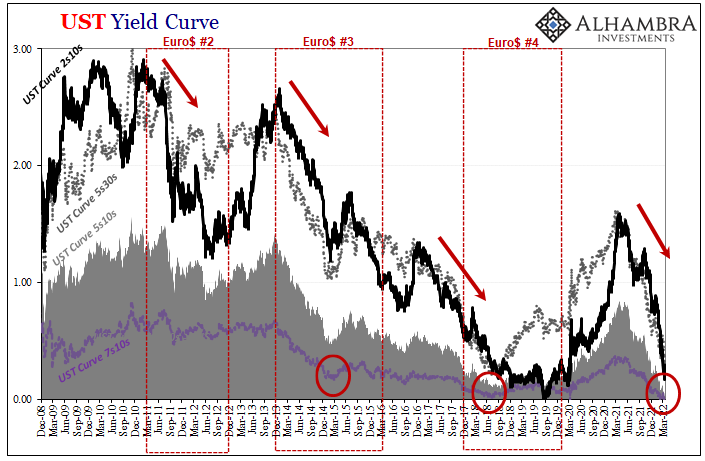
The UST 10yr yield opens today at 2.49% and a +14 bps burst in the past few hours. A week ago this rising rate was at 2.14% so it has been a major shift high since then. The UST 2-10 rate curve starts today a little flatter at +18 bps. Their 1-5 curve is however steeper at +90 bps. Their 30 day-10yr curve is very much steeper at +231 bps. The Australian ten year bond is up +11 bps at 2.88%. The China Govt ten year bond is -2 bps lower at 2.83%. And the New Zealand Govt ten year is also lower by -1 bp at just on 3.31% although the latest global moves haven't hit our market yet. And recall, a week ago the NZ Govt 10yr was at 3.19%, so there has been a big shift higher over this past week.
On Wall Street, the S&P500 is little-changed in Friday afternoon trade and is now +1.5% higher for the week so far. Overnight, European markets were mostly up +0.2% although Paris was flat. Yesterday, Tokyo ended up +0.1% on the day to cap an impressive weekly gain of +5.6%. However, Hong Kong fell -2.5% on Friday to end down -1.9% for the week. Shanghai ended down -1.2% on the day and -1.3% for the week. The ASX200 ended its Friday session up a minor +0.3% to be +1.5% ahead for the week. But the NZX50's +0.3% Friday gain didn't prevent a -1.0% loss for the week.
The price of gold starts today at US$1956/oz and down -US$7/oz from this time yesterday. A week ago gold was at US$1929/oz, so a +US$27 gain since then.
And oil prices are little-changed US$113/bbl in the US. And the international Brent price is still just on US$117/bbl. These prices are about +US$10/bbl higher than a week ago.
Meanwhile, the Americans have agreed to supply the EU with significant gas supplies in an attempt to reduce Europe's reliance on Russian energy. Russia currently supplies about 40% of the EU's gas needs and this deal will cut that to 30%. Internal reductions will get priority to minimise much of that. Germany says it is making real progress on that.
The Kiwi dollar will open today marginally firmer, now at just on 69.6 USc. A week ago it was at 69.1 USc. Against the Australian dollar we are softish at 92.6 AUc. Against the euro we are firm at 63.4 euro cents. Only against the tumbling Japanese yen are we gaining. That all means our TWI-5 starts today at just at 74.9 and now just on our four month high again.
The bitcoin price is up +0.8% from this time yesterday at US$44,290. A week ago it was at US$41,579 so is +6.5% higher than then. Volatility over the past 24 hours has been modest at +/- 2.7%.
Find these Kiwi-centric updates useful? You can help by becoming a Supporter. See here.

The easiest place to stay up with event risk today is by following our Economic Calendar here ».
We welcome your comments below. If you are not already registered, please register to comment
Remember we welcome robust, respectful and insightful debate. We don't welcome abusive or defamatory comments and will de-register those repeatedly making such comments. Our current comment policy is here.