
Here's our summary of key economic events overnight that affect New Zealand, with news the US dollar has resumed its rally and yields on US Treasury bonds have risen as markets come to realise they can't beat the Fed and that interest rates will keep on rising until inflation is beaten - even if that means enduring a recession.
It does raise the question of whether any sort of 'soft landing' can be achieved through this process.
But first in Canada, retail sales fell by -2% in July from June, preliminary estimates showed. That is a backtrack from June, when retail sales rose +1.1% from May, and May was upwardly revised.
The western-backed Asian Development Bank has been funding projects in China, even though China has built its own 'development bank' and pursued emerging economy funding along its Belt & Road projects, in its own interests. The ADB plans to provide China with up to US$7.5 bln in financing from 2021 to 2025, down from US$9 bln between 2016 and 2020. But now the ADB is saying time is up on these projects and is moving to end what has become a charade by China. China's Belt & Road projects now top US$1 bln in 'investment'.
China is claiming a big increase in foreign investment in July. But there are reasons to be sceptical.
The low flow in the Yangtze River is now critical. It seems it will be at least a month yet before any relief is likely. The implications for some regions and cities are rather grim.
Japan's inflation rate rose to 2.6% in July from 2.4% in the prior month. This was the 11th straight month of increase in consumer prices and the fastest pace since April 2014, amid surging fuel and food cost following Russia's invasion of Ukraine, as well as a sharply weakening yen.
In Australia we should note that yesterday, energy from renewables was the largest feed into their electricity system nationwide, for the fist time ever.
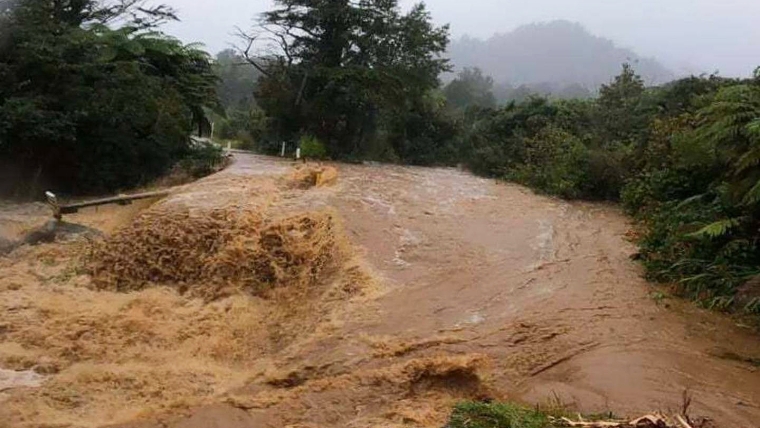
We should also note that cattle prices have hit all-time highs in New Zealand recently. Not only are schedule prices up (especially in the South Island), but saleyard prices are too. However some saleyard activity will be constrained by wet weather, which may boost prices further. What is unusual is that this record is coming three months earlier than the usual November seasonal rise. Lamb prices are rising too, and out of season as well, but they aren't yet at record levels.
Meanwhile, carbon prices are on the rise again, after having flatlined for the past six months. At NZ$85.50/NZU they are matching their February 2022 high. The EU carbon price is also rising again, up to €96/tonne (NZ$155) and also matching their February 2022 high. It is hard to escape the sense that these prices are just getting started. One consequence will be that livestock and grain prices are about to follow them sharply higher as land is converted from food production to 'forests'. Only the wealthy will be able to keep up, sadly.
And speaking or carbon taxes, Indonesia has confirmed it will impose these on its nickel exports soon, almost certainly before the end of 2022 and probably announced at the upcoming G20 meeting to be held there in Bali (which is also the epicenter of their FMD outbreak). Indonesia is home to almost a quarter of global nickel reserves, and the metal is one of its major exports along with coal and palm oil.
The UST 10yr yield starts today at 2.97% and up +9 bps from this time yesterday and up +15 bps from this time last week. The UST 2-10 rate curve is much less negative today, now at -28 bps. Their 1-5 curve is also also much less inverted at -13 bps. Their 30 day-10yr curve is now at +80 bps and steeper than this time yesterday. The Australian ten year bond is up +13 bps at 3.48%. The China Govt ten year bond is staying lower at 2.64%. And the New Zealand Govt ten year will start today up at 3.57% and up +5 bps from yesterday's levels. A week ago it was 3.52%.
Wall Street is lower today, with the S&P500 down -1.4% and ending the week down -1.1%. The equity market correction has been tough on tech stocks today. Overnight European markets were all lower by about -1% although London managed to avoid these declines ending up +0.6% for the week. Yesterday, Tokyo was also unchanged but ended its week up +1.1%. Hong Kong ended flat as well yesterday, but lost -1.3% for the week. Shanghai closed down -0.6%. The ASX200 ended its Friday session flat too, for a +1.2% weekly gain. But and the NZX50 fell -1.1% yesterday largely on market leader Fisher & Paykel Healthcare's dimmer forecast, to end down -0.4% for the week.
The price of gold will open today at US$1745/oz which is down -US$14/oz from this time yesterday and down -US$57 for the week.
And oil prices start today down -US$1 at just on US$90/bbl in the US, while the international Brent price is now just under US$96/bbl. These levels are little-changed for the week, marginally lower if anything. North American rig counts were unchanged last week, after a string of steady rises.
The Kiwi dollar will open today at 61.7 USc which is almost -1c lower than this time yesterday. A week ago it was at 64.5, so a weekly devaluation of -4.3%. Against the Australian dollar we are also lower at 89.8 AUc and down -½c. Against the euro we have fallen to 61.5 euro cents and also a -½c drop. That all means our TWI-5 starts today at 70.8, and down -195 bps for the week.
The bitcoin price is down a rather sharp -8.2% from this time yesterday and now at US$21,355. A week ago it was US$24,076, so an -11% fall from then. Volatility over the past 24 hours has been extreme at just over +/-5.1%.
The easiest place to stay up with event risk today is by following our Economic Calendar here ».
We welcome your comments below. If you are not already registered, please register to comment
Remember we welcome robust, respectful and insightful debate. We don't welcome abusive or defamatory comments and will de-register those repeatedly making such comments. Our current comment policy is here.