
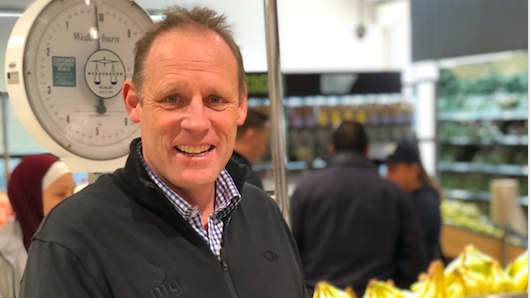
Produce supplier Darling Group doesn’t usually import Australian tomatoes to New Zealand.
Founder Andrew Darling says while his firm is a “big tomato player” across the Ditch, the current juicy price of tomatoes in New Zealand means bringing the household staple across the Tasman to sell makes financial sense.
There are political sensitivities in bringing Aussie toms in, so Darling says the NZ firm is careful to only import “when there is a real shortage, and a dollar to be made.”
“And now is one of those times.”
Inflation is a global story, but New Zealand consumers got a hard reminder of how inflation flows through, including to the pantry, this week when Statistics NZ released the Food Price Index.
The latest index showed food prices soared in August this year compared with August in 2021, logging the fastest-increase in the price we pay at the supermarket since 2009.
Overall food inflation was 8.3% annually in August, a price rise not seen for 13 years with grocery food prices increasing by 8.7%, driven mostly by higher prices for eggs, yoghurt, and cheddar cheese.
Among the other items leading the price increases were fruit and veges, which saw a 15% annual rise with Stats NZ pointing out capsicums, potatoes, and onions were behind the annual increase in prices, while monthly prices were pushed up by tomatoes, capsicums, and cabbage.
So what is going on that’s leading to these higher prices?
Yes, part of it is global inflation, but there are also some more specific issues at play depending which veges you look at.
Take tomatoes, the poster child for higher fruit and vege prices.
Stats NZ data from the Food Price Index shows the price of tomatoes has risen by 162% since 2009.
If you take a look at Countdown’s website, it’s currently selling loose fresh tomatoes for $14.99 a kilo, as is Foodstuffs-owned New World.
In January when Stats NZ released that month’s Food Price Index, tomatoes had almost doubled in price for December 2021 when compared with December 2020, and the price per kilo went from $3.33 to $6.61.
Jerry Prendergast is president of United Fresh, a not-for-profit incorporated society that works for its members in the fruit and vegetable sector.
He says the industry has faced some “very unusual circumstances” for tomatoes in 2021 when the Pepino mosaci virus (PepMV) was found on crops in Auckland.
This disease affects yield from the affected plants, and delays fruit growth.
“This actually caused a lot of problems to the tomatoes that were being planted and that had already been planted as we went from about September, right through to summer, actually plagued us. Industry and tomato growers had a terrible time eradicating this disease.”
Prices for tomatoes are generally high anyway in winter months like August, Prendergast says, but there are other reasons why this August was particularly expensive.
This tomato disease also meant eight export markets were off the table for growers.
Prendergast says usually there is a “reasonable” amount of NZ-export tomatoes, but some growers have decided not to replant for export due to increased freight costs, meaning excess export tomatoes that might have been sold in New Zealand simply won’t be available this year.
New Zealand consumers get many products this way, Prendergast says. NZ exports apples, so there is usually some apple overflow for local consumption. NZ grows plenty of avocados for export; Kiwi consumers benefit again from what’s left over.
“But growers didn’t plant for export this winter. And compounding that, the growing cycles were out of kilter … Because of the [disease] that actually plagued us through summer and into autumn, they're only getting their cycles back. So you've got two or three things here; you've got growing cycles getting back in line, you've got exporting that was not planted for and you've got the traditional winter crop that is extremely difficult to grow.”
A wild, wet winter is also costing us when we want tomatoes.
Industry group Tomatoes NZ says there are about 150 tomato growers in New Zealand that produce tomatoes with a "farm gate value" of $120 million per year with an export market valued at about $11m, with Japan the top destination.
It released a fact sheet this year highlighting issues it says are hampering the industry. It says increased costs to grow tomatoes coupled with low prices is not sustainable and will force growers out of business. It says the "tomato industry is under threat".
On the up
And then there is the issue of rising costs.
Supermarket chain Foodstuffs has been releasing its own data to highlight that it is also paying increased prices, but to its suppliers.
It says in August 2022, the average supplier cost price increase to Foodstuffs’ co-operatives on the same products measured in the Food Price Index basket was 8.2%
As Darling says, “everything is going up.”
Whether it's fuel (the price of diesel has rocketed to more than $2.50 and is about the same cost as regular unleaded 91 petrol) or labour costs or fertiliser or compliance costs or electricity, it’s all adding up to more outgoings — hopefully in the pursuit of more productivity, Darling says.
“Generally speaking, costs in the last five years at an orchard level have gone from about $10,000 to $12,000 a hectare to $25,000 to $30,000 a hectare. But that’s not just about cost increases, that’s required inputs for more outputs, such as putting on more fertiliser to grow more fruit.”
In the case, for example, of avocados which Darling Group is heavily involved in, those rising costs compared with a glut of avocados hitting the market in peak season meant it let fruit fall to the ground and rot this season.
And it’s not just avocados growers walking away because of increased bills.
Prendergast says some NZ growers of leafy greens (think lettuces, cabbages) didn’t harvest their crops at all because it was simply not economically viable to spend more money harvesting that they won’t earn back from selling.
He says for the first time last summer growers said that with increased costs it was impossible to pick the harvest. In previous years growers might have picked and taken the crops to market and got a low price, but now it's just not worth it.
"That has never happened traditionally."
He says “the dynamics have now changed”, and growers will either choose to let fruit fall and rot like Darling Groups' avocados, or some crops like lettuces may be mowed or ploughed.
"We are seeing those decisions being made now."
Prendergast says this is a new trend that he sees will happen more in future, alongside changes in how people chose to grow what they grow.
He says the increased costs to produce fruit and vegetables means speculative growers won't decide to plant a crop and see what happens; growing will be more planned and structured and at scale, and this in turn will mean less "flushes" of produce coming into the market to be sold for NZ consumers.
And in the future, Prendergast expects more "feast and famine" for NZ shoppers.
He says in the next six-to-12 months consumers will see plenty of leafy greens and vegetables, but because of that boggy winter there will be "funny gaps" in supply.
Because the water tables are high, and the ground is wet, vegetables will be dormant for longer so "they're growing slowly".
And yes, he expects prices will keep rising because of those rising costs.
"The market understands that, and has to respond. The supermarkets will respond because they know they've got to pay more, if they want to get it. The independent grower knows that, and the processors know that and everyone understands it, and they are working to do the very best to be ahead of the cost price. So we will see an increase. However, when there's an oversupply, demand or supply principles generally apply and we see the price go down."
We welcome your comments below. If you are not already registered, please register to comment
Remember we welcome robust, respectful and insightful debate. We don't welcome abusive or defamatory comments and will de-register those repeatedly making such comments. Our current comment policy is here.