
The Climate Commission says if New Zealand doesn’t meet the climate commitments it signed up to under the Paris Agreement, the country could face “greater scrutiny” from its trading partners.
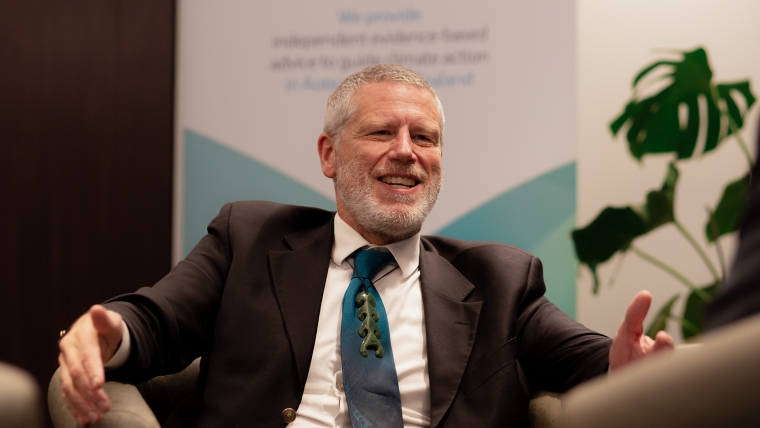
This is according to the Commission’s Chief Executive Jo Hendy and Chairman Rod Carr who appeared at a public webinar on Friday to discuss a new emissions monitoring report released earlier in the week.
The Commission has the job of independently monitoring the country’s progress on reducing emissions. Earlier this week it released an emissions monitoring report, the first annual report on the subject.
The report has looked at emissions data up until April 2024 and assessed how current emissions reductions policies and plans are setting up NZ’s ability to meet its climate goals.
The report suggests NZ is likely on track to meet the first emissions budget – but this comes with several caveats.
One of the caveats is based on newer information received after the Commission’s findings were already finalised around whether its older projections might have underestimated how much deforestation has happened in NZ.
“If this is the case, it makes it less likely that the first emissions budget will be met. We will know more later this year when updated projections and official estimates of ‘target accounting’ emissions are released,” Carr said in the report.
According to the Commission, available emissions data showed the first emissions budget of 290 million tons of carbon emission between 2022-25 may be met.
But this estimate has “high uncertainty” because of rising transport emissions, low rainfall for hydroelectricity generation and increased levels of deforestation.
“Further action by the Government to reduce emissions would decrease the risk of missing the first emissions budget,” the report said.
The Commission is recommending the Government place “increased effort” on measures and policies that can improve the chances of NZ meeting its first emissions budget.
“Those reductions would also build over time to contribute to meeting the second emissions budget (2026–2030) and third emissions budget (2031–2035),” the report said.
The second emissions budget is 303 million tons of carbon emissions and the third emissions budget is 257 million tons.
In mid-July, the Ministry for Environment (MfE) publicly released documents on its second emissions reduction plan which revealed NZ is set to narrowly meet its first and second emissions budgets for 2022-25 and 2026-30.
However, the MfE’s report said NZ is set to go over the 2031-35 budget by 17 million tonnes of carbon emissions.
The Climate Change Commission believes there are “significant risks” to NZ meeting the second and third emissions budgets, according to its emissions monitoring report.
Agreements
Carr said in Friday's webinar NZ was “up against a rock” because if the Government didn’t meet its domestic emissions budget this decade, that didn’t change NZ’s obligations under the Nationally Determined Contributions (NDCs) in the Paris Agreement.
New Zealand is one of 196 countries that signed up to the Paris Agreement, the legally binding international climate change treaty that came into force in 2016.
Signing the Agreement meant NZ had to declare a NDC setting out what a country is going to do to cut emissions and adapt to climate impacts.
According to the Commission, NZ committed to reducing greenhouse gas emissions by 30% below 2005 levels by 2030 as its first NDC.
In 2021, NZ then updated that to a target of a 50% reduction of net emissions below gross 2005 levels by the year 2030.
New Zealand will know by the 31st December in 2030 if it has met its NDC agreement.
Hendy said in the webinar that if NZ doesn’t meet it, it’ll cause a “loss of influence on the global scene” when it comes to climate change as well as “greater scrutiny” from NZ’s trading partners.
“Particularly where we have free trade agreements and particularly with those strong climate elements within them,” she said.
Hendy added that global consumers and customers were also increasingly scrutinising their supply chains and looking for products that are reducing emissions.”
“And so we do increase risks around loss of the global markets in that respect as well.”
Carr said a large number of other countries are going to meet their NDCs.
“You don't want to be the pariah, wealthy nation that doesn't meet its NDC if others are,” he said.
“We've now signed trade agreements in the UK and Europe that make meeting your Paris commitments part of your right to access those affluent markets. And it's not just a matter of accessing it for certain products, accessing it for all products. The Europeans have made that clear.”
We welcome your comments below. If you are not already registered, please register to comment
Remember we welcome robust, respectful and insightful debate. We don't welcome abusive or defamatory comments and will de-register those repeatedly making such comments. Our current comment policy is here.