
An independent solar farm developer says dramatic reform of the electricity sector would risk disrupting a multi-billion dollar pipeline of new energy supply that was already underway.
Far North Solar Farms signed a deal at Parliament on Tuesday, with a Crown-owned green investment bank which will provide it with a $78 million debt facility to fund the connection of five of its solar sites to the national power grid.
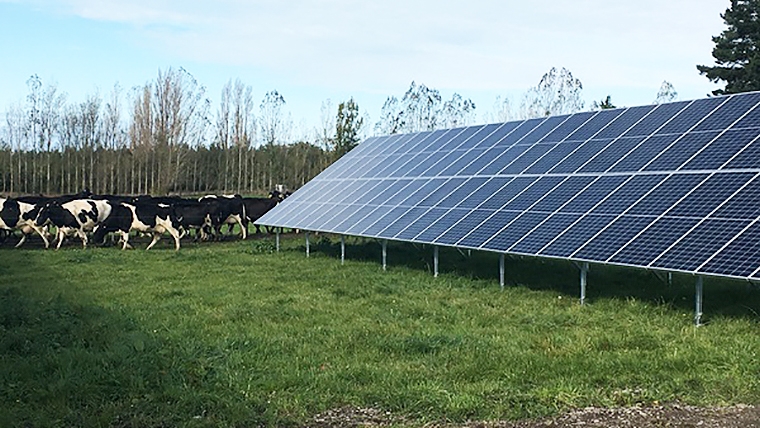
The developer has been working on 11 solar farms that will eventually provide 1.4 gigawatts of energy, enough to power the entire city of Wellington daily. It is funded by German private equity firm Aquila Capital and has no connection to New Zealand’s big energy companies.
Richard Homewood, a founder and director of Far North, said gentailers had built most of New Zealand’s generation capacity because they had the balance sheets and expertise to do so.
But it was possible for new entrants to build new generation projects as long as they had plenty of capital and a strong understanding of both the electricity market and construction.
Sky-high wholesale electricity prices have reignited calls for the Government to reform the market structure, which some argue doesn’t incentivise new development.
Energy Minister Simeon Brown has promised a review of the market to ensure it delivers reliable electricity at the lowest cost while remaining efficient and competitive.
Shane Jones, an NZ First MP and associate energy minister, said he was pushing for this review to take a “deep look” at what was getting in the way of competitiveness.
“The gentailers realize their social licence is perilously low, and we'll cross that bridge when we get to it,” he said.
Homewood told Interest.co.nz that the government should avoid introducing dramatic reforms that could disrupt large energy projects already in progress.
“People are making investments on the basis of how the market is structured now, and so I think we just need to be careful about making knee-jerk changes unnecessarily,” he said.
He supported incremental changes, such as permitting electricity lines companies to invest in development, but noted substantial investment was already flowing into the sector to increase supply.
“There's billions of dollars that are about to enter the New Zealand electricity market. I know we want it now but it's coming. We’re gonna see this generation turned on,” he said.
“I would suggest that we stay the course, tough as it is. Find solutions to manage the short term problems, but don’t restructure the whole market right now”.
That said, large-scale electricity projects are complex, which is why New Zealand Green Investment Finance, a Crown-owned investment bank, has been involved in this deal.
It will finance the construction or upgrade of substations necessary to connect the solar farms to the grid. Because these assets are owned by Transpower, it can be hard to secure private finance from an investor or bank as they wouldn’t be able to use it as security.
Jason Patrick, NZGIF’s chief investment officer, said financing connection assets separately from the rest of the development was an new model the investment bank would use again in the future.
LNG imports
NZGIF’s job is to make commercial investments which accelerate decarbonisation and help the country transition to a low carbon future.
The Coalition Government aims to electrify the economy but believes fossil fuels will be necessary for decades. It plans to bolster energy security by helping the sector build an LNG import terminal and permit new oil and gas exploration.
Homewood said natural gas and coal would have some role in the future, but large-scale solar could address much of the issue by preserving hydro lake water as backup energy.
“Right now we use hydro as a baseline power. If we just treated hydro as a big, giant battery, and introduced more intermittents, then we would be a lot more resilient,” he said.
Raewyn Moss, an executive at Transpower, said projects like Far North’s solar farms were vital to ensure there was enough generation capacity to see NZ through dry years.
“Fortunately, at Transpower, we've got a significant pipeline of other generation projects that we want to commit to the national grid, and these include all types of generations: solar, wind and geothermal,” she said.
There were 16 projects already in delivery, 39 in the investigation stage, and another 35 awaiting investigation to start.
We welcome your comments below. If you are not already registered, please register to comment
Remember we welcome robust, respectful and insightful debate. We don't welcome abusive or defamatory comments and will de-register those repeatedly making such comments. Our current comment policy is here.