
The Coalition Government’s land transport plan contradicts its commitment to bipartisan infrastructure decision-making and a reliable construction pipeline by investing heavily in state highway upgrades that lack broad support.
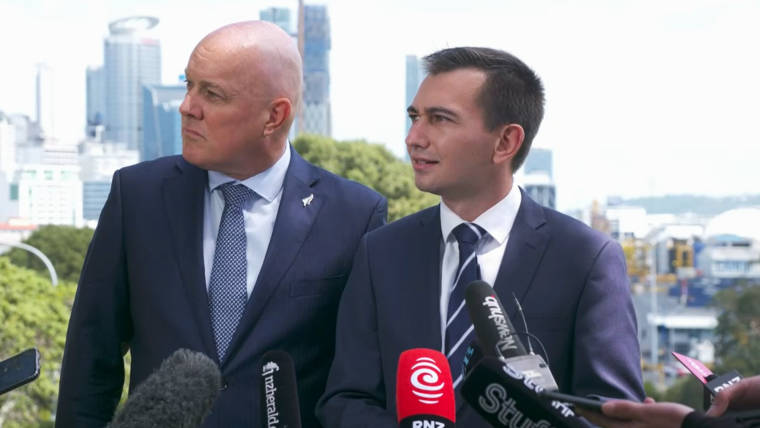
Transport Minister Simeon Brown said his $33 billion investment plan was a repudiation of the previous government’s policies which resulted in non-delivery and too many speed bumps.
He said the new National Land Transport Plan prioritised 17 so-called ‘Roads of National Significance’ to create a pipeline of roading infrastructure across the country.
Construction and infrastructure companies have been virtually begging governments to create a steady stream of projects they can plan around. A recent report said both left- and right-leaning governments have cancelled existing projects once taking office.
This contributes to New Zealand’s eye-watering infrastructure costs. Not only are resources wasted by repeated planning and design work, but also construction firms cannot scale up and invest in things that would make building projects cheaper and more efficient.
Infrastructure Minister Chris Bishop has begun to tackle this problem by restructuring Crown agencies and asking the Infrastructure Commission to create an independent pipeline. He wants cross-party support for a list of highest value projects over the next three decades.
But barely a week later, Brown was announcing an enormous infrastructure investment plan based around partisan policy goals, which critics say restarts the pipeline yet again.
Timothy Welch, a senior lecturer in urban planning at Auckland University, said the plan committed billions of dollars to do preparatory work without delivering any improvements.
“These projects could easily be sidelined by future budget constraints or changing political priorities,” he said.
Not shovel-ready
Matt Lowrie, a transport and urban planning commentator, said funnelling money towards state highway upgrades would result in many smaller projects being scrapped.
“And as it’s going to be some time before the big new roading projects are ready, in the next few years we’re likely to lose a lot of people and talent to other industries or overseas,” he wrote in a blog post.
“Meanwhile, in order to deliver on these promised big roading projects, that money will instead need to be spent on huge numbers of consultants writing business cases – which is exactly the kind of thing that the Minister accused the previous government of doing too much of.”
The National Land Transport Plan sets aside almost $18 billion for roads, $6.5 billion for public transport, $1 billion for rail, and just $460 million for footpaths and cycleways.
Brown told reporters that New Zealanders were “sick and tired of the amount of money” being spent on bike lanes and that active transport was in the “nice-to-have” category.
This was not talk that would win cross-party support from the opposition benches, where MPs are keen for more climate-friendly projects and public transport investment.
Press releases from the Labour and Green parties both criticised the Coalition for putting the majority of investment into roads, while neglecting rail and cycling.
Because none of the Roads of National Significance will begin construction until 2027, these parties could have a chance to scrap them after the next election and restart the pipeline all over again.
Some conditions apply
Even putting politics to one side, the construction industry may not want to count on building all these roads — as Waka Kotahi/NZTA may not be able to fund them all.
A projection of investment intentions shows annual expenditure ballooning to $12 billion, while road-related revenues only rise to $6 billion. That gap would need to be filled by taxpayer money, and is roughly double the Crown contribution over the next three years.
Waka Kotahi/NZTA said this forecast was “indicative only” and in practice investments will need to be prioritised based on available money and delivery capacity.
“Further additional funding or financing will be required outside of the NLTF to deliver on the aspirations of GPS 2024, as well as reform of legislation to allow for road pricing initiatives such as time of use charging, and the transition of all vehicles to road user charges,” it said.
Brown has asked the transport agency to consider tolling all the Roads of National Significance to help meet the costs and will support any recommendation it makes.
He also wants to impose road user charges on petrol cars from 2027 and has already planned to lift fuel excise taxes by 12 cents that same year.
Waka Kotahi also said the Government was expecting public transport fares and other “third party funding” to increase.
We welcome your comments below. If you are not already registered, please register to comment
Remember we welcome robust, respectful and insightful debate. We don't welcome abusive or defamatory comments and will de-register those repeatedly making such comments. Our current comment policy is here.