
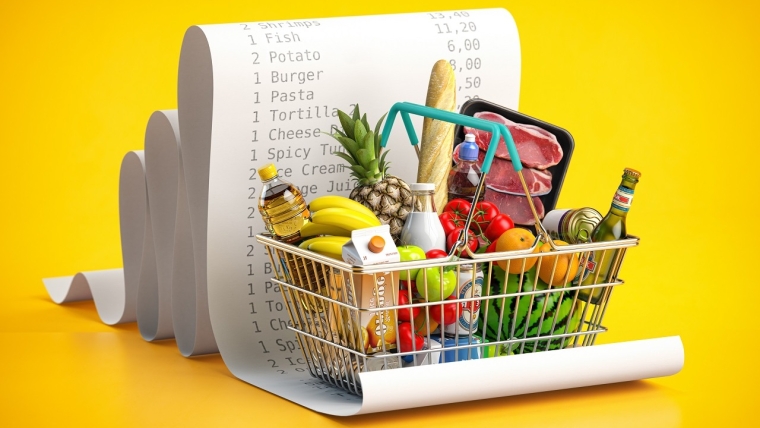
Food prices rose almost 2% in January, according to the latest Statistics New Zealand Selected Price Indexes (SPI), the largest monthly increase in almost three years.
Stats NZ's January SPI says food prices have risen 2.3% in the past 12 months and 1.9% on a monthly basis.
Stats NZ’s SPI features goods comprising about 45% of the quarterly Consumers Price Index (CPI), the official measure of inflation tracked by the Reserve Bank. This means the monthly SPI provides a good idea of where the path of inflation is going.
January’s SPI is a massive increase from the month of December when food prices edged up just 0.1%, and it’s the largest monthly rise in the cost of food since a 2.1% increase in July 2022.
Stats NZ said 65% of items priced in the food basket were more expensive in January 2025, compared with an average of 54% per month in 2024.
“The proportion of the food basket that increased by over 5% in price was the highest in five years,” Stats NZ’s prices and deflators spokesperson Nicola Growden said.
“About 20% of the basket saw prices rise 5% or more in January.”
As of the December quarter, actual inflation as measured by the CPI was still running at an annual rate of 2.2%, having not budged from the 2.2% rate it was sitting at in the September quarter. That's smack bang within the Reserve Bank's targeted inflation range of 1% to 3%, and is the first time it has been this low since mid-2021.
ASB senior economist Mark Smith said it was still early days, but the SPI figures suggested that the lower NZ dollar was reigniting pricing pressures “from a number of pockets”.
“We continue to expect a moderate firming in annual food price inflation over 2025, given recent improvements on global food commodity prices and the low NZD,” he said.
Prices of groceries, milk & chocolate rise
January’s rapid food price increase was driven by higher prices for grocery food, especially increased pricing from milk, boxed chocolates and chocolate blocks.
Grocery food prices were up 3% on a monthly basis and 4% higher on an annual basis.
The average price of a 250g block of chocolate was $5.72 in January 2025 compared with $4.90 a year earlier in January 2024, according to Stats NZ.
Westpac senior economist Satish Ranchhod said chocolate prices typically spiked ahead of Valentine’s Day but this was the biggest increase the bank had seen over the past 25 years – up 13% in January’s SPI — and likely reflected the rise in global cocoa prices.
Growden said the average price of a two-litre bottle of milk was $4.54 in January 2025 compared with $3.93 in January last year.
Higher prices for fruit and vegetables – up 2.8% — also contributed to the 2.1% increase in food prices during the month of January.
Growden added that fruit and vegetable prices typically increase in January months.
“Out-of-season produce, such as broccoli, kiwifruit, and apples, contributed the most to the price increase in January,” she said.
Rentals make up 9.5% of the CPI and Stats NZ said the ‘stock’ measure of rentals was up 0.1% in January compared to December 2024 and up a higher 3.6% on an annual basis.
Stats NZ’s ‘flow’ measure of rentals (which is applicable to new tenancies) was not included in the agency’s SPI data for January due to Stats NZ continuing to work through a new data system for these measures.
Westpac's Ranchhod said rental inflation was much weaker than expected and the bank had only seen a rental increase as small as January’s twice over the past decade.
“Anecdotes point to much more muted pressure on rents this year as population growth has slowed and the stock of houses has increased. Rents are one of the largest components of domestic inflation,” he said.
Stats NZ found petrol prices rose 4% on a monthly basis and had edged up 1.2% compared to a year ago. While diesel prices rose 5.8% compared to December 2024, diesel fell 4.3% on an annual basis.
In January 2025, domestic air transport prices fell 1.3% while international air transport prices slumped further and were down 11.7%. Annually, domestic air transport prices were up 15.5% and international air prices edged up just 0.9%.
Alcoholic beverages and tobacco prices also drove up January’s SPI, with prices 2.4% higher in January 2025 compared to December 2024 and 4% higher annually.
Growden said the new tobacco excise tax that took effect at the beginning of 2025 had increased tobacco prices.
ANZ economists said in a research note on Friday that the lift in tobacco prices was larger than expected and also larger than the annual indexation of excise tax would suggest.
We welcome your comments below. If you are not already registered, please register to comment
Remember we welcome robust, respectful and insightful debate. We don't welcome abusive or defamatory comments and will de-register those repeatedly making such comments. Our current comment policy is here.