
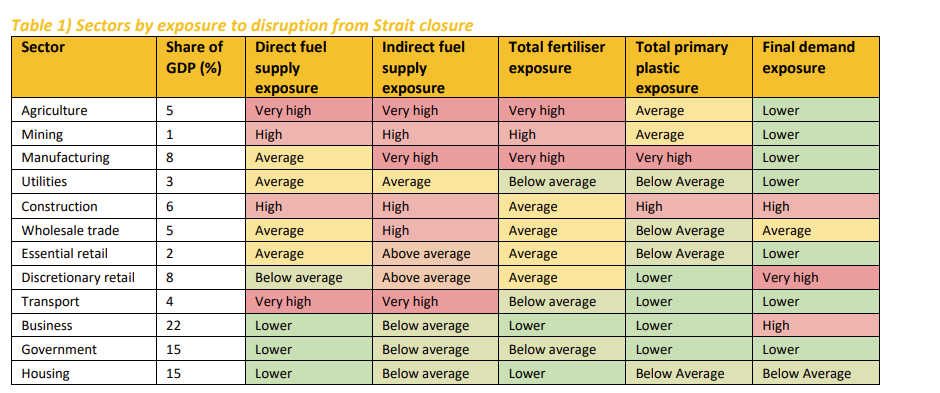
More than a quarter of New Zealand’s economy has a high, or very high, direct or indirect exposure to disruption from the Strait of Hormuz’s closure, ASB analysis suggests.
Agricultural, manufacturing, construction and transport industries are acutely vulnerable to the continued closure of the Strait given the high dependence on fuel, fertiliser and plastics. - Even sectors like arts, recreation, retail trade and hospitality are vulnerable due to sensitivities from changes to discretionary spending.
"Overall, we find that roughly 25% of the economy has a high, or very high exposure to at least two of the key disruptions analysed," the report stated.
From that, ASB expected the initial inflation impulse to hit fuel, food, freight, plastic products and goods with high transport or packaging intensity.
"Meanwhile, economic growth is at risk of slowing across agricultural and goods producing sectors, as well as those industries sensitive to discretionary household demand."
The report said that while the conflict outlook was still highly uncertain, with no clear path towards any agreement to reopen the Strait, it was prudent for businesses to understand exposures and the consequences of the situation.
ASB senior economist Kim Mundy said the effects of the Strait’s closure reach further into the economy than may have first been apparent, "with few sectors likely to escape entirely."
While the price of petrol and diesel has hit the public and businesses in the pocket, the blockage has also affected natural gas, fertiliser and petrochemicals getting through.
"The impacts of higher fuel costs are relatively straightforward to observe but other hidden costs across NZ supply chains from the Strait’s closure may signal more acute exposures than direct fuel costs can account for," the report stated.
Mundy said the broader story of the Middle East conflict "is how the entire cost shock (which includes fertiliser and petrochemicals) spreads through supply chains, lifting the cost of manufactured goods, packaging, freight and farm inputs, and the flow on effects of that to consumer spending."
Initial inflationary pressure is expected to be felt most acutely in food, freight, plastic products and goods with high transport or packaging costs.
Sectors such as retail, hospitality, arts and recreation may face softer demand due to high fuel costs reducing household spending power.
Direct exposure
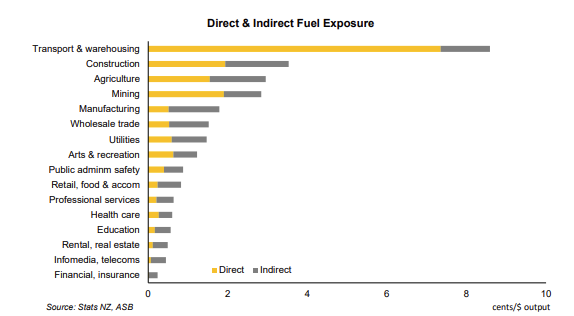
Transport and the warehousing industry was most exposed by the direct impacts of fuel price rises, other highly exposed industries included construction, mainly within non-residential and heavy/civil engineering, primary industries and mining.
"It is worth noting that most of these businesses are exposed to diesel, rather than petrol. Since the Middle East conflict began, retail diesel prices in NZ have risen roughly 45%," the report said.
Indirect
Through supply chain exposure to fuel, construction and agricultural (particularly forestry and logging) had the greatest exposure, while other highly exposed sectors included transport and warehousing (postal and courier services and road transport), wholesale trade (especially grocery and liquor wholesaling), mining (exploration and mining services) and utilities.
Fertiliser
As a third of fertiliser usually goes through the Strait, prices have also risen - combined with fertiliser being heavily reliant on natural gas (which a significant amount also passes through the Strait) in its production.
This hits agriculture hard - particularly horticulture and farming sub sectors, and also manufacturing.
"The manufacturing industry is most exposed to fertiliser in its upstream supply chain, followed by agriculture. But fertiliser shows up in the supply chain of many other industries including construction (primarily via inputs purchased from the agricultural industry), wholesale trade (largely via goods movement) and retail, food & accommodation (via food supply chains)."
Petrochemicals - "essentially the bits left over from oil and natural gas and are used widely in the manufacturing of plastic (but also feed into rubber, paint and many other chemical products)".
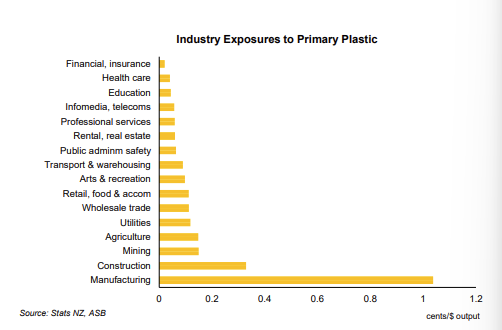
It said while all industries showed an exposure, manufacturing and construction had the largest exposure.
Overall
"Agricultural, manufacturing, construction and transport industries are vulnerable to the Strait’s closure given their high dependence on fuel, fertiliser and/or plastics. Sectors with lower exposure to items that transit the Strait may still be exposed.
"We find arts, recreation, retail trade and hospitality are vulnerable as they are sensitive to reductions in discretionary income despite lower fuel, fertiliser and plastics exposures."
We welcome your comments below. If you are not already registered, please register to comment
Remember we welcome robust, respectful and insightful debate. We don't welcome abusive or defamatory comments and will de-register those repeatedly making such comments. Our current comment policy is here.