

Debt appears to be back in vogue down on the farm, with a strong turnaround in rural lending so far this year.
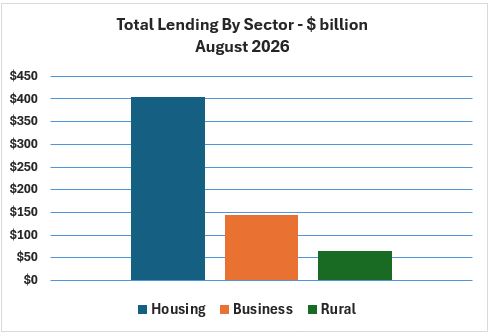
According to Reserve Bank (RBNZ) figures for August, the rural sector remains a relative minnow when it comes to debt, owing banks and other financial institutions $65.7 billion. This is a relatively modest amount compared to the $143.8b owed by businesses and the massive $403.3b owed on housing.
However, farmers get a big tick from the banks for being the most improved on the lending front this year.
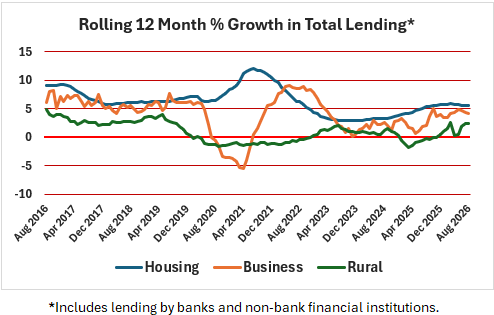
In the 12 months to August 2026, the total rural sector debt increased by 2.4%, compared to negative growth of -0.2% in the 12 months to August last year.
Total rural debt was declining for most of last year, with the annual growth rate fluctuating between -0.2% and -1.8% over the period from January to September, as many farmers preferred to pay down existing debt rather than take on more.
But annual growth in rural debt has remained in positive territory since December last year and this year appears set to have the highest overall annual growth in rural debt since 2019.
Lending to businesses has also been on the up, growing by 4.1% over the 12 months to August this year, almost double the 2.1% annual growth over the 12 months to August last year.
Since March this year, annual growth in business lending has been at its highest level since 2023, although there are tentative signs that the latest growth figures may be starting to get a bit wobbly, with annual growth levels declining for three consecutive months, from 4.9% in May to 4.1% in August.
Residential mortgage lending has also shown some growth, but there are signs that it is also slowing.
Over the 12 months to August this year, total lending on housing grew by 5.5%, up from 5.2% in the 12 months to August last year.
The annual growth in residential lending to August this year was also the highest it has been for that period since 2022.
But residential lending is also having a few wobbles, with annual growth declining steadily from 5.9% in March this year to 5.5% in August.
The Reserve Bank's monthly figures also suggest a decline in new mortgage lending is already underway.
So a banker looking for the sweet spot in the lending market at the moment should probably pull on the gumboots and head for the back blocks.
Rural debt
Select chart tabs
Business debt
Select chart tabs

We welcome your comments below. If you are not already registered, please register to comment
Remember we welcome robust, respectful and insightful debate. We don't welcome abusive or defamatory comments and will de-register those repeatedly making such comments. Our current comment policy is here.