
Today’s economic growth depends heavily on AI investment and fiscal spending. The International Monetary Fund estimates that AI could add up to half a percentage point to annual global growth over the next decade, raising the average rate from 3% to 3.5%.
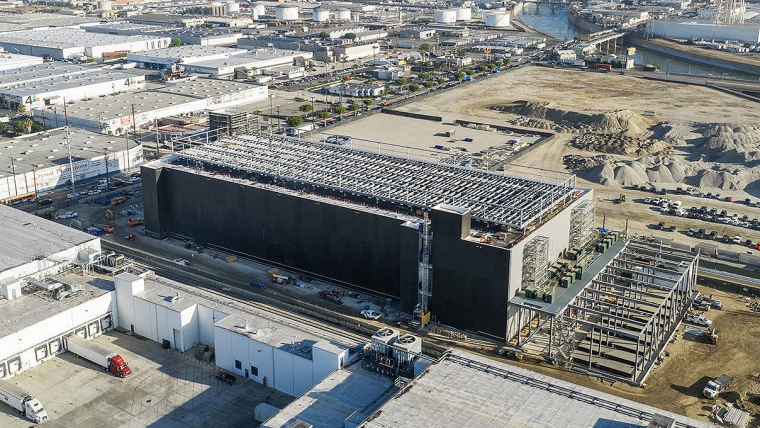
In the United States alone, Big Tech firms are projected to spend $650 billion on AI infrastructure in 2026, from data-center construction to equipment purchases. According to JPMorgan, AI-related investment has accounted for roughly one-fifth of real US GDP growth over the past year, adding 0.5 percentage points.
But there are signs that an AI-driven slowdown is on the horizon. Consider the recent rise in interest rates, which is at least partly driven by shifting capital flows. AI capital expenditures, once funded by companies’ internal resources, are increasingly financed through debt and equity issuance. Google, historically a major share re-purchaser with substantial cash reserves, is now tapping financial markets.
This surge in AI-related borrowing comes at a time when governments grapple with mounting debt burdens and persistent fiscal deficits, along with growing infrastructure and defense spending needs. The result is an intensifying competition for capital, which is driving up bond yields and threatening to tip the global economy into a recession. Yields on ten-year and 30-year US Treasuries are approaching levels not seen since 2002. Globally, roughly 84% of fixed-income securities now yield more than 3%, compared with just 12% of fixed-income securities in January 2022.
And the pressure is not confined to bond markets. Several AI-related IPOs have been delayed this year, including those of SB Energy, Oura, and OpenAI. SoftBank recently issued seven-year bonds at 9.75%, while Meta issued debt at 7.5%, suggesting that investors are demanding equity-like yields to finance AI investments.
An AI-driven slowdown would hit the stock market hard. Strong headline index returns already mask a bifurcated market in which non-AI stocks are performing poorly, while AI firms drive almost all the gains.
If AI stocks begin to fall, wealthier consumers would likely cut back on spending. Falling equity valuations would also make venture capitalists more reluctant to fund AI startups, which would be forced to scale back their plans. The result could be a vicious cycle of declining investment and stock prices across the sector.
Several factors could bring about such a slowdown. Disappointing productivity gains and weak investment returns could cause companies to rethink their spending plans. Infrastructure bottlenecks and cyberattacks could disrupt expansion. And strengthening NIMBY (“not in my backyard”) opposition to data centers could provoke a political backlash. Any of these developments could derail the AI boom.
Global AI spending is expected to top $2.7 trillion this year. While a slowdown might lower funding costs, the resulting decline in interest rates would not be enough to support the broader economy. US mortgage rates, which have reached nearly 7.5%—their highest level since 2023—would need to fall significantly before residential fixed investment could recover.
Central banks, for their part, would have limited room to cut interest rates in response to an AI-led recession. With inflation still running above their 2% targets, partly owing to the wars in Ukraine and Iran, they would be reluctant to stimulate the economy for fear of losing credibility.
Already burdened by large fiscal deficits, governments would struggle to provide additional fiscal stimulus to offset an economic shock. Much of the international capital flowing into the US today is driven by expectations of AI-related returns. If those returns fail to materialize, some of that money could flow back home, weakening the dollar and pushing up Treasury yields. This, in turn, would make it even harder for the US government to finance its deficits.
The IMF has already identified evidence of de-dollarization in official foreign-exchange reserves, reflecting the dollar’s diminishing role, particularly in trade invoicing and cross-border finance. In the fourth quarter of 2025, the dollar accounted for 56.8% of global foreign-exchange reserves, down from roughly 72% at its peak in 2001.
Business leaders should prepare for an AI-driven economic slowdown. At a minimum, companies should manage their balance sheets conservatively and maintain adequate cash cushions. More fundamentally, they should assess how much of their recent financial performance has benefited from AI-related spending and expectations of future productivity gains, and how they would fare if that spending dries up. Those that expect the AI boom to last forever may soon be in for a rude awakening.
*Dambisa Moyo, an international economist, is the author of four New York Times bestselling books, including Edge of Chaos: Why Democracy Is Failing to Deliver Economic Growth – and How to Fix It. This content is © Project Syndicate, 2026, and is here with permission.
We welcome your comments below. If you are not already registered, please register to comment
Remember we welcome robust, respectful and insightful debate. We don't welcome abusive or defamatory comments and will de-register those repeatedly making such comments. Our current comment policy is here.