
 By Andrew Hooker*
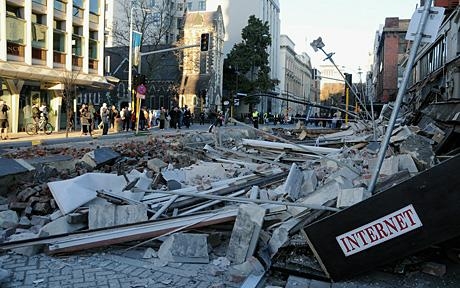
With any major event, we learn new terms. Who had heard of Y2K before 1999 or liquefaction before the tragic earthquakes in Christchurch? Well we have another term coming out of the earthquakes – “depopulation”.
Ever helpful in the wake of such tragedy, insurance assessors around Christchurch are warning people making insurance claims for business interruption/loss of profits that they are not covered for “depopulation”.
Insurance companies are making it clear to their customers from the start that their policy does not cover them for loss of income or profit as a result of this phenomenon.
So what is “depopulation”? It is probably not a particularly helpful term.
The term gained notoriety in relation to the cyclone Katrina claims in the United States.
When New Orleans was depopulated – everybody moved out – businesses suffered loss. The insurance companies maintained that the loss was as a result of everyone leaving town rather than the actual damage to the insured building by the cyclone. As a result the insurance companies said that there was no cover.
The term actually means more than that. The concept of depopulation in the context of business interruption insurance can relate to any type of loss that is not caused by the damage to the insured building.
For example, you have a hairdressing business, and it is an earthquake zone. Nobody really feels like a haircut in the weeks following the earthquake, the insurance company may argue that your losses did not arise from the damage to your building as such and are therefore not covered under your policy.
That, in the most pure sense, is what this is all about.
But of course, it is nowhere near that simple.
The insurance industry and its representatives are relying largely on a decision in the Courts in the United Kingdom last year arising from Hurricane Katrina. They hang their hat on the fact that this judgment supports their view that they can severely limit claims in reliance on this concept of depopulation.
The legal position, however, is nowhere near as clear cut as may be suggested. The U.K. decision was, for a start, an appeal from an arbitration and is therefore very limited in its application. The judge in that case was considering fundamentally different legal principles than a straight out interpretation of an insurance policy.
Second, the decision relies heavily on specific clauses in the insurance policy that may or may not exist in policies in New Zealand.
Don't take insurers excuse at face value
So, this legal decision out of the U.K. is not a get out payment free card for the insurance industry.
There is a lot of water to flow under the bridge before the insurance companies can wriggle out on that basis.
There is a huge ground swell of dissatisfaction building within the business community in Christchurch about this issue, recently highlighted on TVNZ’s Fair Go programme. Even following the most recent earthquake, insurance assessors are already telling devastated business owners that their cover may be limited in reliance on this proposition.
If you are one of those people, do not accept this at face value. Everything will depend upon the specific circumstances of your case, and the policy wording applicable to your insurance. Don’t be afraid to ask questions or to seek independent advice as to your entitlements.
Watch this space; it seems that there is going to be significant water to flow under this proverbial bridge before the issue is finally resolved.
===========================
*Andrew Hooker a lawyer specialising in insurance law and a director of Claims Information Specialists Ltd, running an insurance information web site www.
We welcome your comments below. If you are not already registered, please register to comment
Remember we welcome robust, respectful and insightful debate. We don't welcome abusive or defamatory comments and will de-register those repeatedly making such comments. Our current comment policy is here.