
By Amanda Morrall (email)
Flashback: It's 1986. I have just acquired a not too shabby used Ford Pinto for the rock bottom price of CND$100.
As a 16-year-old no longer at the mercy of the "loser cruiser", I am naturally elated. In my state of teenage euphoria, I splurge on a tape-deck (no not an eight-track) that cost more than the car.
So what if the car is second cousin to the infamous blow-up version of the Pinto and that my car is the colour of dog poo. It's freedom.
My jubilance was further buoyed by world oil prices crashing to US$30 a barrel and in oil-gushing Alberta where I hail from, I'm blissfully drafting off the commodity bust paying peanuts for petrol. Somewhere around the 70 cent a litre mark, possibly less.
Fast forward to 2008: Christchurch, New Zealand. I have the misfortune of having accidentally on purpose purchased at Turner's action one of the most offensive petrol sucking beasts on the market: A stinking lemon of a Subaru Legacy (turbo) whose operating costs make taxiing around town seem cheap by comparison.
Little did I know at the time it was one of the most highly desired car by thieves and as such warranted one of the highest insurance premiums. The only outfit that would take me on as a customer was the National Automobile Club, itself an over-priced haven for high risk clientele.
Like many other New Zealanders (even those blessed with more fuel efficient cars than myself) I was back on the bus and put the gas guzzling monster up on Trade-Me.
Christchurch Press motoring editor Dave Moore tells me I reached the "tipping-point," the upper limit of my budget and or tolerance for sky high petrol prices.
The point of consumer combustion mid 2008 bears close semblance to the present with 91-octane running into the NZ$2.20 a litre red-zone.
Moore, who wrote about tipping-point effects this past February in one of his drivetalk blogs, remarked:
Lower road toll
"Sufficient numbers decided it just wasn't worth using the car for short errands to the extent that there was less traffic on the road. Less enough that, during July and August, there was a corresponding dip in the road toll. This meant that, despite the rest of that year showing our typical treading-water numbers, the fuel watershed or tipping point gave 2008 a record low toll that we've failed to emulate ever since.'' Until now.
As reported in the New Zealand Herald, road tolls are now at 30 year lows and with the reduced number of drivers, a corresponding reduction in road deaths, also at 30 year lows.
So far this year, 36% fewer people have died (112 versus 175 this time last year) on New Zealand road.
Safety, transportation and auto industry officials relate this rare bit of good news to steep fuel prices, self-correcting driver behaviour as well as better policing of the roads.
Moore doesn't buy it. He believes the dramatic reduction in road deaths and tolls boils down to one thing only: fuel shock.
"The thing there is has been no strategy that has brought down the fatality rate in terms of policing, the only thing you can attribute it to is fuel prices.''
Cars getting smaller
He says the run-up in petrol prices is also behind the growing trend among cost conscience consumers toward smaller, more fuel efficient vehicles. He says the scale of the car conversion hit home on a trip to Canada (the motherland of super-sized automobiles) a few years back when he observed a predominance of much smaller vehicles.
"The same is happening now in New Zealand.''
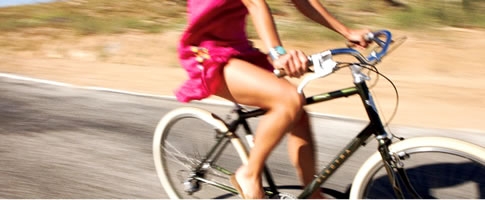
Moore, who drives one of the most fuel efficient cars on the market (a Honda Jazz) says he welcomes high petrol prices because they're pushing people (himself included) off the road and onto bicycles, footpaths or public transport.
'Rack up petrol prices'
He personally would like to see prices spike even further.
"I say rack it up to NZ$2.50 a litre and spend the difference on public transportation.''
For those willing and able to give up the car in favour of the humble bicycle, the savings are not insignificant.
 Take our neon-clad editor Bernard Hickey, who religiously cycles to work at least five day a week and foregoes taxis for off site meetings. He tags his weekly savings at between NZ$30-50 a week, a boon to his budget, beltline and overall outlook (he's not as grumpy as his columns suggest.)
"It's greener, cleaner, faster, cheaper and healthier," chirps Hickey, a self confessed obsessive cycler.
For Government, the financial side-effect of higher petrol prices also has an upside, outside of the costs associated with its fleet.
Road collisions cost big money.
The total social cost of road crashes is estimated to be $3.5 billion a year to health services and the community.
Those drivers who manage to avoid becoming statistics, face ballooning costs as well.
As anyone who has the blessing or curse of owning a car well knows, you pay for the privilege.
Depending on size and cylinder. a new car will cost anywhere between NZ$29,000 and NZ$75,000 to buy.
Three years later, those shining new objects will have depreciated in value anywhere between NZ$12,624 and NZ$30,657, according to estimates by the Automobile Association of NZ.
Annual running costs are also dear.
- $288 a year for registration
- $40-50 for a Warranty of Fitness every six months
- $768-$1,319 for comprehensive insurance cover
- Fuel at $2.10 a litre (assuming 14,000 km) will roughly range between $1,880 and $3,434
Throw in maintenance on top of that and the case for the car (for all its convenience) starts to look grim. Between the fixed costs and running costs, the four-wheel wonder becomes a financial burden to the tune of $7,000 to $14,000. The bigger the car the greater the cost.
Calculate your fuel costs here). Or for a more comprehensive breakdown, visit AA NZ's website and download their running costs report.
Little wonder sales of small and compact cars are a standout in the industry, says Moore.
"The Koreans are making hay on this,'' he adds, pointing out particularly strong sales of Kia Optima and Hyundai i45.
Moore says drivers would want to do themselves and the environment a favour need to let practical reasons, not fashion, dictate car decisions.
Alleviating one's guilt by downsizing the Ford Explorer or the like to a smaller SUV all the while clinging to a second car that sits idle in the garage is another financial gaff, for those looking to economise. The same goes for single driver trips in an seven or eight seater people mover.
"There’s still an awful lot of people driving cars that shouldn’t be, '' laments Moore, who adds that he's been encouraged by a recent movement in Christchurch towards carpooling.
"If people bought a vehicle they need rather than the one they want to be seen in it would be lot easier on peoples' wallets.''
Dave's a smart guy. Thanks to a steer last year in this direction, he has helped to cut my car fuel bill in half. I save my fashion stupidity for my bike. I can't do neon.
Tips – how you use your car does make a difference
- Slow down
As well as increasing accident risks, driving over the speed limit on the open road increases fuel costs by up to 10 percent. If you’re driving fast enough to be fined for speeding then the fuel cost will be significantly more.- Keep your load down
Carrying unnecessary weight in the vehicle increases fuel consumption, by around 2 percent for every 50 kg. So take those golf clubs out of the boot after the game, and remove the roof rack when you’re not using it. The same goes for the bike rack.- Think before you drive
Consider walking, cycling, or taking public transport before getting into your car. If you need to use the car, plan your journey. Picking up groceries and other items on the way home saves taking the car out later.- Avoid short trips
You use 20 percent more fuel driving when your engine is cold.- Drive smoothly
Make sure you accelerate smoothly. Change gear early (but don’t labour the engine). If you drive an automatic, choose ‘economy’ gear switching as this will keep the engine speed down.- Look ahead
Check what’s happening, maintain a safe following distance and you’ll keep at a more constant speed. This uses less fuel than accelerating and braking all the time.- Reduce idling time
If you’re going to be stationary for more than 30 seconds, switch your engine off.- Love your car
A little love goes a long way. Keeping your tyres at the right pressure saves fuel, as does checking your alignment, engine timing, air filter and spark plugs regularly.- Watch your air con
Only use air conditioning when absolutely necessary as it tends to eat fuel, up to 10 percent more in fact. Other features, such as the rear window demist, can also be a drain, so make sure you switch them off when they’ve done their job.
We welcome your comments below. If you are not already registered, please register to comment
Remember we welcome robust, respectful and insightful debate. We don't welcome abusive or defamatory comments and will de-register those repeatedly making such comments. Our current comment policy is here.