
Mighty River Power will be the first company off the block in the government's SOE share sell down, Finance Minister Bill English announced today.
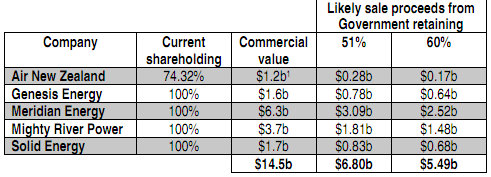
English and SOE Minister Tony Ryall said Cabinet had agreed Mighty River would before the first IPO, with the sale likely to be in the third quarter of 2012, dependent on market conditions. Analysis by Treasury for the government shows a 49% sell-down of Might River Power could raise up to NZ$1.8 billion (see table below).
English and Ryall also confirmed the government would impose a 10% ownership cap on investors in the company, other than the government.
Mixed-ownership model
The National Party contested the November 26 election on the policy to sell up to 49% stakes in SOEs Genesis Energy, Mighty River Power, Solid Energy and Meridian Energy, as well as selling down the government's 73% stake in Air New Zealand to no less than 51%.
Treasury hopes the share sales will raise between NZ$5-7 billion, which has been earmarked by the government for 'social infrastructure' spending, such as school upgrades and irrigation, over at least the next five budgets. The money will be earmarked in the Treasury's accounts as the 'Future Investment Fund', announced by Prime Minister John Key at the National Party's election campaign launch at the end of October.
To date, the government has already promised to spend NZ$1.48 billion of the SOE share sale proceeds: NZ$1 billion has been earmarked for school upgrades, NZ$400 million has been earmarked for irrigation investment, and NZ$80 million would be used to help fund a technology institute. See article: National announces NZ$400 mln irrigation investment to come from SOE share sale cash; Brings total spending from sale fund to NZ$1.5 bln.
The first share sales are likely to be from the latter part of 2012, Prime Minister John Key said on November 28. Mighty River Power or Genesis Energy are likely to be the first off the block.
At the end of August, English and Ryall said they expected to place a 10% ownership cap on stakes held by investors in the SOEs, although this is not yet set in stone. They also said they expect 85-90% of the shares in those SOEs would be held in New Zealand, although that included the government's 51% stakes. That means about 30% of the shares sold to private investors could go into foreign ownership.
'Out of banks, into the economy'
English said on November 29 the share sale policy, or 'mixed-ownership model', was about getting money "out of bank accounts and helping build the economy". Resere Bank Governor Alan Bollard said last week he was not concerned about any flow-out from bank deposits to buy SOE shares.
“We’ve looked at the numbers in broad terms. It looks like the sorts of amounts we’re talking about from those mixed-ownership model sales, are likely to be a very small proportion of domestic deposits," Bollard told media at the RBNZ's December Monetary Policy Statement.
That NZ$5-7 billion would account for part of the NZ$13 billion increase in domestic deposits (to about NZ$160 billion) over the last year. The share sales may slow the growth in domestic deposits, but wouldn’t do much more than that, Bollard said.
(Updates with video)
We welcome your comments below. If you are not already registered, please register to comment
Remember we welcome robust, respectful and insightful debate. We don't welcome abusive or defamatory comments and will de-register those repeatedly making such comments. Our current comment policy is here.