

Here are my Top 10 links from around the Internet at 10 to 7 pm, brought to you in association with New Zealand Mint for your reading pleasure. I welcome your additions and comments below, or please send suggestions for Thursday's Top 10 at 10 via email to bernard.hickey@interest.co.nz. I'll pop any surplus suggestions I get into the comment stream under the Top 10.

1. How much needs to be printed ?- Ambrose Evans Pritchard reports some people think the Federal Reserve needs to buy US$30 trillion of government bonds to have an impact. Yikes. What would that do to the New Zealand dollar vs the US dollar? The chart below gives an idea. It doesn't bear thinking about.
Here is a back-of-an-envelope guess by David Greenlaw at Morgan Stanley on what the Fed can expect from a second blitz of bond purchases, or `Shock & Awe’ as he calls it. If Ben Bernanke does a further $2 trillion (on top of the $1.7 trillion already in the bag) the yield on 10-year US Treasuries will drop 50 basis points to around 2.2pc.
GDP growth will be 0.3pc higher than otherwise in 2011 and 0.4pc higher in 2012. The unemployment rate will be 0.3pc lower in 2011 and 0.5pc lower in 2012 — (in other words drop from 9.6pc to 9.1pc, ceteris paribus).
That looks like trivial returns for a collosal adventure into the unknown, with risks of dollar flight and mounting Chinese suspicions that the US intends to default on its external debts by debasement.
I had dinner recently with a former Goldman Sachs hedge fund guru, and while I can’t remember the exact details through a fog of Mersault Premier Cru, I am pretty sure he said it would take $30 trillion to do the job – given the scale of wealth destruction from the US property crash and ferocity of debt deleveraging still to come.

2. Target the liquidators and receivers? - Australian authorities are wondering whether liquidators and receivers can be trusted and are even asking if the regulators are doing a good job of stopping white collar crime in the corporate clean up industry, BusinessDay reports.
There are real risks liquidators and receivers sell assets cheaply to their mates. I hope someone is keeping an eye on all the liquidators and receivers here, particularly given the taxpayer money at stake in South Canterbury, Mascot and Allied Nationwide.
A SENATE inquiry report will call for the corporate watchdog to lose it power over the insolvency industry because the Australian Securities and Investments Commission has responded too slowly to complaints raised by high-profile corporate collapses such as ABC Learning, Opes Prime and Storm Financial.
The report is expected to recommend a new regulator be set up to oversee personal bankruptcies and corporate insolvencies and call for a flying squad with powers to investigate complaints against liquidators. Senator John Williams, who initiated the inquiry, refused to comment on the report but called for a royal commission into white-collar crime in Australia.
"When I am told about wrongdoings by banks, liquidators, solicitors and auditors it makes me more convinced that we should have a royal commission into white collar crime in Australia," he said. "I have been told of many actions of wrongdoings. If white-collar crime is systemic in Australia then it should be brought to an immediate halt and a royal commission with wide-ranging terms of reference would be the best way to do this."
3. China hunts for Potash - Caixin reports China is keen to get its hands on Potash as it hunts the globe for stuff that makes and grows other stuff.
Access to affordably priced potash that China needs to fertilize farm crops could become more challenging if BHP buys the Canadian company. China fears a new resource struggle similar to the battle it's waged over iron ore dug from overseas mines – including some under BHP control – whose owners have become increasingly concentrated in recent years. So it yearns for ways to control prices and maintain supplies of Canadian potash.
The response so far has been to elevate previously little-known Zhongchuan International Mining Holding Ltd. to the status of industry star. The company drew fresh attention from government and industry following the BHP bid. And now, it's hoping to win government financing for a major project.

4. Watch out for a gnarly ride - The WSJ looks at economists' reaction to the Fed's statement about being ready to intervene again.
These comments represent the third step down the barrel of a potentially gnarly ride. After June’s comments about commodities deflation, August’s assessment of lower but stable inflation, and September’s inflation-too-low statement, there is strong evidence to suggest that, despite all public appearances, the FOMC is growing concerned about outright core deflation.
Bernanke’s wearing yum yum yellow against a backdrop of bond sharks, but before he jumps in, we’ll likely need to see outright evidence of declining price levels, something that could — emphasis on “could” — hit in early 2011 at the soonest.
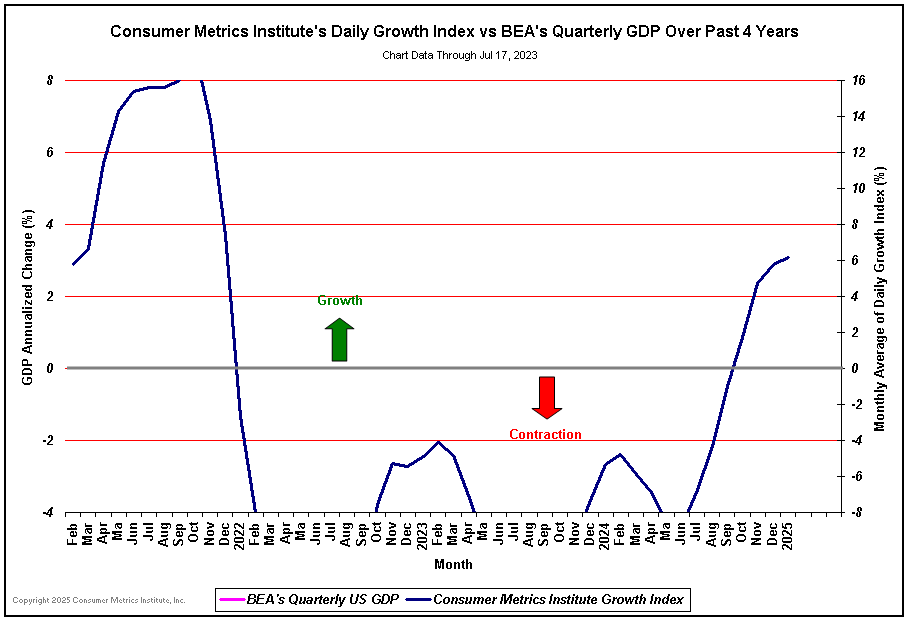
5. This chart shows real time statistics on sales online in America and how much of a leading indicator it is of GDP. It's not pretty.
7. 'Let's have a closer look' - Labour Finance spokesman David Cunliffe is calling for a closer look at the circumstances around the decision to put South Canterbury Finance into receivership.
He will need to tread carefully. There is an awful lot of heat and speculation around. He makes these points in his comments to the blog post on Red Alert.
Overall there are three high level hypotheses being debated:
– was the Govt prudent and successful in minimising the liability to taxpayers in its handling of SCF?
– were the actions of regulators and decision makers at all levels transparent, appropriate and prudent?
– who wins and loses from the result and is that result seen to be fair and appropriate?
8. Not if but how - Morgan Stanley details in this piece how governments will default rather than whether they will default.
9. The drums are beating - David Leonhardt has a nice piece in the New York Times talking about the problems between America and China and how a higher renminbi/yuan may not solve America's problems immediately.
Then, of course, there are those bills before Congress ominously threatening to put new tariffs on Chinese imports. The bills have definitely gotten China’s attention. If anything, they are a hotter topic in Beijing than in Washington, filling state-run newspapers and broadcasts. The tricky part now is using the credible threat of tariffs to force a faster rise in the renminbi — which is up only 1.6 percent since 2008, mostly in the last two weeks — without setting off a trade war that would cost jobs in both countries. With the benefit of hindsight, we can see the real lesson of that story about the yen is that success can take time.
The yen has continued to gain strength since the 1980s and, even after its fall in the last week, it is still more than twice as high versus the dollar as in 1985. Not coincidentally, the trade deficit with Japan, as a share of the economy, has shrunk 66 percent. This is the path that rising economic powers, from Germany to the United States to Japan, have taken before. They start as exporters and then build up a thriving domestic economy. (Japan, alas, hasn’t been so good at the second part.)
It’s the path China needs to take now, for the sake of its citizens and for the world. The currency move of the past couple of weeks is a good start — so long as it continues.
10. Totally irrelevant video - Even beer looks much better in slo-mo. Even Australian beer. HT Ken Freer via twitter

We welcome your comments below. If you are not already registered, please register to comment
Remember we welcome robust, respectful and insightful debate. We don't welcome abusive or defamatory comments and will de-register those repeatedly making such comments. Our current comment policy is here.