
By Bernard Hickey
In olden times the mob would deliver justice via the guillotine and celebrate the deed by parading the guilty's disconnected head around on a pike.
Now we live in a much more civilised time.
Now we ultimately rely on the authorities and the justice system to satiate the demand for redress.
In the event the public doesn't feel justice is being done, or there's a delay, it relies on the ability of the media to expose and embarrass.
In New Zealand there has certainly been a delay, at best, in justice being seen to be done on the issue of finance company collapses.
Our Deep Freeze list at Interest.co.nz of all the 62 finance companies and investment trusts that been been frozen or collapsed in the last four years shows that more than 200,000 account holders have more than NZ$8.575 billion frozen or lost in these companies and trusts. We estimate losses at around NZ$3.1 billion and counting.
I remember the evening four and a half years ago when National Finance 2000 was put into receivership. I edited a report from Denise McNabb, which was published on Stuff and The Independent that night. Denise was also first to report the demise of Bridgecorp a year later. I had been expecting finance companies to start collapsing and had warned in 2005 that this was possible, but even I have been surprised at the depth and speed of the collapse of an entire sector. The excesses, greed and recklessness have been stunning.
But after four and a half years of these collapses, not a single finance company executive has spent a single night behind bars. John Gray, the former accountant for National Finance 2000, has been sentenced to 18 months jail for theft, but is out on bail appealing the sentence. He wants home detention.
Various prosecutions are still grinding their way through the legal system and the Serious Fraud Office has set a furious pace in recent months, announcing investigations and charges almost daily. Adam Feeley appears to have transformed the activities of the SFO.
Yet no one has actually spent time in a locked room with a 'real' criminal for company yet.
Evidence of abuses, deceptions, sharp practice and outright fraud have been widespread. Details about endemic related party dealings, capitalising loans, rampant over-valuations and money-go-rounds are now legendary.
This is why the public is angry and why the New Zealand Herald's front page treatment of Hanover Finance shareholder and director Mark Hotchin has proved so popular.
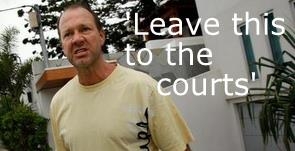
The NZ Herald sent a reporter and a photographer to the Gold Coast to find out what Hotchin's lifestyle was like and ask him about the Securities Commission's decision to freeze his assets, or at least the ones it could see in New Zealand.
The picture of a sneering, snarling Hotchin telling them to leave him alone will, I hope, been seen as the photo of the year. It captures the man perfectly.
Hotchin spent large parts of 2005, 2006 and 2007 trying to stop reporters from publishing articles critical of his company. His legal threats and bullying against media who tried to report his affairs was legendary. On the whole, those threats were effective.
 Over 13,000 investors lent over NZ$465 million to Hanover, thanks to widespread marketing and interest rates slightly higher than bank interest rates.
Now those investors are ruined. They have received back 6 cents in the dollar and will be lucky to get much more, now they have swapped their debentures for nearly-worthless shares in Allied Farmers.
The numbers are easy to republish. The stories behind those numbers are gut wrenching.
I have dozens of emails from devastated investors. I have spoken to many. First they were trusting. Then they were incredulous. Now they are furious. This event has ruined the financial lives of thousands of people. It has torn families apart. It has driven people to suicide. It has destroyed retirement plans.
Parents who hoped to pass on the money to their children have been thwarted. Money for much needed medical treatement is gone. Long dreamed of trips to spend time with grandchildren are gone.
No wonder people welcome the inconvenience and embarassment being visited on Mr Hotchin by a reporter and a photographer.
It is the least he should receive.
He should be a social outcast in his own country. The fact he has moved with his family to the Gold Coast suggest that may already have happened. Hotchin and his business partner Eric Watson should be booed by the crowd at Ericcson stadium if he ever dares to return home to watch the Warriors play on home turf.
Meanwhile the wheels of justice turn, albeit slowly. The unprecedented decision by the Securities Commission to freeze Hotchin's assets is welcome. As is the Serioud Fraud investigation into his affairs.
Some observers, including media personality Kate Hawkesby (via twitter) have questioned the NZ Herald's reports.
I dont know Mark Hotchin from a bar of soap but how is it journalism to chase people, get them pissed off, then report it on the front page?
The media's role is to challenge the powerful, report on their actions and reflect the mood of its community. The New Zealand Herald understands the mood of the community on this one -- perfectly. It is one of frustration, anger and barely suppressed vengeance. Ironically, one of the justifications for the defence of Allan Hubbard has been the lack of action (until a few weeks ago) against Hotchin.
A picture on a newspaper front page is far preferable to what would have happened centuries ago. Whether Kate likes it or not, the media's role is to name and shame and hold the powerful to account. This is one way of doing it.
But ultimately, the best result will be justice done and seen to be done in the courts.
I agree with Hotchin there.

We welcome your comments below. If you are not already registered, please register to comment
Remember we welcome robust, respectful and insightful debate. We don't welcome abusive or defamatory comments and will de-register those repeatedly making such comments. Our current comment policy is here.