
By Bernard Hickey
This week our currency rose towards a three year high of almost 80 US cents.
On the face of it this is extraordinary. Our economy is on its knees. Our second largest city has been badly damaged. Our government is likely to borrow almost NZ$20 billion this year. Our sovereign credit rating could be downgraded within weeks and our big four banks face their own credit rating downgrade.
Yet our currency is back above where it was on February 22 and is near the highest levels it has been since the global financial crisis struck in September 2008.
There's three reasons for this. The first is worth celebrating. The second is also good news. The third is bad news for most and good for some. But all three have a deeply unsettling side effect that threatens to unravel the much promoted great transformation of our economy an export-led machine.
Firstly, New Zealand is experiencing an historic rise in the price of the commodities it sells. Reserve Bank Governor Alan Bollard spoke this week about this improvement in our terms of trade, which means we are able to buy more imports from the exports we sell. Currency traders and buyers of our exports are snapping up our currency in anticipation that record high prices for butter, meat, wool and logs will translate into demand for New Zealand dollars.
Secondly, New Zealand is receiving an unprecedented amount of foreign capital inflow in a short period of time. The government's budget deficit is blowing out because of the dip in the economy late last year, the earthquakes and the deficit-worsening results of the tax package. Almost two thirds of the government bonds issued to fund that deficit will be sold to foreigners, who will have to buy New Zealand dollars to do it.
The other reason for heavy capital inflows is an expected surge of NZ$15 billion worth of reinsurance payments from earthquake claims by both EQC and private insurers. Again, the reinsurers will have to buy New Zealand dollars to pay these bills. This influx of cash will help boost the economy next year, but also runs the risk of increasing inflation and interest rates.
Thirdly, our banks are back on the bandwagon borrowing offshore to lend into the mortgage market. ASB and Westpac are aggressively marketing loans of up to 95% to home buyers tempted by the recent dip in house prices and interest rates at record lows. Kiwibank cut its six month mortgage rate to a record low 5.4% this week and is also offering 95% home loans. The March 10 rate cut by the Reserve Bank has triggered a surge of activity in the housing market, particularly in Auckland.
Mortgage approvals valued at more than NZ$800 million a week over the last four weeks have driven the fastest mortgage growth in 18 months. That was reflected in house prices and volumes in Auckland in March, the REINZ reported this week.
Much of this mortgage money is being sucked in from the same old sources offshore, which is also increasing demand for the New Zealand dollar.
All this means many exporters not selling meat, wool, dairy and logs are really struggling, particularly if their markets are beyond Australia. Luckily for exporters to Australia, our currency is weak against the Aussie dollar, which is seeing its own commodity boom.
Our Dutch Disease
This surge in a country's currency after a 'windfall' rise in commodity exports or capital inflow is often referred to as 'Dutch Disease'. Holland discovered natural gas in the 1960s, which pushed up its currency and hammered its manufacturing sector.
If our government is serious about transforming this economy into an export powerhouse it must act to restrain the currency and the foreign borrowing. The Reserve Bank could and should intervene to push the currency down and could and should introduce controls on bank lending and bank funding. The government also needs to dramatically reduce its deficit and its borrowing.
But is this government really serious about transforming the economy?
Remember, voters like a high dollar because it keeps petrol prices down and Christmas presents cheap. Don't expect real leadership anytime soon.
No chart with that title exists.
31 Comments
I agree Bernard we need a low dollar value to encourage export profits and an inflow of capital due to export growth.
Other measures are simply borrowing to sustain our lifestyle and our lifestyle will end when that money needs to be repaid.
It's a big guillotine hanging over the heads of new entrants into the property market that due to their borrowing from overseas we will all have to pay the tax man when bank looses are socialized during the next crisis.
This commodities boom can't last forever. Sooner or later the US and China have to turn the QE taps off. It's really stuffing up the world economy, many in developing countries can't afford to buy food now and that's the root cause of much of the recent popular protest.
A tech bubble has started up too now, but apparently this one is different.....
I can't believe that banks are offering 95% home loans. Both parties in that transaction are taking an incredible risk if and when NZ goes through a major economic down-turn.
the Chinese housing slowdown has started, this will deflate the commodities bubble. I don't think they'll crash, but a moderate slowdown will still have knock-on effects on Aus and NZ.
See this:
http://macrobusiness.com.au/2011/04/moodys-downgrades-chinas-property-sector/
Bernard - agree with some of what your say, good and bad. I am worried to see the banks getting agressive in the mortgage markets again - to my mind if borrowers can't front with at least 15 - 20% deposits, its too early for them to be buying - bloody tough on young people, but much more so if they buy, get further up to their eye balls in debt, then have any version of the recent US style shake out in house prices thereafter. They have to be patient as markets corerct over time, including the housing market.
With regards the currency, you haven't offerred a solution - the RBNZ has no firepower to intervene to affect the currency other than in a very minor way for short periods. Perhaps youre talking about cutting the OCR to zero, and money printing, that will sure get it down, but then a likely elevated inflationary period over 2012 - 2015 will really hammer the middle class - i.e. be careful what you wish for
The facts are that the banks offshore borrowings is swapped immediately into NZDs with no currency impact, and the currency impact of funds movements to NZ to pay for the earthquake has a short-term one-off impact. A higher currency because of a commodities boom is appropriate and right, since exactly the opposite occurs when commidties prices crumble as they did in late 2008 - it is an excellent balancing/cushioning factor for the economy. Yes, markets will over and under react to that, but only in the short-term.
For the moment, currency isn't the problem, growing debt levels are - and in defence of that, we're far better off than most (not to be used as an excuse), much of the recent rise is one-off and unavoidable (yes some will debate the bail-outs), and most importantly Key and English know they have to contain and reduce it - I have confidence they will - still, it gets us debating it which is your objective no doubt
@GrantA: "With regards the currency, you haven't offerred a solution - the RBNZ has no firepower to intervene to affect the currency other than in a very minor way for short periods."
Well, I don't know that this is the case. How about changes to the capital adequacy regime for banks? Isn't that what Basel II is partly about? Further moves this way would reduce the internal movement of hot money, reduce the upward pressure on the NZ$, and also reduce the risks to both banks & borrowers if a resurgent housing market turns to tears. The Chinese seem to be being very active on this sort of front at present.
The trouble is, it would cut right across the "borrow & hope" economic model that we have in NZ, & stall any borrowing- and consumption-based growth, which in turn could lead to a double-dip recession. Right in election year.
So for political reasons I don't think this will happen. Pity
Cheers to all.
Surely the currency is in a sweetspot. Justifiably high against the currencies that we predominately export food too, the prices of which are outrunning the dollar. And weak against the AUD where much of our manufacturing and tourism income is derived.
Philly - I'm involved in the FX markets and do know its the case, the RBNZ currency intervention is of limited consequence. I'm not sure what youre sugegsting that adjustments to banks capital adequacy ratios will do to affect the currency. If you are suggesting attempts be made to prevent the free flows of funds between currencies, youre talking a whole lot of other pain - the exact reason why many formerly communist and other closed economies have, or are in the process, of moving to free floating exchange rates - China is already experiencing the inflation pain that comes directly from their lack of such a floating rate
Actually Sheep Shagger is exactly right, the NZD is in a sweet spot at the moment for the reasons he's stated - and furthermore, at the same time its high enough to keep our inflation rate conatined, for the moment, despite USD120 oil prices
Sweet spots are always temporary, and we have to recognise that, but for the life of me I can't understand why has the currency been raised by Bernard as an issue at this point of time ?
How about China, Japan and Singapore. All have had currency controls of one sort of another during their growth periods. China and Singapore still have them.
cheers
bernard
Now, yes...however China has grown tremendiously for many years....I would say its last few years are the result of its poor govn and not a weak currency....
regards
China....
The UK at present....
regards
I would suspect that if we are able to lower the average house price the rub off is that the deposit saved becomes a larger percentage figure of the new price.
Hence LTV constraints (proposed by the great AB himself) would assist in going there.
So why is he not doing this? I imagine in my meanderings that AB is keen not to upset relations with JK in election year. Is AB really as independent as he is supposed to be?
More questions than answers.
When a country has run large external deficits for over 40 years - the currency is overvalued.
End of message !
Sweet spot be buggered - The same comments would have been made 2 years ago when the US was ~ 0.50 - now it's 0.80. The UK Pd has now halved in ~10 years.
Manufacturers cannot adjust to these level of changes in these periods - if at all.
Until we ditch the failed reserve Bank act and start targeting exchange rates as Singapore and may others do - we will get the same failed outcomes of just more debt and lower growth while driving our exporters to the wall.
Singapore's GDP came in at over 20 % for the latest quarter with massive external surpluses. It does work guys.
Not everyone sells timber to Oz or skim milk to China !
Open an F&P fridge today and you may find a Made in Italy label.
If they can't make it in domestic manufacturing - then no body can.
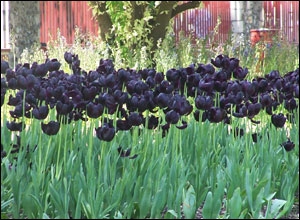
Bernard, you show a field of Tulips when commenting on the Dutch disease. Nothing to do with the tulip mania of years ago I trust - a bit akin to our housing market.
Hadn't thought of the tulip bubble when I put tulips picture in. I wasn't looking for something typically dutch with a kiwi twist. I thought tulips are dutch and black is our colour.
cheers
bernard
I was looking for a black swan to poke its head up among the tulips
;o)
Iain, you are either a liar or a fool if you think politicians should be put in charge of the money supply. Or you might be in need of specialist medical care.
That is the essential problem, that those with power will keep it to the detriment of everyone else. Thus we actually know the eventual certianty of GFC2.
Problem for NZ, as I pointed out the other day with the Declaration of Independence of 1835, is that we have never actually given our politicians the right to make decisions for us. They only do because we haven't told them not to either.
Had in interesting conversation the other day with a Lawyer that learnt all this stuff at law school.
1. Australia’s major banks are undercapitalized for the risks they carry.
2. Major Banks rely heavily on offshore borrowings.
3. Interest rates are not in the control of the RBA.
4. Borrower income to mortgage size ratios are very high by any prudent standard.
5. Banks are incentivized to continue to 'dance'.
6. Banks are too big and carry too much systemic risk.
7. Government policy and regulation are inadequate to deal with the system risks.
8. Australia is a middle class welfare trained society with a baby boomer population that has a pass the parcel attitude.
9. Vested interests across the banking, main stream media, equity markets and property markets are systemically tied to not admitting the issues.
10. The Australian economy relies far too heavily on commodities and housing industries.
Bernard. An interesting article and clearing a high currency hurts the export sector. However, a couple of quick points:
a. While longer-term commodity prices will increase due to resource constraints, we are likely to have a short-term correction in the near future when QE2 ends and China slows its economy. When this happens, the currency will fall.
b. The best long-term sustainable way to drop the currency is to stop borrowing from foreigners!!! This will push down the demand for NZD and will allow NZ to reduce its real interest rates.
c. Capital controls are not a viable option for a country up to its neck in debt and with limited reserves.
The reserve bank does not have the ammunition to take on int'l currency traders. Sure, the Government could undertake printing money but the result in an indebted country such as NZ, which is heavily reliant on import of both goods and capital will be capital flight, run-away inflation, massive increases in interest rates. This will not be good for the indebted private and public sectors. The spiriling interest rates will push many NZ businesses and households into forced sales and will also make NZ assets very cheap to foriegners.
So the actions should be:
a. Balance the central govt budget and restrict local government borrowing;
b. Tighten the capital adequacy ratios applying larger haircuts on foriegn debt to restict lending for property.
a) Cant on 2 grounds......firstly restricting spanding will kill any recovery we do have...Govn spending is what's keeping us on life support...second where do we cut? answer there isnt anywhere much.
b) Putting at 80% limit on mortgages would do well from other examples...however the property market is very weak, it could die on us and our economy is the prperty market....anything else might frighten the foreign investors which costs us more....which is bad.
I think the term is "caught between a rock and a hard place". We should have had a rainy day fund, but no ppl wanted tax cuts....we should have had teh last tax cuts but it was promised....ho hum.
regards
All very good stuff, but I have a problem.
Last night we had our neibours over for dinner and got talking about NZ economy and its place in the world.
He thinks NZ produces 37% of the words milk. Because of that the USA is desperate to have a free trade agreement with us. Actually we produce 2.7% of the worlds milk 1/6th of what the USA produce and slightly more than the UK. It is NZ that wants a free trade agreement with the USA.
He thinks NZ is self sufficient in oil and foreigners ship it all overseas and we have to buy it at high prices. We import 85% of our oil needs.
He thinks NZ should close its doors on "rich" poms and foreign companies and keep NZ for kiwis. Without them NZ would be deep in the brown stuff.
Is this what most NZ people think? They need to be told the truth constantly so that we can then ask the difficult questions that must be adressed if we are to save ourselves from a IMF bailout in the future. I.e. Student loans, WFF etc
We need to concentrate the mind on where NZ has a chance to catch up, storing water, selling coal, drilling for oil, aquaculture, ironsands, gold etc.
We dont need to act like an ostrich we need to face the issues.
Ok well here is one huge issue...
The minerals are a one time use......getting out of the ground and selling it abroad will just turn us into an economic wastland like most of Europe, but hey the BBs etc will get healthcare in their old age curtosy of pillaging our mineral wealth in a few years.......The Saudi King said a very good thing when asked about opening up the remaining small oil fields, (paraphrase) "no leave it in the ground our future generations will need it"
"the USA is desperate to have a free trade agreement with us" they are because it wont be a free trade agreement....the US Congress and its lobbyists will block our imports while forcing us to accept their IP laws...get rid of Pharmac etc we'd get screwed over.....just ask Vietnam about the catfish trade and OZ about PI....
Poms, Im not sure he;s right, foreign companies I susepct he's right.....the profits from our companies that run here but are owned abroad means the profits go overseas, thats lost $ for us and a worse balance of payments....Look at Toll rail, they ran the company intot he ground.
We need to face the issues AND be morally responsible.....
regards
Good call on the minerals.
If we sell them all now, then when we want to manufacture in 20 years time we will have to buy them back in greatly increased prices. Well for the rarer ones anyway.
Also if the extraction is developed, it becomes a resouce than can be used to reconcile debt, something we have a lot of. Eventually will have to default, but anything held as collateral will be lost.
@ Steven
Re. government spending. I agree that cutting spending in the short term will derail the NZ "recovery". However, short term expenditure is not the issue - long term entitlement spending is the problem.
Also, it is difficult to impose retrospective solutions on people if they have already made decisions.
Hence, NZ should abolish DPB for all children born 10 months from now, but make contraception free. Therefore, people have a future choices. In a world of highly effective contraception, having a child is a choice - the biggest coice you will ever make and the biggest environmental threat facing the planet.
Abolish interest free student loans for future students. Student loans should move to the private sector. Going to university is again a choice and you do it to personally benefit through higher renumeration. This will encourage students to make sure they take their studies seriously.
Abolish WFF going forward and replace with tax cuts at the lower end. This stops subsidies for increased population growth.
Increase the super age to 70 but give people the option to draw down at 65 at a discounted rate. This gives people choices and incentives to work longer if they can.
Encourage people to undertake their own health plans, such as they do in Australia.
Entitlements, no I dont agree....WINZ/Welfare is only a part of the problem, simple no jobs no income.......so society has to cover those without.
The US had a good idea on DPB, give the woman dpb, but make it clear if she had another child she wouldnt get any more money....very few children eventuated...I'd like to see the % of women doing this however....probably not as big as you think.
Student loans, I simply dont agree, thats what happens in the US and it looks like a disaster.
Abolish WFF and pop growth, yes totally agree...mainly from the pop perspective....though again there have been comments that some women are annoyed they have to go back to work once their kids are too old for the family to get WFF....WFF shouldnt be about making a choice, it should be there as a backstop to cover real need....
Lower socio-economic ppl live 5 to 10 years less than higer income ppl....so no sorry I dont agree on taking the retirement age to 70....though it might have to happen.
Health plans in aka OZ? no I very much do not agree....you can look at the USA for a clear example of how that doesnt only not work but actually costs 2x or more GDP... So for me what you are saying is its A Ok for us to waste GDP on private in-efficient healthcare, frankly I just dont agree....we can do better things with 6% of GDP.... Encouragement jsut sounds like give the richer ones a atx break....just nuts if thast the case.
regards
Re. healthcare - the US example is not a good one as the system is hevaily corrupted by political interference and subsidises. Suggest you look at the Singapore health system or Australian health system. Also suggest you talk to some nurses or doctors working in public v private healthcare in NZ. The public health system is so inefficient, political and beaucratic that front line nurses and doctors simply hate working there.
The GP's are all private and on the whole do a good job.
Re. DBP, why on earth should you pay ot for 1 child, when contraception is almost 100% effective. Unless of course, you can prove immaculate conception!!!
Uh....I have worked in both the UK public health system and here in NZ for some years (have you?)....and experienced both as a patient....and I still know doctors and nurses......think you are mis-informed.....or politically biased. Off hand except for the consultants who like to make mega bucks the more junior ppl dont like to go near private hospitals. In terms of in-efficient you just have to look at the US's system and its effects on GDP, simple.
GP's NZ v say the UKs? no difference from the std of care but in fact i'd rate the UK GPs higher....slightly...and they are NHS salaried. You also get to see a GP in the UK for free, no $50~$90 to come up with....
Dont know how accurate wiki is but if this is correct,
http://en.wikipedia.org/wiki/Healthcare_in_Singapore
means tested....hmmm....
regards
FYI from an emailer:
Bernard Good article ...........but you make the common mistake of assuming that overseas borrowing by our banks has an impact on the exchange rate. In reality the Banks hedge currency risk of offshore borrowings; they are not in the business of borrowing in say, Yen, lending to Kiwis in NZD and hoping the exchange rate doesn't go against them. The Banks borrow offshore for two reasons: 1. Access to a large pool 2. After hedging costs, the interest rate on the loan is slightly cheaper than NZD borrowings PatBernard,
Surely the LVT tightening (promoted well before Goff by Bollard himself) could be inched forward to squeeze the banks without upsetting the overseas lenders. It just seems that having discovered all these options Bollard is not doing anything worthwhile.
There are two ways of reducing excess bank lending against property assets. LVT is more direct and immediately effective compared to CFR which of necessity has to be engineered to give the lenders time to change their habits. Also LVT lets Joe Public know the rules while CFR has no direct influence on the habits of a particular borrower.
It seems to me that borrowers have to be protected from their own financial ignorance and the best way is to avoid them getting into future troubles.
If you exclude housing, NZ's economy has 3 main streams - commodities, manufactured goods and tourism.
Let's say the current strength of the dollar is driven by overseas commodity purchasers anticipating higher commodity prices, thus higher demand for the dollar thus higher future dollar prices and buying the currency to secure their future positions.
That's the up-side (apart from cheaper overseas holidays [sic], cheap stuff at the Warehouse [sic] and a dampening effect on fuel prices)
If the demand for commodities drops, it's not a major problem for the producers to wind down their production to match the demand and they've got the windfall profits to tide them over until the next boom.
Now look at the other two:
NZ$ increases against all other major currencies which makes NZ as a destination expensive-to-unaffordable at a time when discretionary income is shrinking.
Tourism drops off, leaving swathes of unemployed low skill-level workers
The high NZ$ makes manufacturing - even high-tech products - non-competitive in international markets.
Buyers in this field don't switch their sourcing to another supplier in the way that commodity buyers do. (A litre of milk is a litre of milk is a litre of milk...)
They have long-term relationships with niche suppliers (which is all that NZ manufacturers can ever hope to be) and once you've made the decision to move away from a supplier on grounds of cost, you're unlikely to switch back when the price drops because a) you have no idea when the currency is going to strengthen again (and they'll look at the volatility charts and see a rollercoaster ride over the last 20 years) and b) the transaction and process disruption costs of changing suppliers are significant/prohibitive.
So instead of crowing about a strong New Zealand dollar (as if it was something to be PROUD of) the politicians need to be looking at measures to secure NZ's future in the real world.
And God forbid an outbreak of foot & mouth or similar...
We welcome your comments below. If you are not already registered, please register to comment
Remember we welcome robust, respectful and insightful debate. We don't welcome abusive or defamatory comments and will de-register those repeatedly making such comments. Our current comment policy is here.