
Here's my blogroll for the week. Have a nice weekend everyone.
From the right
1. Why it was good those train jobs didn't go to Kiwirail. Roger Kerr (the Business Roundtable one) says making KiwiRail build trains here at a higher cost than if they were built overseas would mean those higher costs would be passed on to its NZ customers. Kerr says these customers would largely be exporters = not good.
(Weren't the locomotives going to be for Auckland's rail system though? - those costs would therefore be passed on to Aucklanders, or gobbled up by NZ taxpayers.)
Anyway, his point is that import protection in order to create certain jobs in NZ isn't good, so get over it.
One of the popular arguments for import protection was that it created or saved jobs in the protected firms.
However, such jobs came at the expense of jobs elsewhere in the economy, especially in internationally competing industries that faced higher costs (including wages that were bid up by the protected firms). Policy makers finally came to understand that there was no free lunch in import protection and barriers were lowered.
Here we are seeing the same old protectionist fallacy. Assuming KiwiRail has got its numbers right, building rolling stock here at higher cost would mean its customers would face higher prices across the board. They would grow less and create fewer jobs.
Many of the customers would be in the export sector. The badly needed rebalancing of the economy would be hampered. And of course KiwiRail would be an even bigger drain on taxpayers.
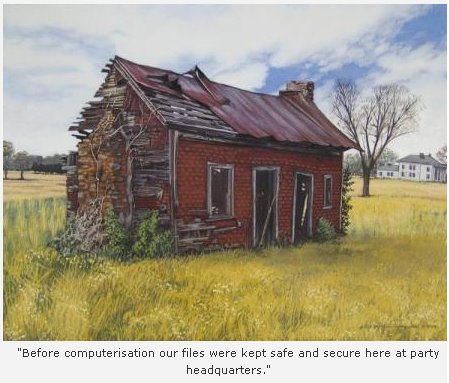
2. Get rid of Pharmac and leave it to the private sector; why can't people put aside money themselves? Libertarianz leader Richard McGrath gives his party's unsurprising view on Pharmac. Is it possible to leave people to save up for their pharma demands themselves?
The existence of Pharmac is a symptom of government interference in the health and pharmaceutical industries. Its “aggressive pricing policies” are an indication of how powerful government monopolies are, when competition is outlawed and the State has the sandpit all to itself.
The writer tells us that Pharmac (the Pharmaceutical Management Agency) was established in 1993 by the same National Socialist administration under Jim Bolger that was also responsible for the execrable Resource Management Abomination. Yep, that’s the National Socialist Party that believes in personal responsibility, competitive enterprise (yeah right) and limited government (pass me a bucket).
There is no reason why the sort of analysis undertaken by the doctors and pharmacists that Pharmac bankrolls couldn’t be undertaken in the private sector. But that would mean deregulating the medical and pharmaceutical industries—and the National Socialists aren’t willing to do that. They prefer instead to keep a battalion of state servants warming office seats, feeling important as they disburse money to the poor serfs who earned it in the first place, and clipping the ticket on the way.
I saw Dr Peter Moodie, medical director of Pharmac, at a GP conference in Rotorua last weekend. I paid my own way at that conference Peter; I hope the taxpayer didn’t pay for your attendance there, but I’m damn sure she did.
There has got to be a better way than giving Pharmac all this money and power – and there is.
The government should stop stealing money from people’s pay packets, just because it thinks it knows better how to spend that money. Let people plan for their health needs themselves, according to what they can afford. Allow them to spend that $1800 or thereabouts making their own arrangements. This would encourage people to take better care of themselves and to work hard and earn more money so they could afford a more comprehensive insurance or savings package to cover health catastrophes.
3. Will Brash get the votes? Adolf Fiinkensein at No Minister isn't too impressed with the impact Brash has had on ACT's polling. Sold a lame duck perhaps?
I say wait a bit longer, at least to see the ACT list for the November 26 election. Brash seems happy that he's got some exciting talent lined up for the ACT Party list - and they're not just all old white men apparently either.
Dr Brash marched into the ACT party board room and knocked them all for six with what now appears to be fictitious polling figures showing his personal following to be such that he would save the Party from itself and its heinous leader Rodney Hide. All they had to do was sack Rodney and install Don for the hallowed gates of Fiscal Policy to be thrown wide by an ever grateful John Key.
Boy oh boy, were they ever sold a pup! Perhaps the greatest political and tactical mess since Hitler invaded Soviet Russia.
Today’s Roy Morgan poll with its miserably pathetic 1.5% party vote pretty much seals the fate of the Bract Party. There has been no Brash bounce in any reputable polls so the party now is reduced to ineffectively fulminating from the sidelines as it sinks further into irrelevance. On their current performance they’ll struggle to get their leader into the house as a list member.
4. Gumboot in mouth disease. Labour leader Phil Goff said yesterday Federated Farmers were considered as the National Party in Gumboots. Homepaddock says this is yet another reason farmers and those in the rural sector need to vote National.
Remember the Labour Party wants to bring farmers under the ETS by 2013, and the musings from around Parliament are that Labour is not finished on the 'target-farmers' front, so watch this space.
If ever there was a time for farmers and the wider rural community to support the National Party it is now both because of what it has done in government and what Labour is threatening to do should it win the election.
Sadly, from my point of view, not all farmers understand that. Although many are more likely to support National than members of some other groups, not all of them do.
However, Phil Goff would have helped National’s cause and harmed his own when he stuck his gumbooted-foot in his mouth.
Goff could have mended a bridge or two with farmers and got some positive publicity at the Fieldays. Instead he gaffed again with a defensive, and ill-judged quip.
"In financial terms agriculture is hugely important, in political terms someone once said that Federated Farmers is the National Party in gumboots, it's always been that way and we have to accept that."
From the left
The Minister for Earthquake Recovery, Gerry Brownlee, appears to be part of the Government’s problem, and increasingly he appears to be almost a lame duck minister. There must be questions asked about whether he was the right person for the job.
He is reported today as saying he does not accept that Christchurch residents are in limbo – see: NZPA: Quake complainers are being simplistic – Brownlee. He’s also being criticized for his apparent line that although it’s ‘blindingly obvious’ which parts of Christchurch will be bulldozed, he’s not willing to discuss them.
And last night he appeared on Campbell Live (watch here) wearing a flash branded “CERA” jacket that probably caused a number of Cantabrians to curse. As Brian Tut of the Bexley Residence Association said on Radio NZ, ‘CERA has a corporate uniform, perhaps that shows their priorities are in the wrong place’. Similarly, he continues to push a common plea to the media for sympathy because while Christchurch residents without homes are suffering, he too is suffering and having sleepless nights, and so forth. It’s not a good line for the public.
Surely it’s only a matter of time before the calls become louder for his replacement.
6. National's wage plan could hurt...their election chances. Imperator Fish thinks reports National is looking to reintroduce a lower minimum wage could be detrimental to their vote. TV3 reported last night that the government would campaign on a lower youth wage. I'm told by a little bird that this would be for the 15-19 year old bracket, not the 15-24 yr old bracket.
It's open to debate whether this will hurt National. It may piss a few youngsters off who might see their wages drop, but it may open up more jobs for others. Perhaps you could grandfather it in? (ie employers would not be allowed to cut the wages of those 15-19 yr olds in work currently...or is that just a silly idea?)
How many unemployed 15-19 year olds vote National anyway? Actually, how many 15-19s vote National? The real question should be what their parents think of the policy.
It's no surprise that whenever National look at ways to grow employment the first thing they do is look at cutting wages. They don't know what else to do, because they have an imagination deficit and can't look beyond the short term balance sheet. If they had their way and didn't have pesky opposition parties, unions and the media nipping at their heels, I've little doubt they'd drop all minimum wage protection, and many people would now be earning $4-5 an hour.
One of the problems we have as a nation is our low level of worker productivity. That's not because workers are lazy: far from it. We work some of the longest hours in the OECD. But our work is not efficient because it's cheaper to hire workers at low rates than it is to spend money on new equipment and plant. This means we stay less efficient and our economy doesn't get the benefits of high productivity.
Surely, then, if our productivity problems stem in part from the low cost of labour, it makes no economic sense to make it even cheaper to hire staff.
John Key and Bill English often talk about the importance of productivity as a driver of economic growth. But talking up productivity while allowing employers to cut wages is like telling a junkie to clean up their act while giving them a bag full of heroin.
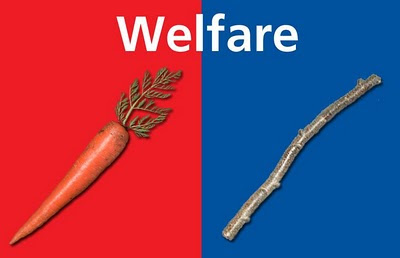
7. And here's The Standard's stance on the TV3 youth wage story:
Outrageous and a breach of human rights. You should get paid for the work you do. Not your gender. Not your ethnicity. Not your sexuality. Not your age.
National’s vision. A poorer New Zealand with a small slice of the cake going to workers.
But what do you expect from a government that “would love to see wages drop“?
Oh, and before some Rightie says the minimum wage creates unemployment, let’s see what the Department of Labour says:
“The evidence of the impact of increasing the minimum wage on job growth is not strong… The Department therefore considers the impact on job growth to be minimal”
Economics blogs
Now on the first point he is right: governments can not pick winners, in education or anything else. Markets, by and large, do a much better job of sorting out the wheat from the chaff, sorting out the valuable or worthwhile and rejecting what is useless or worthless.
But on the second point he is wrong. If markets are to do their sorting then prices must reflect opportunity costs. This is just as true for loans as it is for bread or cars or pens or ... There may be a case for the government providing loans to students, problems with borrowing against human capital, but pricing these loans at zero will missallocate resources.
When taking out a loan one of the questions a student should ask is, How will I pay this back, including interest. If the returns to the education can not pay for the loan and interest then that loan could be better used by someone else.
Our place was inspected post-September but we never received a quote from EQC on their estimate of the damage cost, and so we were never able to book in with a builder to get things fixed. Once EQC's assessors get around to us, hopefully before this coming September, there's no way they'll be able to tell how much damage is due separately to Boxing Day, February, or this weekend's major earthquake (for folks abroad: the city just keeps rocking). But there have been 12 separate events. If private insurers argued that damage were spread evenly across all twelve events, EQC would be on the hook for all damages - $1.2 million per home, well in excess of the "bowl it over and build new" cost for the vast majority.
On the other side, if EQC can minimise its liabilities by lumping a whole pile of separately damaging earthquakes into one event, EQC's foot-dragging in getting assessments out makes more sense. Again, using our place as example: damages from September's quake were pretty minor as we're over on the east side of town; Boxing Day provided no new damage; February was far worse for us. Our housesitter (who was also our housesitter for the Boxing Day quake) informs me that the house is currently a mess of broken glass and that the cracks in the internal wall plaster are rather worse than they've been since February. EQC footdragging then lets them count all the earthquakes against the same $100k cap, with any excess costs then falling on AMI.
Meanwhile, nothing gets rebuilt. In some cases, that's efficient; fixing cosmetic damage like plaster cracking probably doesn't make sense if the next damned earthquake will just undo everything. But each bit of structural damage that doesn't get fixed because of foot-dragging makes the next quake's damage worse. Will be interesting to see what's waiting for us on our return.
Video
10. Funny speech from Simon Power on Trevor Mallard's leadership credentials. HT David Farrar @ Kiwiblog and inthehouseNZ. How bout it then - Mallard at the top of the party? Perhaps number two to a certain finance spokesman? If Goff loses the election, who's likely to take over?
We welcome your comments below. If you are not already registered, please register to comment
Remember we welcome robust, respectful and insightful debate. We don't welcome abusive or defamatory comments and will de-register those repeatedly making such comments. Our current comment policy is here.